Among the wealthiest figures cited are Tesla and SpaceX chief executive Elon Musk, Amazon founder Jeff Bezos, and French media investor Vincent Bolloré. The report references Musk’s advisory role to the U.S. administration in early 2025, Bezos’s ownership of The Washington Post, and Bolloré’s acquisition of the French news outlet CNews as examples of how large fortunes can translate into political or media leverage.
Oxfam Executive Director Amitabh Behar said in the report that the concentration of economic power among a small elite is creating what he called a “political deficit,” as governments “pander to the elite” while living costs rise for much of the population. According to the group, policy decisions that favor affluent households—such as tax breaks approved in several countries—exacerbate the divide between top earners and average citizens.
Tax policy and political access
The charity links recent U.S. tax changes to its broader critique. In 2025, President Donald Trump signed legislation popularly described as the “big beautiful bill,” which lowered taxes for high-income households. Oxfam calculates that individuals earning over $1 million annually will see their disposable income increase by roughly three percent under the measure. The organization argues that cuts of this kind reduce public revenues that could otherwise finance social programs, further entrenching inequality.
The report also notes that tax concessions coincide with rising living costs. Data from the Ludwig Institute for Shared Economic Prosperity found that most Americans can no longer afford what it labels a “minimal quality of life.” U.S. Census Bureau figures show about 10% of the U.S. population lived in poverty in 2024.
Globally, Oxfam contends that gaps in taxation allow the wealthiest to maintain their fortunes with relatively low effective tax rates. Among the group’s chief recommendations is the adoption of national plans to reduce inequality, including higher levies on extreme wealth and “firewalls” separating private money from public decision-making.
Unrest and human cost
Oxfam connects economic disparities to social instability, documenting more than 140 significant anti-government protests in 68 countries during the past year. Government responses were “typically met with violence,” the report says. In Iran alone, the organization estimates that over 2,500 people have been killed since protests over a prolonged economic crisis began last month.
These figures underscore what Behar describes as the distinction between being “economically poor,” which creates hunger, and being “politically poor,” which fosters anger. The charity argues that both facets drive public demonstrations when populations feel excluded from decision-making and unable to meet basic living standards.
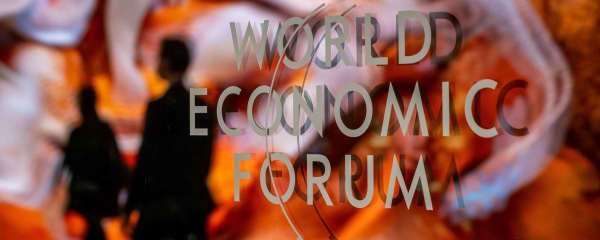
Imagem: Internet
Aid cuts and projected impact
In addition to domestic tax debates, Oxfam criticizes reductions in international development budgets. The report states that many high-income countries are “cutting aid further and faster than before,” citing the U.S. closure of the United States Agency for International Development (USAID) as a prominent example. Oxfam warns that shrinking foreign assistance could contribute to an additional 14 million deaths by 2030, particularly in low-income regions vulnerable to food insecurity and inadequate healthcare.
The organization links these projections to broader patterns of fiscal restraint in donor nations, arguing that rising wealth at the top contrasts sharply with diminishing resources for humanitarian and development programs.
Davos backdrop
This year’s World Economic Forum, commonly referred to as Davos, opens Monday and is scheduled to host roughly 65 heads of state and 850 CEOs. President Trump is set to address delegates on Wednesday, placing the discussion of tax policy, corporate influence and global inequality at the center of the gathering. The meeting’s agenda and participant list are available on the World Economic Forum’s official website.
Oxfam has released an inequality report to coincide with the Davos event every year since 2014. In its 2023 edition, the organization predicted the emergence of at least five trillionaires within a decade if current trends continue, arguing that existing tax frameworks are insufficient to capture the scale of modern wealth.
Key recommendations
The latest report advances several policy proposals aimed at curbing what Oxfam calls “billionaire power.” These include:
- Comprehensive national strategies to reduce inequality, pairing progressive taxation with expanded social spending.
- Higher taxes on extreme wealth to limit the accumulation of political influence by the ultra-rich.
- Stronger separation mechanisms—or “firewalls”—to keep private money from unduly shaping legislative agendas.
- Enhanced protections for freedom of expression to safeguard civic space and ensure accountability.
Oxfam maintains that without structural reforms, the current trajectory will continue to favor concentrated wealth, undermining democratic processes and prolonging poverty. The group’s analysis contends that the same forces driving record fortunes are simultaneously curbing the resources available for public services and overseas development, leading to what it describes as a “dangerous and unsustainable” imbalance.
Crédito da imagem: Reuters


