Positioning inside a crowded AI coding market
The launch underscores the fast-moving competition around AI-driven software development tools. While major technology vendors such as OpenAI, Microsoft and Google have demonstrated code-generating models, Replit’s latest release targets a consumer-friendly scenario that those larger players do not yet offer natively: end-to-end mobile app deployment controlled entirely through conversational commands.
Vibe-coding—an approach that focuses on describing the desired “vibe” or outcome rather than specifying detailed logic—has gained traction throughout the generative AI boom. Momentum accelerated after Anthropic introduced Claude Code, which reported $1 billion in annualized revenue only six months after launch. Industry valuations have also escalated. Replit was valued at approximately $3 billion during a fundraising round in September. Rival startup Anysphere, creator of the cursor-based coding assistant Cursor, raised $2.3 billion in November, lifting its valuation to $29.3 billion. European entrant Lovable recently reached a valuation of $6.6 billion.
Investor enthusiasm for AI coding tools has coincided with pressure on traditional software stocks. The iShares Expanded Tech-Software Sector ETF, whose top holdings include Salesforce, Adobe and ServiceNow, has declined 11 percent over the past three months amid concerns that autonomous coding agents could reduce demand for conventional enterprise licenses.
Path to the App Store
Before public release, Replit-generated apps must pass Apple’s review process. Apple states that 90 percent of submissions are evaluated within 24 hours, but the company enforces strict guidelines on user privacy, content and security. Developers can reference Apple’s detailed App Store Review Guidelines to confirm compliance before submission.
Replit demonstrated two example projects to illustrate the workflow. “Market Bling” monitors leading companies by market capitalization, while “Pattern Haven” provides a community space for sewing enthusiasts. Both apps were created through conversational prompts and subsequently published.
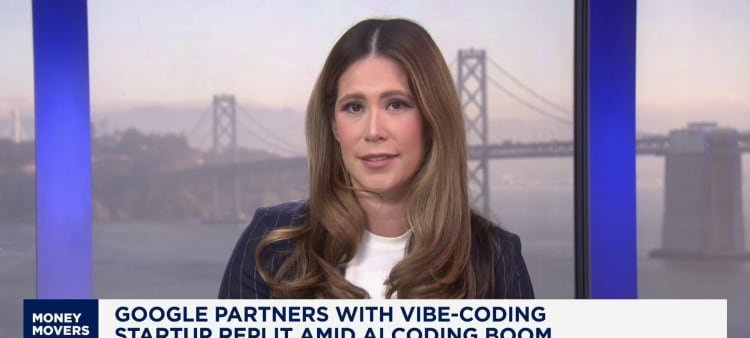
Imagem: Internet
Security considerations
The rapid pace of vibe-coding has brought increased scrutiny from cybersecurity researchers. A recent report by security startup Tenzai analyzed applications produced by several popular AI coding agents, including Replit’s platform and Anthropic’s Claude Code. The study found that these tools frequently generate code containing critical vulnerabilities, such as inadequate defenses against password brute-force attempts and insufficient safeguards against common web exploits.
Replit’s Mobile Apps feature does not bypass standard security checks, and any submitted application remains subject to Apple’s evaluation of data handling and encryption practices. However, the Tenzai findings indicate that users may need to perform additional manual audits or implement external testing tools to ensure production-level robustness.
Monetization via Stripe
By embedding Stripe’s payment infrastructure, Replit aims to simplify revenue generation for independent creators. The integration supports one-time purchases and recurring subscriptions, automatically configuring the required backend services during app creation. Stripe’s merchant-of-record model also handles tax remittance and compliance in supported regions, removing a common operational barrier for small teams.
Outlook
The debut of Mobile Apps on Replit marks another step in democratizing software development. As more platforms emphasize natural language over traditional coding, the boundary between ideation and deployment continues to shrink. While convenience may accelerate innovation, the industry’s next challenge will be establishing best practices that keep pace with the speed of AI-produced code.
Crédito da imagem: Thomas Fuller | SOPA Images | LightRocket | Getty Images


