Another barrier involves the potential deployment of troops from NATO member states on Ukrainian soil once the war ends. Ryabkov said Moscow would reject any agreement that permits foreign soldiers to remain in Ukraine, even if they are included under security guarantees proposed by a coalition of European governments. “We definitely will not at any moment subscribe to, agree to, or even be content with, any presence of NATO troops on the Ukrainian territory,” he stated.
Since 2008, Ryabkov has served as one of Russia’s most prominent diplomatic figures, working under long-time Foreign Minister Sergey Lavrov. Prior to the invasion he publicly dismissed allegations of an impending attack, asserting in January 2022 that Moscow had “no intention of invading” Ukraine while Russian forces massed near the border.
During the interview Ryabkov avoided describing the conflict as a war, instead using the Kremlin’s preferred term, “special military operation.” He argued that Russian actions were intended to protect ethnic Russians in eastern and southern Ukraine. When asked about civilian suffering, he expressed sympathy but said the goal was to ensure that “the majority of those people find it better … to be where they belong, which is Russia.”
The deputy minister also linked broader U.S.–Russian relations to developments in Ukraine. He reiterated calls for renewed dialogue on nuclear arms control, while cautioning that progress would require “substantive and irreversible improvements” in Washington’s policy toward Moscow. Last month he told the state-run magazine International Affairs that a meeting between former U.S. President Donald Trump and President Putin was possible “as Ukraine peace talks continued.”
Ryabkov’s remarks coincide with a fresh diplomatic initiative led by the White House. The effort seeks to formalize a cease-fire, address territorial disputes and outline security arrangements for Ukraine’s future. Diplomatic sources familiar with the negotiations said the framework includes phased troop withdrawals, international monitoring and economic reconstruction packages backed by Western donors. Details of enforcement mechanisms, as well as Kyiv’s security guarantees, remain under discussion.
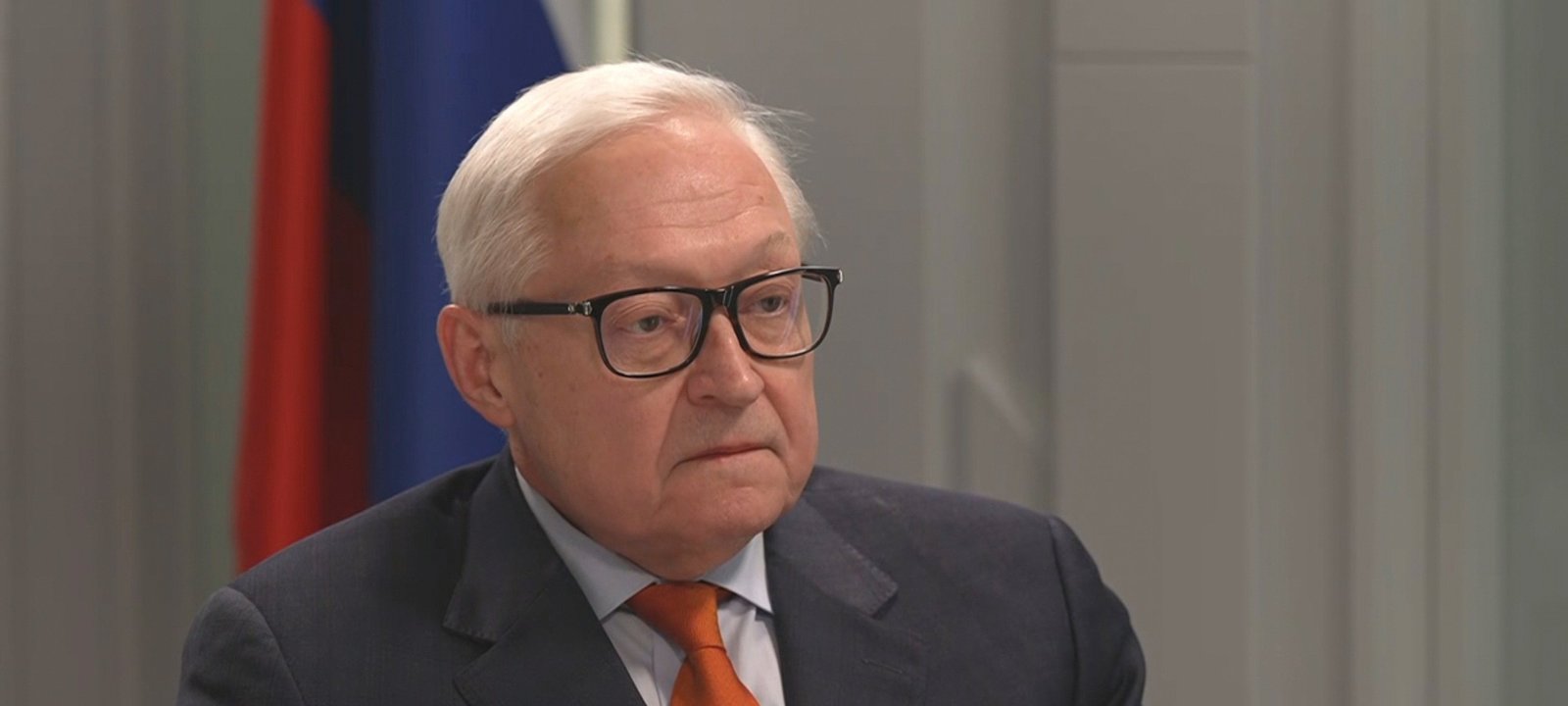
Imagem: Internet
Kyiv has not publicly commented on Ryabkov’s latest statements. In previous addresses, President Zelenskyy has insisted that any durable peace must respect Ukraine’s sovereignty and territorial integrity. The Ukrainian leader also continues to pursue security assurances similar to NATO’s Article 5, though membership in the alliance has not been offered. A recent NATO communique reaffirmed the alliance’s commitment to long-term support for Ukraine but did not address post-war troop deployments.
In Moscow, officials remain cautious about the timeline for a final document. While Ryabkov suggested an agreement is within reach, the Kremlin has not scheduled public negotiations or revealed draft texts. Russian domestic media emphasized the territorial clauses and reported that the government views retention of the five regions as non-negotiable.
Western diplomats monitoring the talks noted that previous truces faltered over similar issues. Nonetheless, the current momentum, combined with signals from both Washington and Moscow, has raised expectations that direct negotiations could produce the first formal cease-fire in nearly four years of large-scale fighting.
No date has been announced for a potential signing ceremony, and it remains unclear whether talks will occur in a neutral venue or through continued shuttle diplomacy. Observers point out that winter battlefield conditions have historically slowed operations, creating windows for political dialogue. Whether the outstanding territorial and security questions can be bridged will determine if the tentative progress cited by Ryabkov translates into an enduring peace.
Crédito da imagem: ABC News


