The downgrade followed a months-long slide that began in January, when California Attorney General Rob Bonta sued to block federal efforts to assume oversight of the pipelines. The state’s complaint argued that environmental safeguards would be weakened under federal jurisdiction, prompting uncertainty over timelines and compliance requirements. Sable Offshore shares retreated in the immediate aftermath of the filing as investors reassessed regulatory risk.
White House Signals Emergency Support
Momentum shifted again on March 12 after reports indicated that President Donald Trump intends to invoke emergency authority in support of the Santa Ynez project. The prospective order would ease certain permitting hurdles and place key decisions under federal control, a move the administration contends is necessary to secure domestic energy supplies. The strategy mirrors other recent attempts by the executive branch to accelerate infrastructure deemed critical to national interests.
The proposed action, if finalized, would aim to neutralize state-level challenges by streamlining approvals for the pipelines that connect offshore platforms to onshore processing facilities. Advocates argue that federal oversight could shorten construction timelines and reduce costs, while opponents maintain that California retains the right to enforce its own environmental standards.
According to the U.S. Department of the Interior, energy projects operating in federal waters typically require a complex array of clearances across multiple agencies, a process that can be further prolonged when state and federal jurisdictions overlap. Sable Offshore’s experience illustrates how that layered system can generate prolonged uncertainty for producers and investors alike.
Company Background and Strategic Importance
Sable Offshore is an independent exploration and production company headquartered in Texas. Its 16 domestic leases stretch from the Gulf Coast to the Pacific, providing what the firm describes in regulatory filings as a geographically diversified portfolio. While most of its existing output comes from the Gulf of Mexico, the Santa Ynez Unit holds a material share of the company’s booked reserves and is central to its long-term growth strategy.
The Santa Ynez complex includes offshore platforms, subsea wells and the two controversial pipelines that deliver crude to processing plants onshore. Because the asset is located off the coast of California—a state known for stringent environmental regulation—Sable Offshore has faced a lengthy sequence of reviews, public comment periods and legal contests. Any acceleration of federal approvals could therefore have a measurable impact on the timing of first oil and future cash flow.
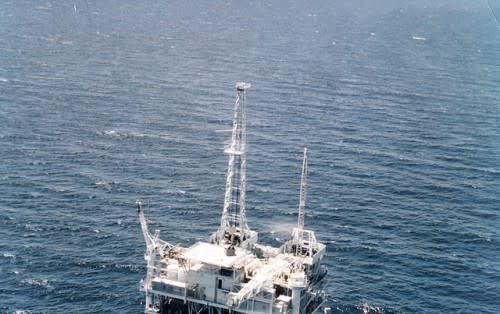
Imagem: Internet
Market Reaction Remains Cautious
Despite the White House’s apparent backing, market participants have proceeded with caution. The Benchmark downgrade highlighted investor ambivalence, noting that the federal reclassification of the pipelines had not fully resolved legal exposure. Industry observers also point out that emergency actions can attract additional litigation, potentially offsetting any gains from expedited approvals.
Moreover, Sable Offshore operates in a commodity-driven sector where price volatility can erase benefits derived from regulatory wins. The company’s stock has therefore continued to reflect a blend of optimism over possible policy support and concern about courtroom outcomes, environmental opposition and broader oil market dynamics.
Sequence of Key Events
- January 2026: California’s attorney general files suit to prevent federal authorities from assuming control of two pipelines linked to the Santa Ynez Unit, triggering a decline in Sable Offshore’s share price.
- March 5, 2026: Benchmark downgrades Sable Offshore to “Hold,” citing ongoing legal challenges and uncertainty surrounding the recent pipeline reclassification.
- March 12, 2026: Media reports indicate that President Trump plans to deploy emergency powers to expedite approvals for the Santa Ynez project, positioning the federal government to override certain state objections.
Outlook Hinges on Courtroom and Policy Timelines
While the administration’s emergency approach could accelerate federal permitting, the California lawsuit remains active, and additional challenges may arise once a formal order is issued. Legal experts note that courts often weigh federal energy objectives against state environmental prerogatives, and outcomes can vary widely by jurisdiction.
Sable Offshore, for its part, has not publicly detailed revised project schedules since the White House announcement. Company representatives have previously emphasized their commitment to meeting all regulatory requirements while pursuing what they describe as a critical source of domestic energy.
For investors, the immediate question is whether federal intervention will materially shorten development timelines or whether extended litigation will maintain the current overhang on the stock. Benchmark’s decision to move to the sidelines underscores the difficulty of making that call until clearer guidance emerges from the courts.
In the meantime, Sable Offshore continues to trade in a range influenced by both macro oil prices and the incremental headlines generated by the legal dispute. The stock’s inclusion on recent day-trading watch lists suggests a high degree of short-term volatility, driven largely by the rapid cadence of policy updates and court filings rather than fundamental operating results.
With multiple agencies, state officials and the judiciary still weighing in, the path forward for Sable Offshore’s California ambitions remains fluid. Investors, analysts and policymakers will be monitoring the next set of legal milestones and any formal action from the White House to determine whether the Santa Ynez Unit can proceed on an accelerated timetable or remains locked in regulatory limbo.