The legislation covers five regular appropriations bills whose details had been negotiated by bipartisan leaders over recent weeks. Those bills handle discretionary spending for a broad range of departments, but DHS was carved out because of persistent disagreements over immigration enforcement and border policy. Instead, the department will operate under a continuing resolution that extends current funding levels for two additional weeks, buying negotiators time to address the unresolved issues.
Senate action had been delayed Thursday night and through Friday morning by holds from several Republican senators. The most prominent hold came from Sen. Lindsey Graham, R-S.C., who demanded a vote on a separate measure that would criminalize state and local “sanctuary” policies restricting cooperation with federal immigration authorities. Graham also sought an amendment related to the “Arctic Frost” investigation conducted by then-special counsel Jack Smith, proposing that the Justice Department notify lawmakers if their phone records are obtained during criminal probes.
Graham lifted his procedural objections late Friday after negotiations with leadership, allowing the chamber to proceed to final passage. However, the delay proved long enough to prevent both chambers of Congress from completing work before the deadline.
DHS has been under intensified scrutiny from Democrats following aggressive immigration enforcement actions in Minnesota and other jurisdictions. Democratic senators argued that debating a complex immigration proposal inside an urgent spending package would derail the appropriations process and risk a broader shutdown. By separating DHS funding, negotiators hoped to secure near-term stability for most agencies while deferring the politically charged immigration fight.
A partial shutdown means that agencies funded by the newly passed bills can continue normal operations, but offices that rely on lapsed appropriations will scale back to “excepted” activities deemed necessary for safety or property protection. During previous shutdowns, the White House Office of Management and Budget has issued detailed contingency plans outlining which functions remain operational. Such guidance, available on the OMB website, is expected again if the lapse continues beyond the weekend.
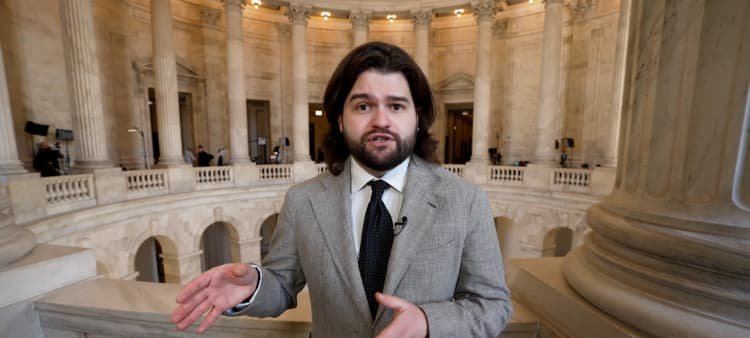
Imagem: Internet
The stopgap for DHS, combined with the five full-year bills, constitutes the first tranche of the fiscal 2024 appropriations process. Congressional leaders still must negotiate the remaining spending bills that were not included in Friday’s agreement. Earlier in the week, Senate Majority Leader Chuck Schumer, D-N.Y., called the compromise “the only viable path” to avoid prolonged disruptions, while Minority Leader Mitch McConnell, R-Ky., urged colleagues to support it despite reservations about excluding certain policy riders.
Approval in the House is not guaranteed, but GOP leadership expressed confidence that Trump’s endorsement would help persuade skeptical conservatives. Johnson told members he expects to bring the package to the floor under a procedure requiring two-thirds support, a threshold that demands significant Democratic votes but speeds consideration by waiving normal rules.
If the House passes the legislation Monday, the measure will be sent to President Trump for his signature. Until then, federal workers in impacted agencies will receive furlough notices, and programs classified as non-essential will remain paused. Essential personnel—such as air traffic controllers, Border Patrol agents, and military service members—are required to continue working without immediate pay until the shutdown ends.
Congress has faced several funding cliffs over the past decade, often relying on short-term extensions to avert broader shutdowns. Friday’s lapse underscores the consequences of scheduling votes close to statutory deadlines and highlights the persistent difficulty of reconciling policy disputes within the partisan landscape of immigration and border security.
Crédito da imagem: Senate Television