Oct. 14 With negotiations stalled, House Speaker Mike Johnson forecast that the stoppage could rank among the longest ever. The House had been out of session since mid-September, after approving a seven-week funding extension that the Senate did not take up.
Oct. 15 The Pentagon announced it had reallocated existing funds to cover military pay, ensuring service members would not miss a paycheck.
Paychecks halted, pressure mounts
Oct. 24 More than 500,000 federal workers missed their first full paycheck. Days later, the largest union representing federal employees urged lawmakers to enact a short-term spending bill, a plea Republicans used to amplify pressure on Democrats.
White House enters the fray
Oct. 30 Returning from an overseas trip, President Trump urged Senate Republicans to eliminate the filibuster to reopen the government unilaterally. Senate Majority Leader John Thune swiftly rejected that approach.
Assistance programs hit funding wall
Nov. 1 Resources supporting the Supplemental Nutrition Assistance Program (SNAP) were exhausted, putting 42 million recipients at risk and triggering legal disputes between states and the administration. The same day, ACA open enrollment began amid sharp premium increases projected for the following year.
Repeated Senate failures
Nov. 4 The Senate fell short for the 14th time in efforts to pass a temporary funding bill.
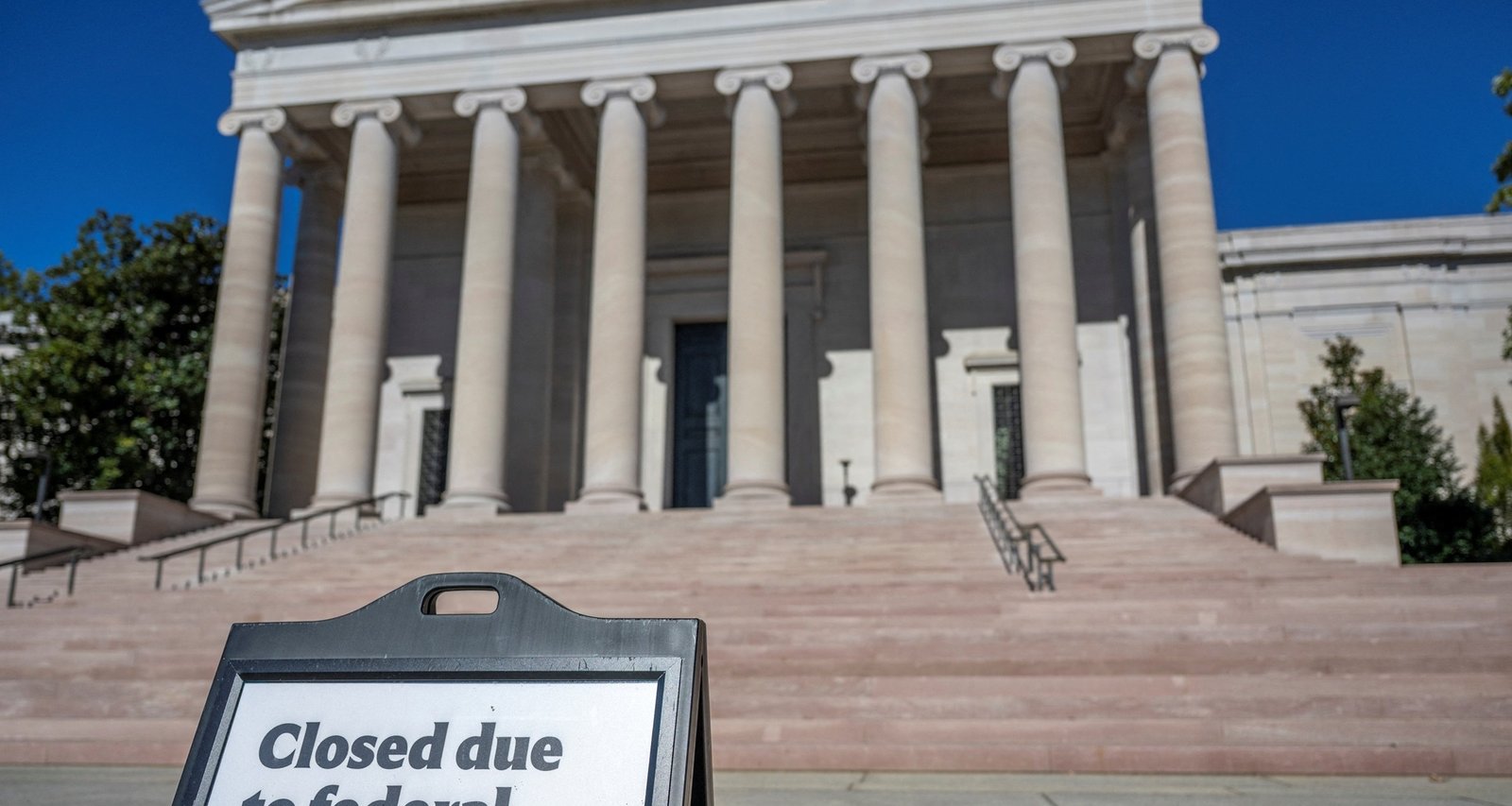
Imagem: Internet
Record-breaking shutdown
Nov. 5 The impasse became the longest in U.S. history. That day, President Trump summoned Senate Republicans to the White House after the party suffered losses in key state elections. Democrats pointed to their electoral gains to reinforce calls for negotiations on health-care funding.
Air travel disruption expands
Nov. 7 The Federal Aviation Administration reduced flight capacity at major airports, intensifying delays for travelers nationwide. Senate Minority Leader Chuck Schumer proposed a short-term funding measure paired with a one-year ACA subsidy extension; Republicans dismissed the offer.
Competing plans surface
Nov. 8 Thune pledged to keep the Senate in continuous session until a deal emerged and outlined a plan combining a temporary funding bill with three full-year appropriations covering SNAP, the Special Supplemental Nutrition Program for Women, Infants and Children, and veterans’ programs. Schumer criticized the strategy, arguing Republicans had squandered an opportunity to compromise.
Breakthrough vote
Nov. 9 In a 60–40 procedural vote, eight Democrats joined Republicans to move a bipartisan agreement forward. The proposal omitted Democratic demands on health care but included a leadership promise to allow a December vote on an ACA-related bill of the minority’s choosing. The measure would:
- Extend government funding through January 30, 2026.
- Reverse firings executed during the shutdown.
- Guarantee back pay for furloughed employees.
Next steps on Capitol Hill
Nov. 10 The Senate reconvened to continue processing the legislation. Speaker Johnson instructed House members to return to Washington immediately and pledged a swift House vote once the Senate completes its work, aiming to send the bill to the president without delay.
The shutdown’s prolonged effects—ranging from suspended food assistance to curtailed airport operations—underscore the broad reach of federal funding lapses. Historical data show that earlier shutdowns rarely exceeded three weeks, highlighting the exceptional length of the current impasse. For context on prior funding gaps, see the Congressional Research Service’s overview of federal shutdowns here.
Crédito da imagem: Daniel Heuer/AFP via Getty Images; outros conforme legenda original


