Calls for a Primary Challenge
The post quickly drew rebukes from prominent venture capitalists. Martin Casado, a general partner at Andreessen Horowitz, said on X that Khanna had “alienated every moderate I know who has supported him,” adding that replacing the congressman would be “all the more gratifying.” Garry Tan, chief executive of startup accelerator Y Combinator, echoed the sentiment, writing simply, “Time to primary him.”
Data from recent Federal Election Commission filings show that employees and partners at Andreessen Horowitz and Y Combinator rank among Khanna’s biggest campaign contributors.
Industry Concerns Focus on Unrealized Gains
Tech entrepreneurs argue that the proposed tax would apply to unrealized gains—equity that founders hold on paper but cannot easily convert to cash. Critics say forcing executives to pay 5 percent of the estimated value of their illiquid stock could trigger an exodus of talent and capital from California.
“We’re absolutely going to have to figure out how our society adapts to a rapidly increasing wealth gap. But the answer is definitely not taxing unrealized gains,” Reddit co-founder and venture investor Alexis Ohanian wrote in a weekend post.
Vinod Khosla, founder of Sun Microsystems and Khosla Ventures, predicted that “top prospects for generating wealth in the state will almost certainly leave.” Forbes estimates Khosla’s net worth at roughly $12.6 billion.
Khanna’s Response and Policy Position
Khanna’s office maintains that the congressman remains a “passionate supporter of technology and entrepreneurship.” Spokesperson Sarah Drory noted that Khanna co-authored the CHIPS and Science Act, designed to expand domestic semiconductor manufacturing. In a statement, Drory said Khanna favors “a modest wealth tax on billionaires to deal with staggering inequality and to make sure people have health care,” while also supporting “common-sense workarounds for startup founders whose companies are not profitable and who have illiquid stock.”
Khanna reiterated his stance in a follow-up post, asserting that entrepreneurs would still launch companies in California even if “there is a 1–2 percent tax on their staggering wealth.”
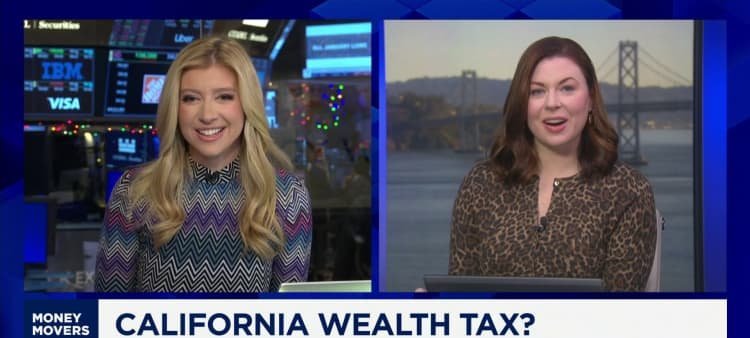
Imagem: Internet
State-Level Resistance
California Governor Gavin Newsom, a Democrat widely seen as a potential 2028 presidential candidate, opposes state-specific billionaire taxes. “You can’t isolate yourself from the 49 other states,” Newsom said at the New York Times DealBook conference earlier this month, arguing for a more pragmatic approach.
Pressure to target the highest earners nonetheless continues to grow within the party. A February survey by the Pew Research Center found that 58 percent of Americans favor increasing taxes on households earning over $400,000 a year, including 74 percent of Democrats.
Political Ramifications
Khanna carried California’s 17th Congressional District by more than 30 percentage points in 2024, and the seat remains safely Democratic. However, Republicans have made incremental gains in Silicon Valley by courting disaffected tech executives; several industry leaders have accepted advisory roles in President Donald Trump’s administration.
Although a successful primary challenge against Khanna appears unlikely at this stage, the backlash highlights a growing divide between progressive Democrats advocating aggressive redistribution policies and tech investors concerned about maintaining the state’s competitive edge.
Next Steps for the Ballot Measure
The SEIU-UHW West must collect the required number of valid signatures to secure a place for the 2026 Billionaire Tax Act on the statewide ballot. If the union meets its deadline, California voters will decide next November whether to impose the 5 percent levy on an estimated 100-plus residents whose personal fortunes exceed $1 billion.
Supporters argue the plan would generate billions of dollars for Medi-Cal and other health programs without affecting middle-class taxpayers. Opponents warn the policy would drive wealth and innovation to lower-tax states, further eroding California’s revenue base.
For now, Khanna remains firmly in the wealth-tax camp—even as some of Silicon Valley’s most influential voices warn they may respond by funding his defeat or relocating their businesses.
Crédito da imagem: CNBC


