Power utilities also faced mounting challenges as ice-laden branches snapped and brought down lines. Field technicians worked in rotating shifts to restore electricity, often in single-digit temperatures and gusty winds. In several counties, local officials opened warming centers in public schools, churches and recreation halls to shelter residents who lost heat. Community organizations coordinated blanket drives, delivered hot meals and transported seniors to safe locations.
Emergency medical services contended with a spike in calls ranging from hypothermia to weather-related trauma. Ambulance crews navigating unplowed secondary roads received assistance from volunteer firefighters and off-duty law-enforcement officers equipped with four-wheel-drive vehicles. In one widely shared example, paramedics attempting to reach a cardiac-arrest patient were escorted by a convoy of pickup trucks driven by local farmers, allowing lifesaving care to arrive minutes sooner than it otherwise would have.
First responders were not alone in their efforts. Across suburban neighborhoods and rural towns, residents formed ad-hoc teams to clear driveways, check on elderly neighbors and distribute supplies. In Georgia’s Hall County, a group of high-school students organized an online sign-up sheet, matching owners of snow-capable vehicles with individuals who needed transportation to dialysis appointments or pharmacies. In northern Mississippi, volunteer search-and-rescue handlers accompanied sheriff’s deputies on welfare checks after reports of people trapped in vehicles along isolated county roads.
Hospitals activated severe-weather protocols, rerouting non-critical appointments and securing additional staff beds. Regional blood banks issued urgent calls for donations after delivery schedules were disrupted. At the same time, animal shelters urged residents to bring outdoor pets indoors and offered temporary boarding for livestock vulnerable to the cold snap.
State governors in Alabama, Georgia and South Carolina signed emergency declarations, unlocking funds for debris removal and overtime salaries. National Guard units were placed on standby, with select high-mobility groups tasked to distribute generators, bottled water and cots to remote communities anticipating extended outages.
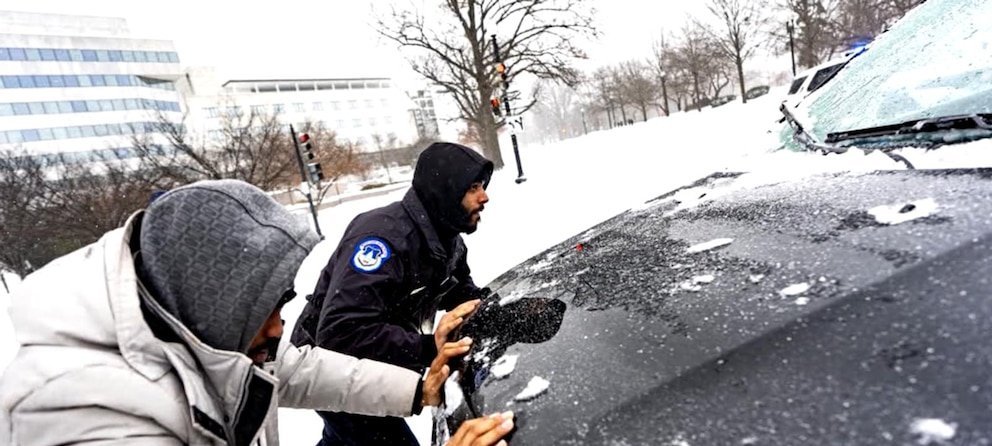
Imagem: Internet
Despite the storm’s wide footprint, meteorologists indicated that warming trends over the West limited the system’s duration. Forecasts called for temperatures to rebound gradually within forty-eight hours, allowing melt-off to begin. Even so, authorities warned that refreezing overnight could create black-ice hazards, underscoring the need for continued caution during morning commutes.
As conditions slowly improved, officials credited the rapid, coordinated response for preventing larger-scale casualties. While final damage assessments were still under way, preliminary reports pointed to dozens of minor injuries, several hundred vehicle accidents and scattered structural damage—figures considered moderate given the storm’s reach. Leaders emphasized that early planning, clear communication and what they described as “neighbor-helping-neighbor” initiatives played a decisive role in mitigating risk.
Utility companies urged customers to conserve energy until full grid stability could be confirmed. Road crews shifted their focus from plowing to pothole repair, anticipating cracks caused by rapid freezing and thawing. Public-health agencies reminded citizens to monitor carbon-monoxide levels when using alternative heat sources and to guard against thin ice on ponds and reservoirs as temperatures climbed.
In a briefing summarizing initial lessons learned, emergency-management directors highlighted the value of cross-jurisdictional resource sharing. Mutual-aid agreements allowed chainsaws, fuel supplies and heavy equipment to move swiftly between counties, reducing downtime and avoiding duplication. Technical specialists also cited the effectiveness of social-media dashboards that linked official bulletins with real-time crowd-sourced updates, making it easier to pinpoint stalled vehicles and downed wires.
With cleanup continuing, residents and officials alike acknowledged the commitment of front-line workers and civilian volunteers who braved treacherous conditions. Whether clearing roadways, manning shelters or checking on isolated households, their collective actions underscored the importance of community resilience during rare but consequential Southern snowstorms.
Crédito da imagem: ABC News