The prospect of SpaceX debuting on public markets as early as this summer has placed the company’s satellite-internet division, Starlink, under an intense spotlight. Analysts tracking the forthcoming initial public offering say Starlink is not merely a business unit; it is the financial engine that could define the market value of what is already the most valuable privately held firm in the world.
SpaceX reportedly posted a $5 billion net loss last year, largely tied to heavy spending on its artificial-intelligence venture xAI. Stripped of that outlay, the company’s core activities—orbital launches and satellite connectivity—generated an estimated $6 billion in earnings before interest, taxes, depreciation, and amortization (EBITDA). Those figures, combined with Starlink’s rapid global expansion, have driven private valuations to roughly $2 trillion, a size that would eclipse any prior U.S. technology IPO.
The Business Model Behind the Valuation
Starlink delivers broadband directly from low Earth orbit (LEO) to user-installed antennas on the ground. The network relies on satellites positioned between 340 and 750 miles above the planet, much closer than traditional geostationary craft located about 22,000 miles away. The shorter distance allows signals to travel faster, keeping latency near 25 milliseconds—similar to many fiber connections and far quicker than conventional satellite systems. This speed, paired with worldwide coverage, has already attracted more than nine million residential, commercial, and government customers.
A key differentiator is SpaceX’s vertical integration. The company designs, manufactures, launches, and operates the entire constellation in-house, reducing reliance on third parties and enabling rapid iteration of both spacecraft and supporting hardware. PitchBook research recently described this end-to-end control as a structural advantage that is difficult for competitors to replicate at scale.
Scale of the Constellation
Starlink currently maintains roughly 9,600 active satellites, accounting for about two-thirds of all operational payloads circling Earth. Launch cadence plays a decisive role: SpaceX adds close to 70 satellites each week, using its Falcon 9 rockets for regular deployment flights. At that pace, the constellation not only grows but is continually refreshed with updated hardware, including the newer V3 satellites capable of gigabit throughput.
To put the fleet’s magnitude in context, publicly available statistics from NASA list approximately 14,300 working satellites globally; Starlink alone represents the majority of that total. Such dominance grants SpaceX greater control over orbital resources and spectrum allocations, further consolidating its competitive position.
Customer Segments and Future Growth
Starlink’s user base spans multiple segments. Residential subscribers form the backbone of revenue, particularly in regions where terrestrial broadband remains slow or unreliable. The service has also found traction among enterprises requiring connectivity in remote locations, maritime operators seeking reliable data links at sea, and governmental agencies using the network for defense, humanitarian, and disaster-relief missions. Continued expansion into aviation and mobility markets could open new revenue streams as satellite terminals are tailored for aircraft, vehicles, and unmanned systems.
From a cost perspective, hardware prices have fallen since the service’s launch. Antenna units that once sold for several hundred dollars are now available at mainstream electronics retailers in multiple countries, indicating economies of scale in production. Reduced upfront costs lower barriers to entry for subscribers and support the company’s projection of double-digit million customers within a few years.
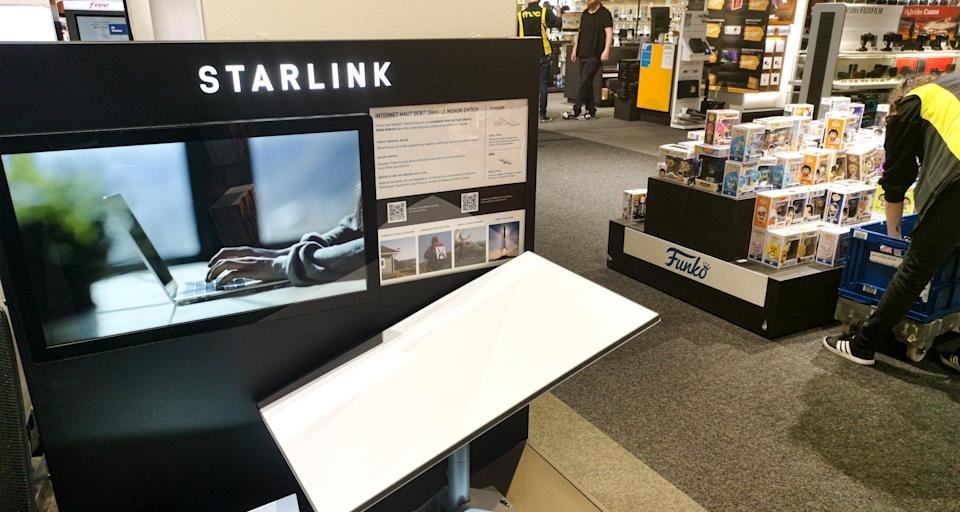
Imagem: Internet
Financial Implications for the IPO
The anticipated listing hinges on Starlink’s ability to convert subscriber growth into sustained cash flow. Approximately $6 billion in annual EBITDA—derived largely from Starlink and the launch division—suggests a robust foundation, but market observers will scrutinize capital expenditures required to maintain and expand the constellation. Each satellite has a design life of roughly five years, necessitating ongoing replenishment. However, SpaceX’s reuse of Falcon 9 boosters and progress toward its heavy-lift Starship system could temper launch costs over time.
In addition, the company’s foray into AI via xAI may continue to weigh on near-term profitability. Nonetheless, investors appear willing to tolerate those expenditures if Starlink’s recurring revenue base continues to climb. The prospect of capturing a sizeable share of the global broadband market, estimated by numerous industry studies at over one billion unserved or underserved households, underpins bullish expectations.
Regulatory and Competitive Landscape
Operating such a large constellation presents regulatory challenges. National telecom agencies must allocate spectrum and approve user terminals country by country, while international bodies monitor orbital congestion and collision risks. Competitors including Amazon’s Project Kuiper and OneWeb are working on their own LEO networks, potentially intensifying the race for orbital slots and radio frequencies. Yet SpaceX’s head start—both in satellite count and launch capacity—gives it leverage as policymakers draft rules governing this emerging sector.
Another factor is geopolitical demand. Governments seeking resilient communications infrastructure view LEO broadband as a strategic asset, increasing opportunities for long-term service contracts. Starlink’s use in remote or conflict areas has already demonstrated the practical advantage of an independent space-based internet layer, further elevating its strategic profile.
Outlook
Whether the public offering ultimately lands this summer or later in the year, the valuation math centers overwhelmingly on Starlink. Its constellation, subscriber momentum, and vertically integrated cost structure have combined to generate multibillion-dollar earnings and an unprecedented scale of satellite deployment. For prospective investors, understanding Starlink’s current performance and future capital needs will be essential to assessing what could become the largest technology IPO to date.