Customs and Border Protection data show the government has collected at least $89 billion in duties linked to the tariffs. If the Supreme Court rules against the measure, those funds could be subject to refund. Historical information on tariff collections is publicly available from the CBP’s official statistics portal.
The former president also expressed confidence in the Supreme Court’s forthcoming ruling, stating he looks “so much forward” to the outcome. The justices placed the case on an expedited calendar, reflecting the significant financial implications and the unresolved question of executive authority under IEEPA.
Events at the White House
While legal proceedings continue, several ceremonial and administrative events are set for the White House on Monday. At approximately noon Eastern Time, first lady Melania Trump is scheduled to receive the official 2025 White House Christmas tree on the North Lawn. Later in the day, at 4 p.m. ET, the president plans to sign an executive order. Details of the order have not been disclosed.
The tree-arrival ceremony is a long-standing tradition marking the start of holiday festivities at the executive mansion. In recent years, the event has included military bands and brief remarks by the first lady. This year’s tree is expected to follow similar protocols, featuring a horse-drawn carriage and a brief presentation to the press.
Congress Presses for Epstein File Release
Separately, Congress last week passed—by a wide bipartisan margin—legislation compelling the Department of Justice to release all remaining documents connected to the late financier and convicted sex offender Jeffrey Epstein. Trump signed the measure on Wednesday night, initiating a 30-day deadline for the department to disclose the files.
Lawmakers supporting the bill argued that public disclosure is essential to maintaining confidence in federal investigations. The Justice Department has not commented publicly on the timing or format of the forthcoming document release.
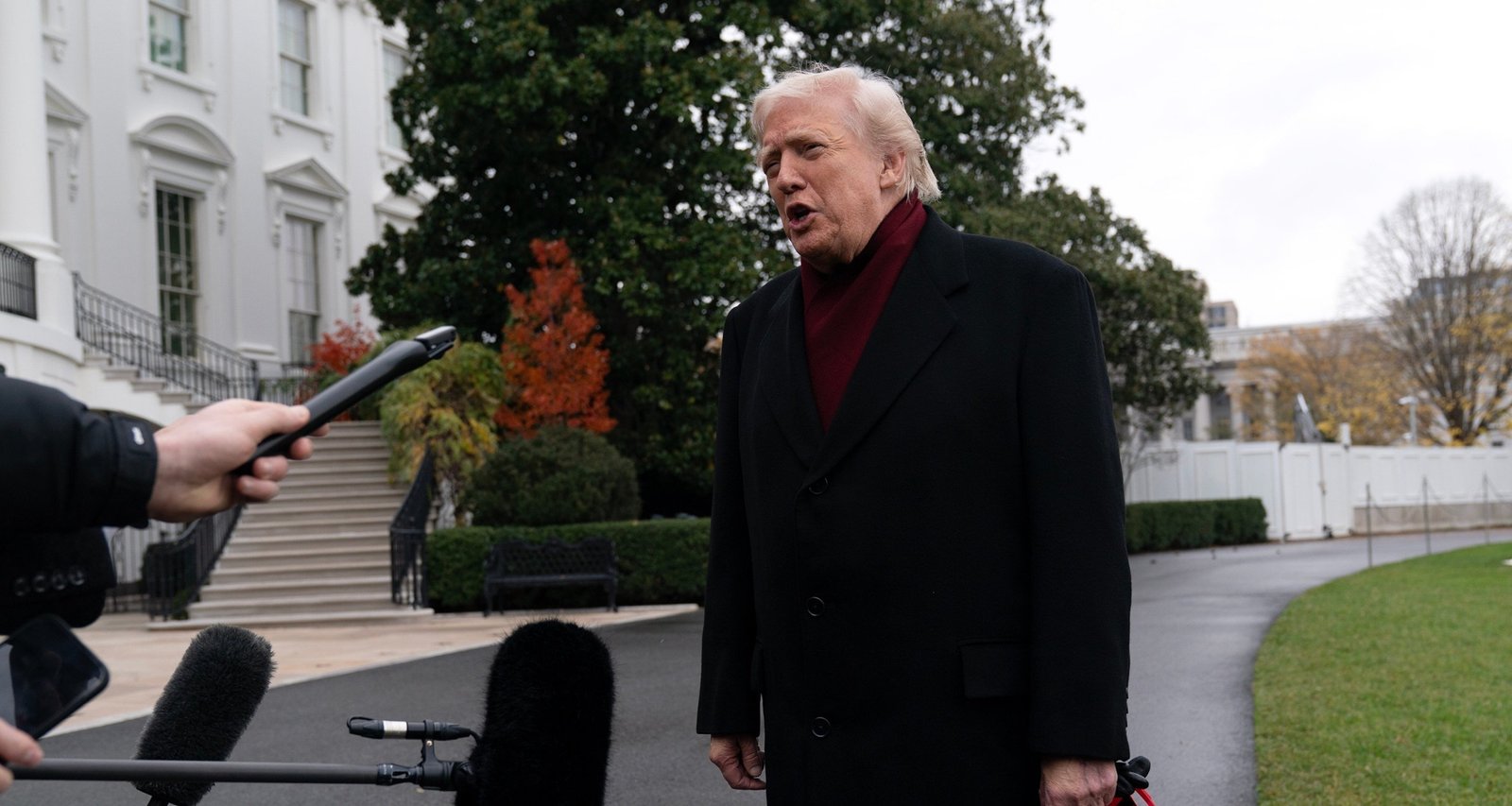
Imagem: Internet
Legal Foundations and Timeline
The core dispute before the Supreme Court centers on whether IEEPA offers sufficient statutory authority for imposing tariffs. Enacted in the aftermath of the Vietnam War, the law was intended primarily as a tool to regulate foreign assets when national security is threatened. More information on the act’s provisions can be found through the Congressional Research Service analysis.
Trump first implemented the contested duties after declaring a national emergency related to what he called threats posed by certain international economic practices. Plaintiffs in the case argue that duties fall outside the law’s intended scope and that only Congress holds clear constitutional authority to levy taxes. Government attorneys counter that the statute grants the president broad discretion to regulate international commerce in a security context.
The high court’s decision could influence future administrations’ reliance on emergency powers for trade measures. If the justices determine that IEEPA does not authorize tariff imposition, previously collected funds may have to be refunded, and similar future actions would require explicit congressional approval.
While the legal debate proceeds, tariff collections continue. Importers remain responsible for payments until the court issues its ruling. Analysts say refund mechanics would be complex, involving coordination among the Treasury Department, Customs and Border Protection, and affected companies.
For now, the White House is projecting confidence in both its legal position and its fiscal outlook, emphasizing potential gains once existing foreign inventories clear. Observers inside and outside government await the court’s opinion, which will define the boundaries of emergency economic powers for years to come.
Crédito da imagem: Jose Luis Magana/AP; Mariam Zuhaib/AP


