Commerce Secretary Howard Lutnick told CNBC that the measures are designed to shift a significant portion of Taiwan’s semiconductor supply chain to the United States. He indicated that firms choosing not to establish U.S. manufacturing could face tariffs of up to 100 percent on their American-bound products. Lutnick set an initial target of relocating roughly 40 percent of Taiwan’s chip production ecosystem to U.S. territory.
The accord arrives amid intensifying geopolitical competition over advanced semiconductors, which are critical for applications such as artificial intelligence, cloud computing and defense systems. U.S. policymakers have warned that heavy reliance on overseas fabrication represents a strategic vulnerability, especially if cross-strait tensions were to disrupt access to supplies produced by Taiwan Semiconductor Manufacturing Co. (TSMC) and its peers.
TSMC, the world’s largest contract chipmaker, already operates fabrication facilities in Arizona and has invested up to $40 billion in that state, aided by incentives from the CHIPS and Science Act. Lutnick said the company recently purchased “hundreds of acres” adjacent to its existing Arizona campus, a move that could support additional production lines. A TSMC spokesperson stated that final investment decisions depend on market conditions and customer demand but acknowledged strong interest in the firm’s advanced technologies.
Beyond tariff relief, the new framework grants clarity to semiconductor and technology companies unsettled by shifting U.S. trade policies over the past several years. Stakeholders now have defined terms governing component imports during plant construction, potential duty liabilities once facilities are operational, and the scale of public-sector financial support available on both sides of the Pacific.
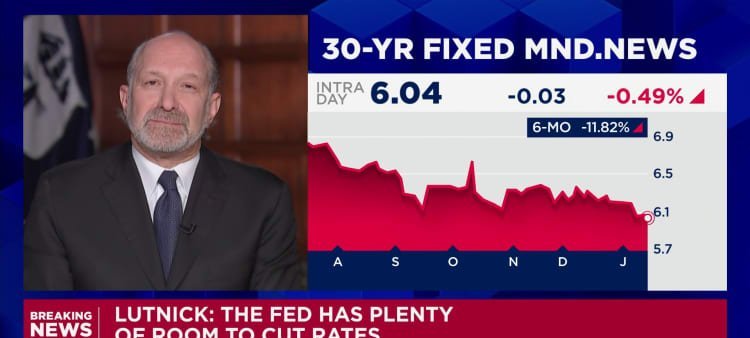
Imagem: Internet
Washington’s decision to waive tariffs on pharmaceutical inputs, aircraft parts and certain commodities is intended to foster broader commercial ties while complementing the semiconductor focus. By reducing costs for multiple industries, officials aim to encourage deeper bilateral supply chains and lessen dependence on third-country intermediaries.
The United States has made domestic semiconductor capacity a top economic and national-security priority. In testimony and public statements, officials have cited the risk of supply disruptions if China were to take aggressive action against Taiwan, a scenario that could curtail delivery of cutting-edge chips to U.S. manufacturers. Speaking Thursday, Lutnick said the long-term objective is to make the United States “self-sufficient” in producing the most advanced semiconductors.
Further details on implementation timelines, specific plant locations and eligibility criteria are expected in subsequent guidance from the Commerce Department and Taiwanese authorities. Industry analysts will also monitor how the tariff schedule interacts with existing CHIPS Act incentives and state-level subsidy programs.
Additional background on U.S. semiconductor policy can be found at the U.S. Department of Commerce, which oversees the CHIPS Act and related trade initiatives.
Crédito da imagem: CNBC


