Higher tariffs are hitting the market when domestic supplies are already constrained. The U.S. cattle herd is hovering near its smallest level in roughly 75 years, the result of prolonged drought that has thinned pastureland and pushed feed costs higher. Some imported fertilizers now carry double-digit duties, raising the expense of growing corn and soybeans used in animal rations. Tariffs on steel and aluminum have added to the price of tractors, grain bins and other essential equipment, leaving ranchers with less capital to expand operations.
Texas rancher James Clement III called the current downturn “one of the toughest cattle cycles in history.” Replacement heifers, crucial for rebuilding herds, have dropped to a 20-year low, and operators face a long timeline—often several years—to see returns on fresh livestock purchases. Political uncertainty, including the tariff regime, is discouraging some producers from retaining young females, Clement said.
Frustration among ranchers intensified in October when the White House announced a deal allowing limited beef imports from Argentina. The National Cattlemen’s Beef Association argued the move would undercut rural America. Analysts calculate the additional Argentine quota would represent less than 0.5% of U.S. consumption, or roughly one extra hamburger per person per year—an amount viewed by many producers as insufficient to influence retail prices.
While some ranchers wait for clearer economic signals, Clement continues to acquire heifers, describing cattle as a “great long-term investment.” Nevertheless, he acknowledged that the fragile supply chain leaves little margin for shocks.
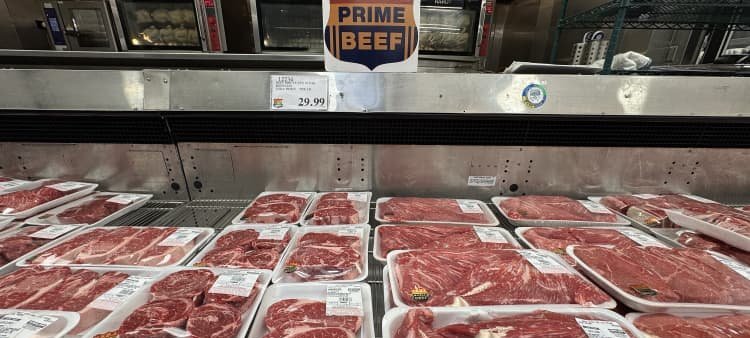
Imagem: Internet
The federal government has taken steps to address the shrinking herd. The U.S. Department of Agriculture recently unveiled initiatives aimed at encouraging new entrants into cattle production. Concurrently, administration officials have emphasized broader efforts to temper grocery bills on everyday staples such as bananas and coffee, both of which are imported and unaffected by domestic tariffs.
Economists warn that protectionist measures often shift costs onto consumers. “It’s politically easy to slap tariffs on foreign competitors, but the consumer usually ends up paying,” said Peter Boockvar, chief investment officer at OnePoint BFG Wealth Partners. Elevated beef prices may prompt households to switch to cheaper proteins like chicken, he added.
Beyond trade and weather, the sector is monitoring animal-health risks. U.S. Secretary of Agriculture Brooke Rollins recently led a USDA delegation to Mexico to coordinate defenses against the New World Screwworm. The parasitic fly, eradicated from the United States in 1966, has re-emerged in Mexican cattle and prompted a halt to Mexican beef imports. If detected early, infected animals can recover, but the larvae can cause severe tissue damage.
The combination of supply disruptions, escalating production costs and disease threats continues to pressure the beef market. Ranchers such as Clement say they will adapt, but rebuilding national herd numbers will require time, adequate rainfall and sustained investment.
Crédito da imagem: Bloomberg


