Federal officers and Guard personnel were first deployed to Portland in June, when nightly protests intensified following several high-profile incidents of police violence nationwide. Clashes, graffiti, and property damage were reported near the ICE facility and other federal buildings. City officials openly criticized the federal response, accusing agents of excessive force and rejecting the administration’s broader law-enforcement strategy.
While the legal dispute unfolds, the president is scheduled to begin the public portion of his week with a meeting on Monday afternoon with the White House Task Force overseeing preparations for the 2026 FIFA World Cup, which the United States is co-hosting with Canada and Mexico. Later in the day, he is expected to deliver remarks at a policy summit in Washington. Neither event is directly connected to the Oregon litigation, but White House aides said they anticipate questions about the matter during media availabilities.
The administration’s focus on public safety has drawn criticism from within the president’s own party. Last week, Rep. Marjorie Taylor Greene sharply rebuked the White House on topics ranging from border security to the handling of the Jeffrey Epstein investigation, punctuating a public rift that dominated political headlines. The disagreement marked one of the most prominent intraparty clashes of the fall legislative session.
Separately, the federal government continues to bring operations back to normal following the longest shutdown in U.S. history. The Federal Aviation Administration announced that flight reductions affecting 40 major airports would end at 6 a.m. Eastern Time on Monday, allowing airlines to resume standard schedules. Additional information about the restoration of air-traffic services is available on the FAA’s official website.
Legal analysts expect the Ninth Circuit to review the stay request swiftly, although no timetable has been set. If the appellate court grants the motion, the National Guard units could remain under federal command while the merits of the appeal are considered. If the stay is denied, the administration would have to comply immediately with Judge Immergut’s injunction, potentially prompting further appeals to the Supreme Court.
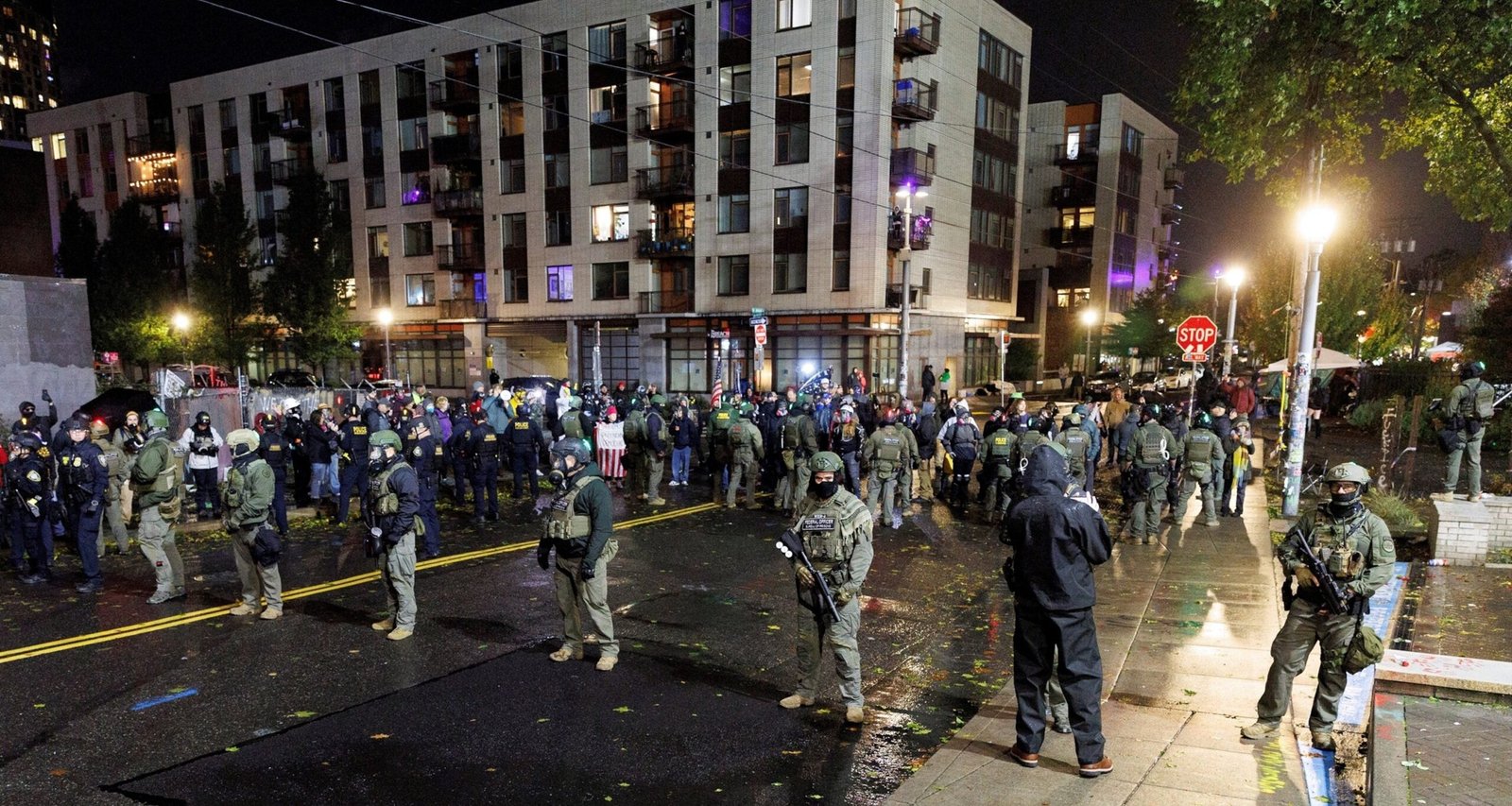
Imagem: Internet
The Justice Department’s brief emphasizes what it describes as a pattern of sporadic but continuing unrest in Portland through October. According to the government, incidents of vandalism, arson attempts, and threats against federal personnel persisted despite a reduction in crowd size compared with the summer peak. The filing states that these conditions supported the president’s determination that federal intervention remained necessary in order to protect federal facilities and employees.
City leaders in Portland maintain that local and state law-enforcement agencies are capable of addressing any residual disruptions without federalized Guard support. The city’s official communications have repeatedly condemned both violent conduct by a minority of demonstrators and what officials call disproportionate tactics by federal officers. Oregon’s governor has likewise opposed federal deployments, asserting that state National Guard units should remain under her command absent an explicit request for assistance.
The confrontation over executive authority adds to a series of legal challenges that have defined the final year of the Trump administration. Recent rulings have scrutinized the president’s use of emergency powers, his approach to immigration enforcement, and the scope of federal involvement in local policing. The outcome of the Oregon case could shape future interpretations of the Insurrection Act and the balance of responsibility between state governments and Washington during periods of civil unrest.
For now, the Ninth Circuit will decide whether federalized Guard members continue operating in Portland while the courts weigh the underlying constitutional and statutory questions. Observers expect further filings from both sides in the coming days as the legal battle enters its next phase.
Crédito da imagem: John Rudoff/Reuters


