Wall Street reacted swiftly. Shares of Invitation Homes, the nation’s largest single-family landlord, fell roughly 6% during Wednesday trading. Blackstone, a major investor in single-family and multifamily properties, slid more than 5%, while Apollo Global Management declined by a similar margin.
Market data illustrate the affordability squeeze. The National Association of Realtors reported the national median price for an existing single-family home at $426,800 in the third quarter of 2025, slightly below the record $435,300 reached during the summer. Meanwhile, the average rate on a 30-year fixed mortgage stood at 6.19% on Wednesday, according to Mortgage News Daily, adding to monthly payment burdens even as price growth moderates.
Blackstone remains the largest private-equity owner of apartments in the country, holding more than 230,000 units, according to the Private Equity Stakeholder Project. In recent years the firm has spent billions of dollars acquiring companies such as Tricon Residential, American Campus Communities and AIR Communities to expand its rental platform.
Trump did not specify how a federal ban would be structured or enforced. He said additional details will be presented during a speech at the World Economic Forum in Davos, Switzerland, scheduled for two weeks from now. The annual gathering attracts political leaders and CEOs, offering a global stage for policy announcements.
Congressional reaction emerged quickly. Senator Tim Scott, who chairs the Senate committee that oversees housing policy, endorsed efforts to make ownership more attainable but pointed to his own bipartisan “ROAD to Housing Act” as a preferable approach. Scott said the measure, which passed the committee unanimously, focuses on expanding supply and lowering costs for first-time buyers. He added that 2026 should be the year lawmakers “get housing affordability right for working families.”
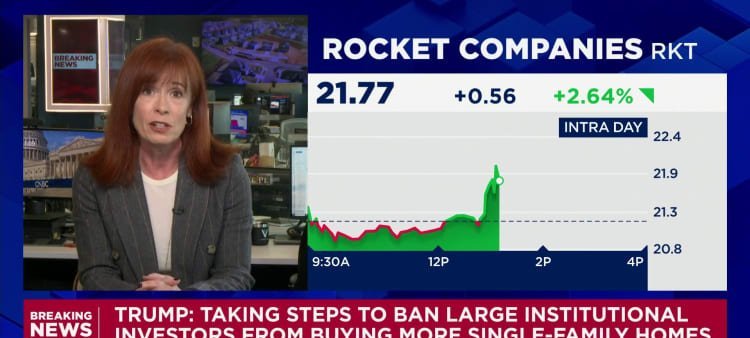
Imagem: Internet
Industry participants have long defended institutional investment, asserting it finances the construction and renovation of rental properties and offers professionally managed housing. Housing advocates counter that corporate buyers can outbid individuals, use scale to extract higher rents and deploy algorithms to set prices. A comprehensive overview of corporate homeownership’s influence on pricing and supply is available from the National Association of Realtors, which tracks ownership trends and market dynamics.
Legal scholars note that an outright federal ban would face logistical and constitutional questions, including potential challenges under property and contract clauses. Existing state laws governing landlord-tenant relations and zoning would also intersect with any federal restrictions, complicating enforcement.
While Trump framed inflation as a primary driver of unaffordability, economists point to a range of factors, including decades-long underbuilding, pandemic-era migration, and labor and material shortages that slowed residential construction. The Commerce Department reported housing starts rebounded in 2024 but remain below the pace needed to close the estimated national deficit of several million units.
The former president’s call adds housing to a growing list of economic themes likely to feature in the 2026 election cycle. Both parties have introduced legislation aimed at boosting supply, reforming zoning, and expanding down-payment assistance, though consensus on federal intervention in private real-estate markets remains elusive.
For now, Trump’s statement has injected new uncertainty into the single-family rental sector, prompting investors to assess potential regulatory risks. Market analysts said trading volatility may persist until clearer policy language emerges from the forthcoming Davos address or from draft legislation on Capitol Hill.
Crédito da imagem: CNBC


