Signatories and absentees
The countries represented at the signing included Albania, Argentina, Armenia, Azerbaijan, Bahrain, Belarus, Bulgaria, Egypt, Hungary, Indonesia, Israel, Jordan, Kazakhstan, Kosovo, Kuwait, Mongolia, Morocco, Pakistan, Paraguay, Qatar, Saudi Arabia, Turkey, the United Arab Emirates, Uzbekistan and Vietnam. Officials close to the process said additional confirmations could arrive in the coming days, bringing the total near 30.
France, Norway and Sweden publicly declined the invitation, citing apprehension about duplicating the work of established multilateral institutions. Germany, the United Kingdom and Italy remained undecided. Yvette Cooper, the U.K. foreign secretary, told the BBC that London would stay on the sidelines for now, pointing to ongoing Russian military operations in Ukraine and expressing doubt about Moscow’s inclusion in any peace forum.
Moscow weighs participation
The Kremlin confirmed receipt of an invitation. During a meeting of Russia’s Security Council, President Vladimir Putin said the proposal “primarily concerns settlement in the Middle East” and improvements to Gaza’s humanitarian situation. He added that Russia might fund its required contribution using assets currently frozen under U.S. sanctions, if membership terms are finalized.
Washington’s outreach to Moscow has added to European hesitation. Several diplomats said privately they are wary of appearing in the same founding group as Russia while the war in Ukraine continues. A senior NATO official noted that any platform granting Russia new diplomatic standing “will be examined very carefully.”
Comparison with the United Nations
Asked earlier this week whether the Board of Peace could someday replace the U.N., President Trump replied that “it might,” though he also said the two bodies could collaborate. In Davos, he called the new entity “the most prestigious board ever assembled” and argued that it would “accomplish work the United Nations should have done.” His comments heightened speculation that Washington intends to promote the Board as an alternative venue for international diplomacy.
The United Nations, founded in 1945, currently counts 193 member states and oversees peacekeeping missions, humanitarian relief and international law. According to U.N. statistics, 87,000 uniformed personnel serve in 12 peace operations worldwide. European diplomats insist that the global system remains indispensable, warning that parallel structures could fragment resources and political will.
Leadership team and governance
An executive committee is set to supervise day-to-day operations. U.S. officials identified former British prime minister Tony Blair, Canadian prime minister Mark Carney and U.S. secretary of state Marco Rubio as members, alongside special envoy Steve Witkoff and Trump’s son-in-law Jared Kushner. Committee members will draft operational guidelines and oversee budget allocations once funding pledges are formalized.
Despite Trump’s high-profile rollout, the White House has not published the full invitation list, nor the detailed financial framework. Diplomats from nations that have not yet signed said they are requesting clarity on voting procedures, dispute-resolution mechanisms and safeguards to prevent any single country from exercising outsized influence.
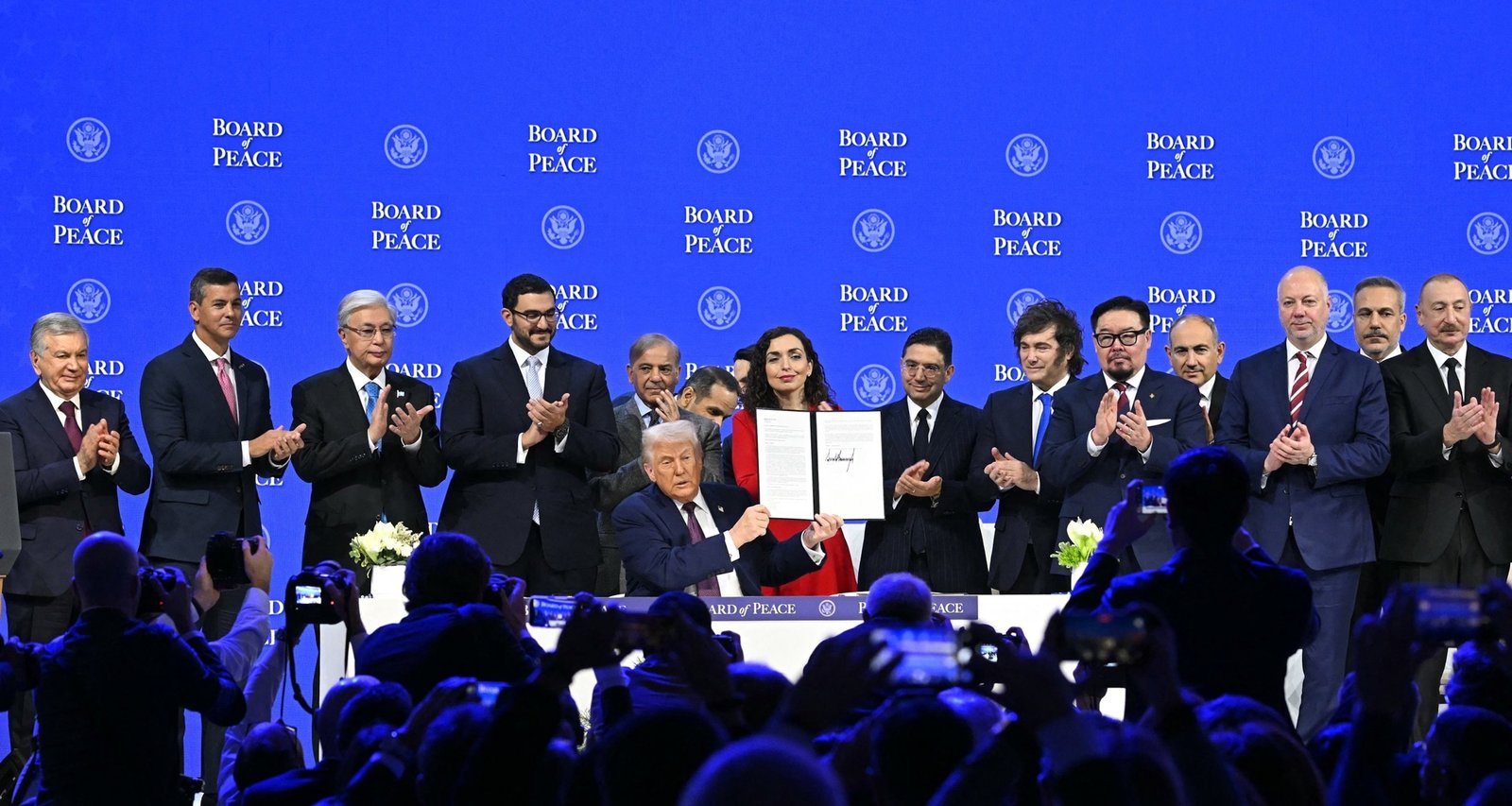
Imagem: Internet
Financial structure under scrutiny
The potential for permanent seats tied to billion-dollar donations has drawn criticism from transparency advocates. A spokesperson for the non-profit Global Accountability Network said the arrangement “raises questions about pay-to-play governance.” U.S. officials counter that large early contributions will accelerate urgent humanitarian projects, particularly in Gaza, and emphasized that no state is obligated to pay.
Putin’s suggestion of using frozen Russian assets adds another layer of complexity. European Union officials note that reallocating those funds would require legal agreements among sanctioning countries, and could spark debate over precedents for repurposing seized assets.
Focus on Gaza and beyond
The Gaza crisis remains the initiative’s immediate test. The Board inherits a Security Council mandate that expires in late 2027, tasking it with coordinating reconstruction and security in the enclave. However, the charter’s broader language—omitting any direct mention of Gaza—signals an ambition to engage in conflicts elsewhere. Observers say the body may attempt to mediate disputes in the Sahel, the Caucasus and parts of South Asia once fully operational.
Special envoy Witkoff told CNBC that up to 25 nations had accepted invitations before Thursday’s ceremony and predicted more would follow. He framed the Board as a “coalition of the willing” able to move faster than larger organizations. Critics, however, argue that space for new diplomatic structures already exists within regional organizations and specialized U.N. agencies.
Next steps
Member states are expected to nominate delegates within 60 days and meet again in Washington this spring to adopt bylaws and finalize funding commitments. Construction of a permanent headquarters has not been announced, though Trump said a shortlist of potential host cities will be circulated after initial consultations.
Until full membership is confirmed, interim offices will operate out of New York and Geneva, staffed by seconded diplomats and technical experts. Early projects are likely to include coordinating humanitarian corridors in Gaza, facilitating cease-fire talks between regional militias and designing a trust fund for post-conflict reconstruction.
Whether the Board of Peace can attract the endorsement of key European capitals—and how it will coexist with the United Nations—remains uncertain. For now, the new organization moves forward with support from a diverse but still limited group of countries, many of which view Washington’s backing as a motivation to participate, while larger allies adopt a wait-and-see approach.
Crédito da imagem: Fabrice Coffrini/AFP via Getty Images


