The majority opinion stated that Congress, not the White House, holds constitutional authority over tariffs and taxes. Three conservative justices—Samuel Alito, Clarence Thomas and Brett Kavanaugh—dissented. Reading from Kavanaugh’s dissent during a White House briefing, Trump noted that the justice believed future presidential tariff authority might remain largely intact.
Legal constraints and congressional role
Because Section 122 limits new duties to 150 days without legislative approval, the administration would need Congress to extend the tariffs before the mid-August deadline. When asked Friday whether he would seek such authorization, Trump said he believed he could “do pretty much what we want to do,” signaling no immediate plan to request statutory backing even though Republicans control both chambers.
Katyal responded on X (formerly Twitter) that relying on Section 122 conflicted with earlier Justice Department arguments that the statute was not applicable to tariffs linked to trade deficits rather than balance-of-payments emergencies. He urged the president to “do the American thing and go to Congress” if sweeping duties are deemed essential.
Scope and exemptions
A White House fact sheet indicated that the 10%—and potentially 15%—tariffs apply broadly to imports from countries with U.S. trade agreements, including the United Kingdom, Japan, India and the European Union. Existing bilateral deals with Japan and India currently set higher rates of 15% and 18%, respectively, meaning the new proclamation would lower duties on those products.
Several categories are exempt, among them beef, automobiles, pharmaceuticals and selected electronics. Goods shipped from Canada and Mexico under the U.S.–Mexico–Canada Agreement will not face the additional duty. The president also renewed a suspension of the de minimis exemption that previously allowed shipments valued under $800 to enter the United States duty-free. As a result, low-cost parcels from online retailers such as Shein and Temu will be subject to the new global tariff.
Economic impact and industry reaction
The Tax Foundation, a Washington-based policy group, estimates the latest measure will raise the average household’s tax burden by roughly $700 in 2026, down from an estimated $1,000 under last year’s higher levy. Erica York, the organization’s vice president for federal tax policy, said the shift to Section 122 preserves “quite a high rate on U.S. imports compared to where we were before Trump came into office,” while leaving businesses uncertain about future trade costs.
York warned that the temporary nature of the tariffs could discourage long-term planning and investment: “There’s a lot of chaos and uncertainty, and that itself can take a toll on business decisions and financial planning.” Her assessment aligns with other analysts who say frequent policy changes complicate supply-chain strategies.
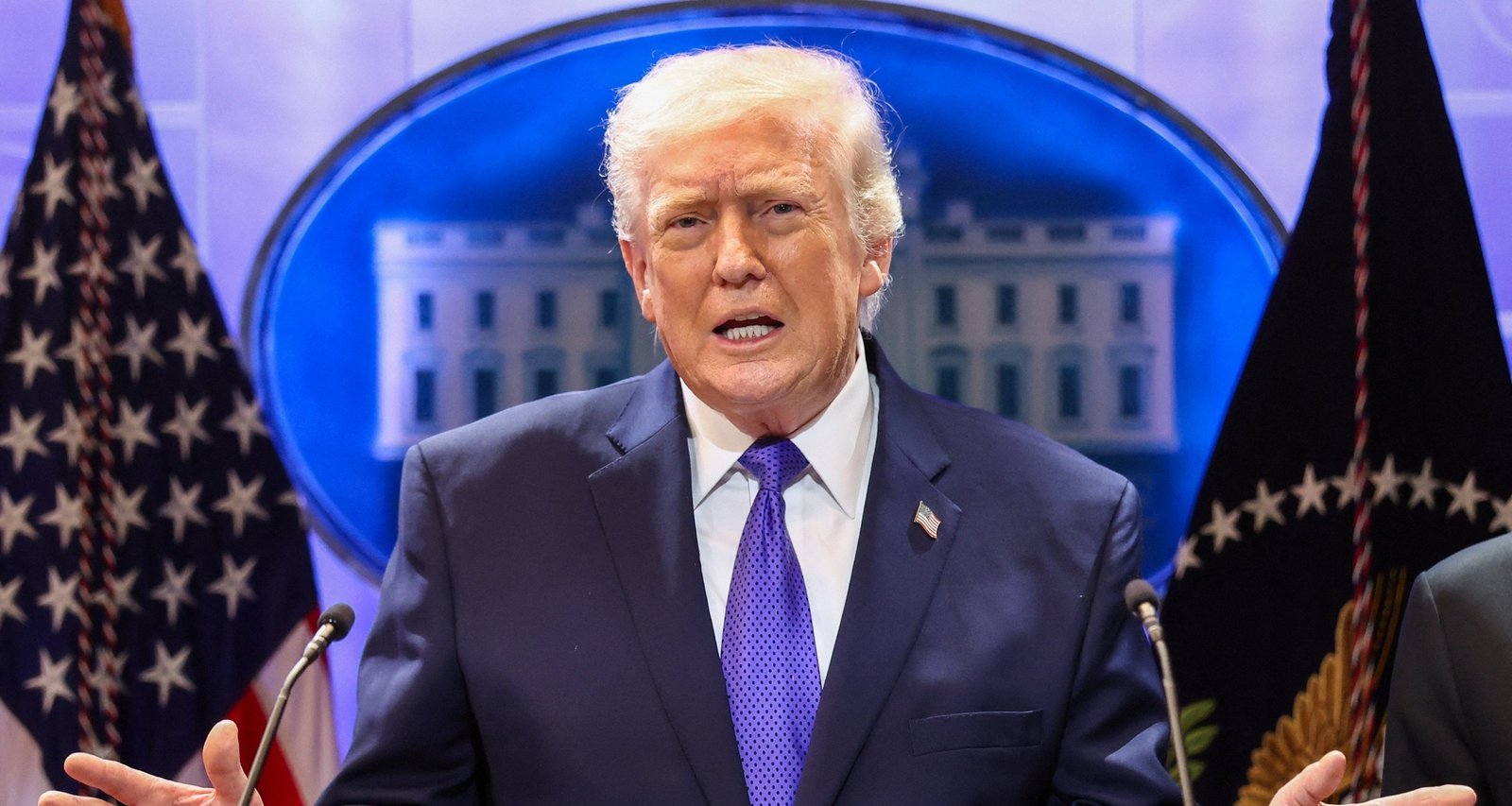
Imagem: Internet
Potential Section 301 investigations
Trump told reporters he will initiate investigations under Section 301 of the Trade Act of 1974, which permits retaliatory measures against unfair foreign trade practices. He did not identify specific countries or sectors but noted the inquiries could take weeks or months to complete. Section 301 investigations were a hallmark of the administration’s first-term trade battles, particularly with China.
According to the Yale Budget Lab, the Treasury has collected $142 billion from Trump-era tariffs as of December. The president suggested he would fight any effort to refund duties deemed unlawful following the Supreme Court ruling, predicting the issue could take “five years” to resolve in court.
Political dimension
Trump lashed out at the justices who joined the majority opinion, calling them “fools and lapdogs for the RINOs and radical left Democrats,” and said their families “should be embarrassed.” He praised the dissenting justices, adding that Justice Kavanaugh’s “stock has gone so up.” In the president’s view, countries that “have been ripping us off for years” are celebrating the ruling, but “they won’t be dancing for long.”
The dispute underscores the ongoing tension between the executive and judicial branches over trade authority. While the administration searches for legal pathways to preserve its tariff agenda, the court’s decision reinforces Congress’s central role in shaping U.S. trade policy. The text of Section 122, available on Congress.gov, outlines the limits the White House now faces.
For businesses and consumers, the immediate concern is whether the 15% rate will be implemented on Tuesday alongside the 10% duty or if the higher figure will be phased in later. The White House has not released implementing instructions, leaving importers to prepare for potential price increases within days.
More broadly, the administration’s decision to pursue Section 122 tariffs foreshadows a new round of debates on Capitol Hill. Lawmakers will soon have to decide whether to extend, modify or block the duties before the 150-day window closes, setting the stage for another pivotal fight over the direction of U.S. trade policy.
Crédito da imagem: Mandel Ngan/AFP via Getty Images


