Images from the week show heavily armed officers standing guard outside the Bishop Henry Whipple Federal Building while demonstrators demanded accountability. Protests erupted within hours of Pretti’s death and have continued across Minneapolis-St. Paul, at times leading to clashes with law enforcement.
Political fallout reaches Washington
The shooting has placed DHS Secretary Kristi Noem under scrutiny. A nationwide Quinnipiac University poll released Wednesday found that 58% of registered voters believe Noem should be removed from her post. Support for her dismissal was strongest among Democrats at 91%, while 62% of independents agreed. Seventy-four percent of Republicans favored her remaining in office.
Noem drew criticism after initially claiming, without offering evidence, that Pretti intended “to inflict maximum damage on individuals and to kill law enforcement.” She later retracted the remark, saying officials had relied on “the best information we had at the time.” The same poll indicated that 61% of respondents think the administration has not provided an honest account of the shooting.
The survey interviewed 1,191 self-identified registered voters from Jan. 29 to Feb. 2 and carries an overall margin of error of ±3.6 percentage points.
Local leaders demand end to Operation Metro Surge
Minneapolis Mayor Jacob Frey welcomed the partial withdrawal of federal personnel but called it insufficient. In a written statement, he argued that the presence of an estimated 2,000 Immigration and Customs Enforcement officers “is not de-escalation.” Frey said the operation has generated widespread fear and harmed businesses, adding that “Operation Metro Surge has been catastrophic for our residents and businesses. It needs to end immediately.”
Community organizations have echoed the mayor’s concerns, attributing declining foot traffic in commercial corridors to a climate of intimidation created by the large federal presence.
Schools file lawsuit over enforcement near campuses
Meanwhile, a coalition of Minnesota school districts and educators filed suit in federal court on Wednesday, alleging that immigration operations near schools and bus stops have produced a “pervasive climate of fear” and lowered attendance. The plaintiffs seek a court order barring agents from conducting enforcement on or near educational property without a judicial warrant.
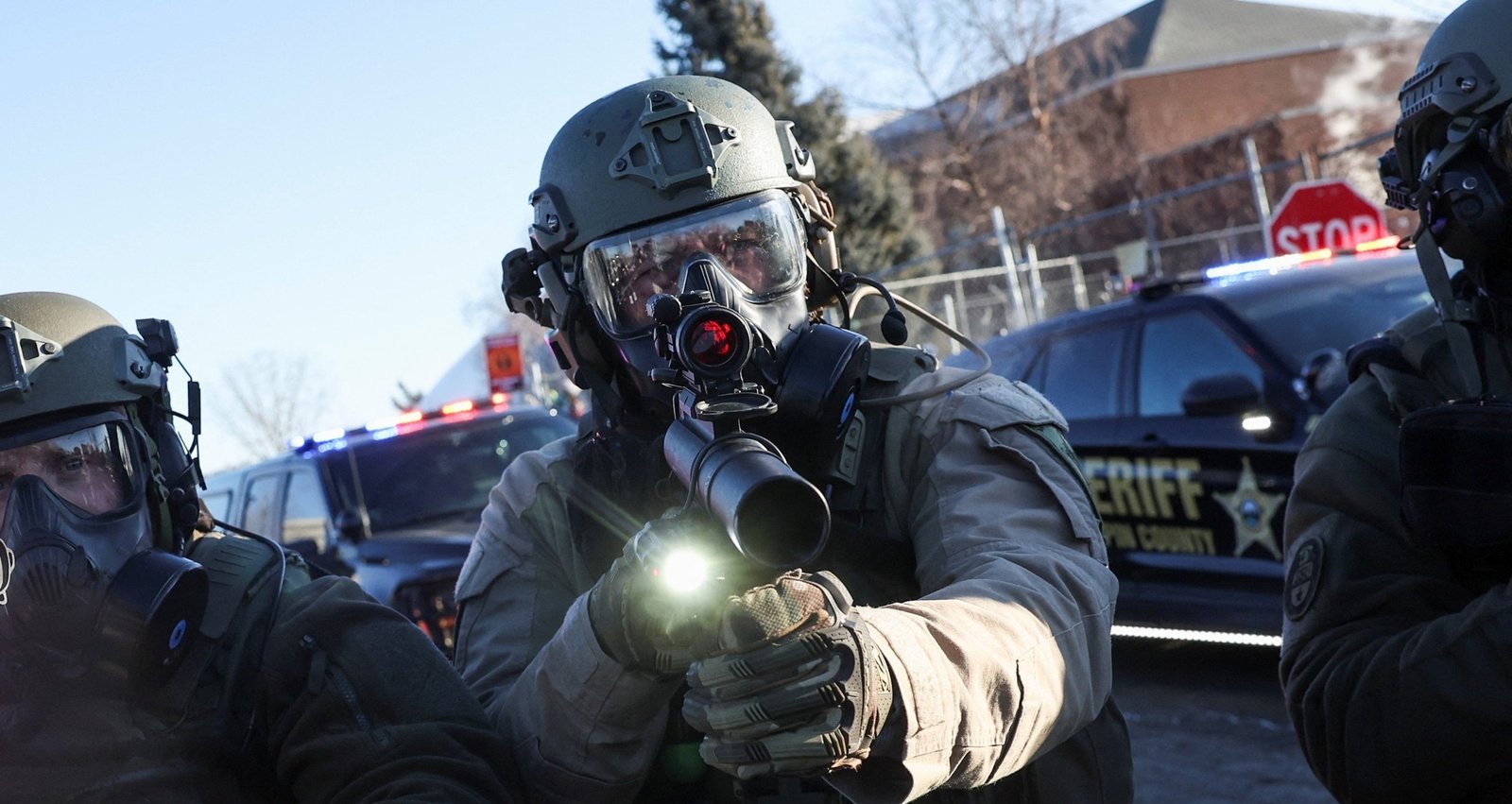
Imagem: Internet
The complaint states that for more than three decades, federal policy has limited immigration actions at “sensitive locations,” which include schools. Lawyers for the districts argue that Operation Metro Surge disregards those restrictions, citing multiple reports of agents near campuses since early January. One incident described in the suit involved U.S. Border Patrol agents detaining an individual outside Roosevelt High School during dismissal on Jan. 7.
The plaintiffs contend that the federal government can carry out immigration laws without “denying or limiting children access to their schools,” referencing long-standing guidance detailed by DHS. A recent analysis by the Migration Policy Institute (migrationpolicy.org) notes that sensitive-location policies have historically reduced the likelihood of enforcement actions at schools, houses of worship and hospitals.
Community tensions remain high
Pretti’s shooting further inflamed grievances following the Jan. 7 killing of Renee Good, a Minneapolis mother whose death also involved federal agents. Civil-rights advocates argue that both cases illustrate excessive force and insufficient oversight during Operation Metro Surge, which was launched to accelerate immigration enforcement in the Minneapolis-St. Paul metropolitan area.
Activists have organized nightly vigils and marches demanding an independent investigation. Some gatherings have turned confrontational, with authorities using crowd-control measures to disperse demonstrators blocking intersections or federal buildings.
Next steps for federal officials
The White House has not provided a timeline for concluding Operation Metro Surge. Trump’s comments suggest a potential recalibration rather than a full termination. DHS has said internal reviews of the Pretti and Good shootings are underway, and results will be shared “when complete.”
Separately, congressional committees have requested briefings on the operation’s scope, the use-of-force protocols applied by agents and the decision-making process that led to large-scale deployments in Minnesota.
For now, Minneapolis remains under a mixed security posture: federal agents continue patrols in certain neighborhoods, while local police maintain primary jurisdiction elsewhere. Residents, educators and business owners are watching closely to see whether the promised “softer touch” translates into diminished tension—or whether further confrontations will deepen the city’s unrest.
Crédito da imagem: Reuters