Agency documents characterize critical minerals as fundamental to technologies such as electric vehicles, semiconductors, aerospace components and grid-scale batteries. U.S. Geological Survey analysts have repeatedly warned that global supply of many of these resources is concentrated in a small number of countries, with China dominating extraction or processing in several cases.
Financing and commercial participation
EXIM Chairman John Jovanovic said the bank is already in discussions with companies that plan to align their development projects with the new reserve. By allowing project sponsors to rely on guaranteed offtake or price floors supplied by the stockpile, EXIM expects firms to achieve financial close and accelerate construction schedules.
Equipment manufacturers, including GE Vernova, Western Digital and Boeing, have signaled preliminary interest, according to information released Monday. General Motors Chief Executive Officer Mary Barra attended the White House launch and emphasized the importance of stable mineral inputs to the automotive sector’s transition toward electrification.
The administration’s blueprint calls for most of the mineral purchases to be sourced from U.S. producers whenever feasible, while permitting imports to fill gaps in domestic output. Officials said that multiple warehouse locations have been secured, though specific sites were not disclosed. Material will be stockpiled in processed or semi-processed form so that it can be deployed directly into industrial supply chains if disruptions occur.
Link to broader mineral strategy
Project Vault expands a policy framework that has steadily evolved over the past two years. In July, the Department of Defense entered a landmark agreement with MP Materials, the operator of the Mountain Pass rare earth mine in California. The deal included an equity stake, an offtake arrangement and a price floor intended to protect the company from market volatility linked to state-subsidized competitors overseas.
More recently, the Commerce Department outlined plans to finance USA Rare Earth in exchange for an ownership position, pending the completion of closing conditions. Similar federal backing has been directed toward Lithium Americas and Trilogy Metals, reflecting the administration’s willingness to invest public funds directly in upstream projects.
During an energy conference in Oklahoma City last April, Interior Secretary Doug Burgum disclosed that a sovereign risk-insurance facility is under consideration. That instrument would shield U.S. mining investments from potential cancellation or policy reversals by future administrations. Burgum described stockpiling, sovereign insurance and equity participation as the three central pillars required to reinforce the domestic mineral sector; Project Vault represents the first of those pillars to move into operational status.
Geopolitical context
Washington’s push to secure mineral supplies follows a period of rising trade friction with Beijing. Last year, Chinese authorities signaled the possibility of restricting exports of certain rare earth elements during bilateral disputes. Although such restrictions were not fully enacted, the episode heightened concerns about the vulnerability of U.S. manufacturing to overseas supply shocks.
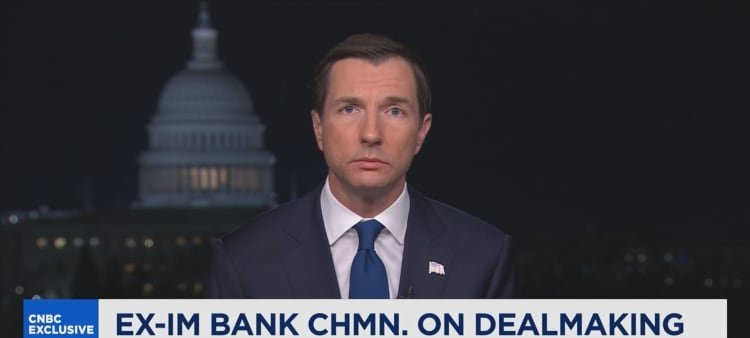
Imagem: Internet
China currently dominates global rare earth refining and maintains significant influence over processing capacity for lithium, graphite and other battery materials. By creating a strategic reserve that sources from multiple jurisdictions and backs domestic extraction, the administration aims to reduce exposure to a single supplier and strengthen alternative supply corridors among allied nations.
Implementation and next steps
EXIM officials are drafting term sheets that define how private entities can draw upon the reserve. Possible mechanisms include pre-purchasing stored material at fixed prices, using inventory as loan collateral, or entering swap agreements that allow companies to borrow minerals temporarily. Final program rules are expected to be published in the coming months.
In parallel, the Interior Department is coordinating with the Department of Defense and Department of Energy to identify the most urgent materials for initial procurement. Agency staff will evaluate market data, existing commercial contracts and projected demand from domestic manufacturers before authorizing purchases.
Industry analysts anticipate that rare earth magnets, battery-grade lithium chemicals and high-purity copper could be among the earliest additions to the stockpile, given their importance to electric vehicles, grid storage and aerospace systems. However, administrators maintain that any mineral on the official list is eligible if market conditions warrant.
Federal officials have not provided a target tonnage or cost estimate for the total inventory, citing the dynamic nature of prices and demand. They indicated that procurement volumes will be adjusted periodically to reflect consumption trends and geopolitical risk assessments.
Trade groups representing the mining sector welcomed the launch, arguing that predictable government demand can unlock private financing for new projects. Environmental organizations have urged regulators to balance strategic objectives with rigorous oversight of extraction and processing operations, particularly on public lands.
With Project Vault now officially established, the administration expects initial mineral deliveries to reach storage facilities by late 2025. Further details on warehouse locations, inventory auditing procedures and release protocols are scheduled for release after the program’s operating guidelines undergo interagency review.
Crédito da imagem: CNBC