House Speaker Mike Johnson, Republican of Louisiana, kept the chamber in session well past the expected voting window to gather the necessary support. With a razor-thin majority, Johnson could afford to lose only one Republican vote once Democrats signaled they would not help adopt the rule. Several GOP members withheld their votes as leverage to secure consideration of a separate voter-identification proposal known as the SAVE Act. Representative John Rose of Tennessee initially cast a “no” vote, aligning with the holdouts and leaving the outcome in doubt.
During an intense stretch on the House floor, senior Republican leaders pressed the remaining dissenters. Rose eventually flipped his vote to “yes,” and other holdouts followed suit, allowing the procedural hurdle to clear. Johnson then moved quickly to the final vote on the funding bill itself. Although the margin was tight, the measure passed with bipartisan backing.
Representative Rosa DeLauro of Connecticut, the lead Democratic negotiator on the spending bills, urged her caucus to support the package despite lingering reservations. DeLauro argued that separating the DHS allocation into a short-term extension would strengthen Democrats’ position in upcoming talks over immigration restrictions attached to the department’s full-year budget.
Several Democrats and a faction of Republicans nevertheless opposed the overall legislation. Their objections ranged from the absence of stricter border provisions favored by some conservatives to concerns among progressives about defense spending levels. Ultimately, a sufficient blend of votes from both parties propelled the measure to passage.
The Senate had removed full-year DHS funding from the package after two U.S. citizens were killed by federal immigration officers. That incident intensified debate over enforcement practices and prompted lawmakers to postpone a longer commitment for the department. As a result, DHS now operates under temporary funding that expires in two weeks, forcing Congress and the White House to revisit the issue almost immediately.
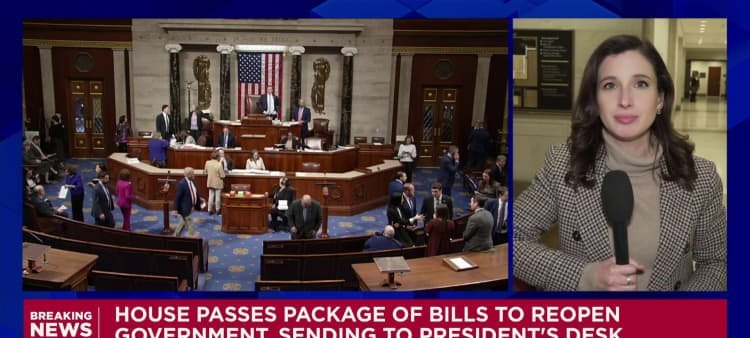
Imagem: Internet
Speaking to reporters on Tuesday morning, Johnson expressed confidence that the House would approve the rule and the underlying bill despite internal friction. “We’re governing responsibly and we’re getting the job done,” the speaker said, adding that negotiations over the unresolved DHS component would proceed in the coming days.
Democratic Leader Hakeem Jeffries of New York had earlier informed Johnson that his caucus would not supply votes to advance the rule, compelling the speaker to unify his conference. The dynamic became more acute after a newly sworn-in Democratic member reduced Johnson’s margin for error to a single vote on any party-line motion.
The brief shutdown that ended Tuesday had shuttered large segments of the federal government for roughly four days. Affected agencies began the process of recalling furloughed employees and resuming full operations shortly after Trump signed the bill.
Attention now shifts to crafting a DHS spending bill that can satisfy both chambers and avoid another lapse in funding. Lawmakers are expected to confront contentious questions over detention limits, asylum procedures, and internal oversight of immigration enforcement. According to a Congressional Research Service overview, debates over immigration provisions are among the most frequent triggers for short-term spending extensions in recent years.
Should negotiators fail to reach agreement by the new deadline, Congress may need to pass another temporary measure or face renewed shutdown risks confined to Homeland Security. For now, the signed legislation ensures that most federal departments and programs remain funded through the end of the fiscal year.
Crédito da imagem: CNBC