Historical data compiled by the Government Accountability Office show the previous longest shutdown, lasting 35 days in 2018–2019, was eclipsed by the current 49-day lapse. Administrative offices have already begun coordinating the restart of public services, including processing of small-business loans, passport applications and scientific research grants.
President Maintains Political Pressure
Moments after endorsing the bill, Trump urged voters to remember what he called the “damage” linked to Democratic leadership when casting ballots in next year’s midterm elections. He cited flight delays, missed paychecks for federal workers and the temporary depletion of Supplemental Nutrition Assistance Program funds as examples of consequences that, in his view, could have been avoided.
Throughout the shutdown, the White House and Republican allies argued that Democrats prioritized partisan leverage over routine governance. Democratic leaders countered that the impasse stemmed from disagreements over spending levels and policy riders, particularly those involving immigration enforcement and climate provisions.
Controversy Over Senate Phone Records Provision
While the spending package cleared both chambers, one clause drew immediate criticism from House Republicans. The language permits U.S. senators to sue the federal government for monetary damages if their phone records are obtained in a criminal or civil investigation without prior notification. The addition follows recent subpoenas issued to eight GOP senators by Special Counsel Jack Smith, who is examining efforts to overturn the 2020 presidential election.
House Speaker Mike Johnson expressed strong opposition after the vote, saying he had conveyed his frustration directly to Senate Majority Leader John Thune. Johnson called the provision “out of line” and announced that the House will consider a standalone measure to repeal it early next week under suspension of the rules, a process that requires two-thirds support for passage. He signaled an expectation that the Senate would ultimately agree to remove the language.
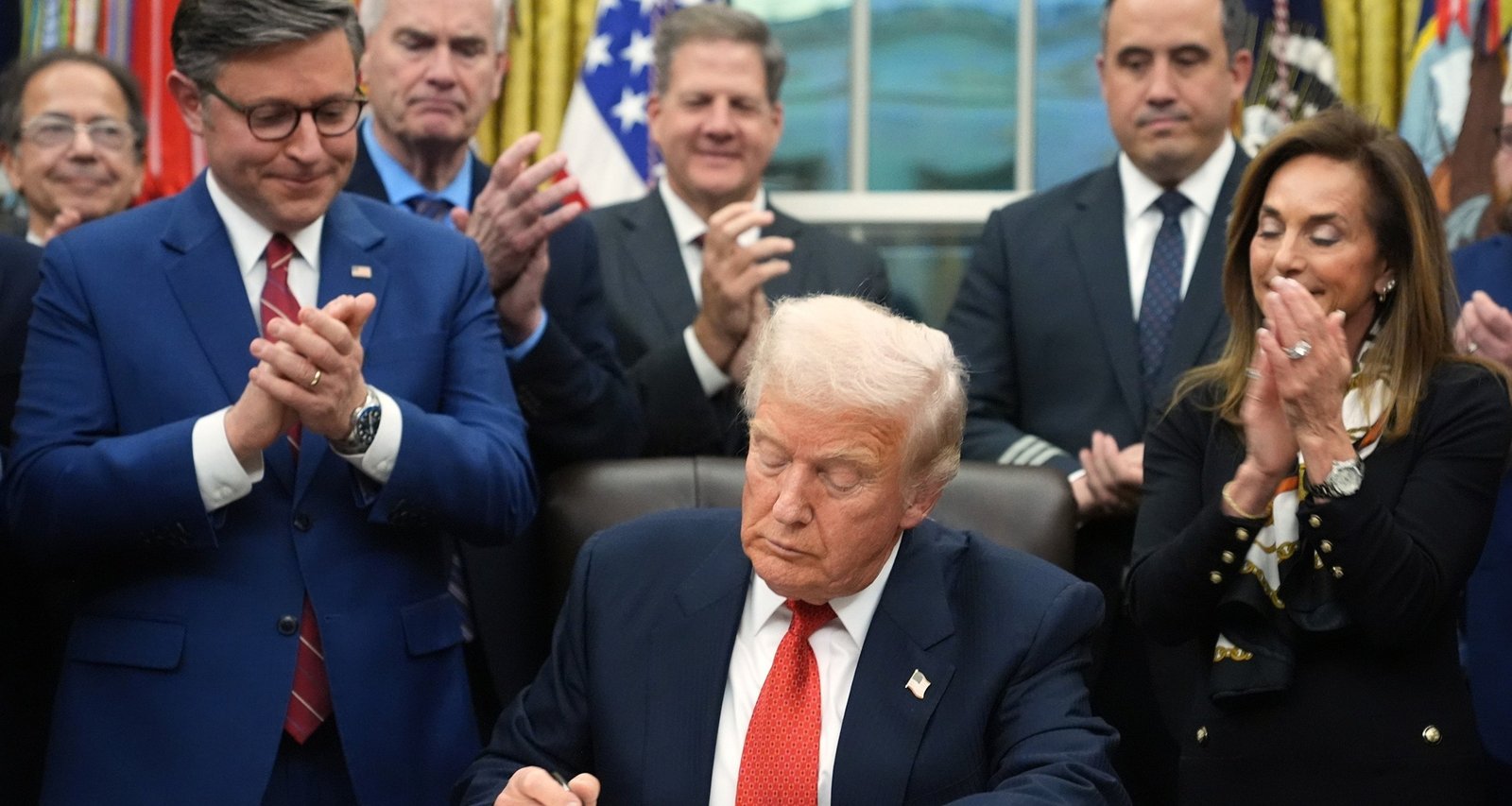
Imagem: Internet
Legislative Timeline
- Monday, Nov. 10: The Senate approves the funding bill and forwards it to the House.
- Wednesday, Nov. 12, 7:15 p.m.: The House passes the measure 222–209, sending it to the president’s desk.
- Wednesday, Nov. 12, 10:33 p.m.: Trump signs the bill, formally ending the shutdown.
Several moderate House Democrats joined Republicans to secure final passage, while a group of conservative GOP lawmakers opposed the bill on grounds that it lacked deeper spending cuts.
Next Steps for Congress
With only temporary funding secured for numerous agencies, appropriators face a narrow window to negotiate full-year allocations before the Jan. 30 deadline. Leaders in both chambers have indicated that talks will resume next week. Failure to reach agreement could trigger another partial government closure unless an additional short-term resolution is enacted.
Meanwhile, congressional attention will turn to the proposed repeal of the phone-records clause and to oversight hearings examining the shutdown’s overall cost. Early estimates from the Office of Management and Budget suggest billions of dollars in lost productivity and delayed contracts, figures that will undergo further review in the weeks ahead.
Though federal employees are scheduled to receive back pay by the end of November, several unions have called for legislative safeguards to prevent similar lapses in the future. Separate bipartisan bills introduced in both chambers would automatically extend current funding at prior-year levels if appropriations bills are not completed on time.
Political ramifications of the historic shutdown are expected to shape campaign messaging for the 2026 midterms. Republicans are likely to emphasize their role in ending the impasse, while Democrats are poised to argue that the confrontation underscores the need for broader budget reforms and more predictable governance.
Crédito da imagem: Jacquelyn Martin/AP


