U.K. Prime Minister Keir Starmer criticized the decision to penalize allies pursuing what he described as collective NATO security objectives. Starmer emphasized that Greenland remains part of the Danish realm and that its future “is a matter for the Greenlanders and the Danes.”
Swedish Prime Minister Ulf Kristersson echoed those views, stating that Stockholm and its partners will not succumb to blackmail and that only Denmark and Greenland have authority over decisions regarding the island. Kristersson confirmed that discussions are under way among the affected nations to craft a joint reaction.
Danish and Greenlandic opposition
Danish Foreign Minister Lars Løkke Rasmussen, who met earlier in the week with U.S. Vice President JD Vance and Secretary of State Marco Rubio, called any attempt to “conquer” Greenland unacceptable. Rasmussen said he had believed the talks in Washington were constructive and expressed surprise at the tariff threat.
Leaders in Greenland and Denmark have repeatedly stated that the island is not for sale. Public disapproval within Greenland intensified over the weekend, with large crowds marching through the capital, Nuuk, to protest the U.S. proposal. Demonstrators carried Greenlandic flags and placards urging Washington to abandon its plan.
Military presence in the Arctic
The Danish military last week invited forces from several NATO countries to participate in training exercises on Greenland aimed at bolstering Arctic security. Contingents from France, Germany, the United Kingdom, Sweden, Norway, Finland and the Netherlands arrived in Nuuk in recent days. Danish officials said the deployment is designed solely to enhance regional stability.
Trump, however, characterized the multinational exercises as interference with American interests. He has previously stated that armed force remains an option for acquiring Greenland if negotiations fail.
Domestic response in the United States
Opposition to the Greenland initiative extends beyond Europe. A Quinnipiac University survey released this month found that 55 percent of U.S. voters oppose purchasing the island, including 85 percent of Democrats and 58 percent of independents. Among Republican respondents, 67 percent favored the idea.
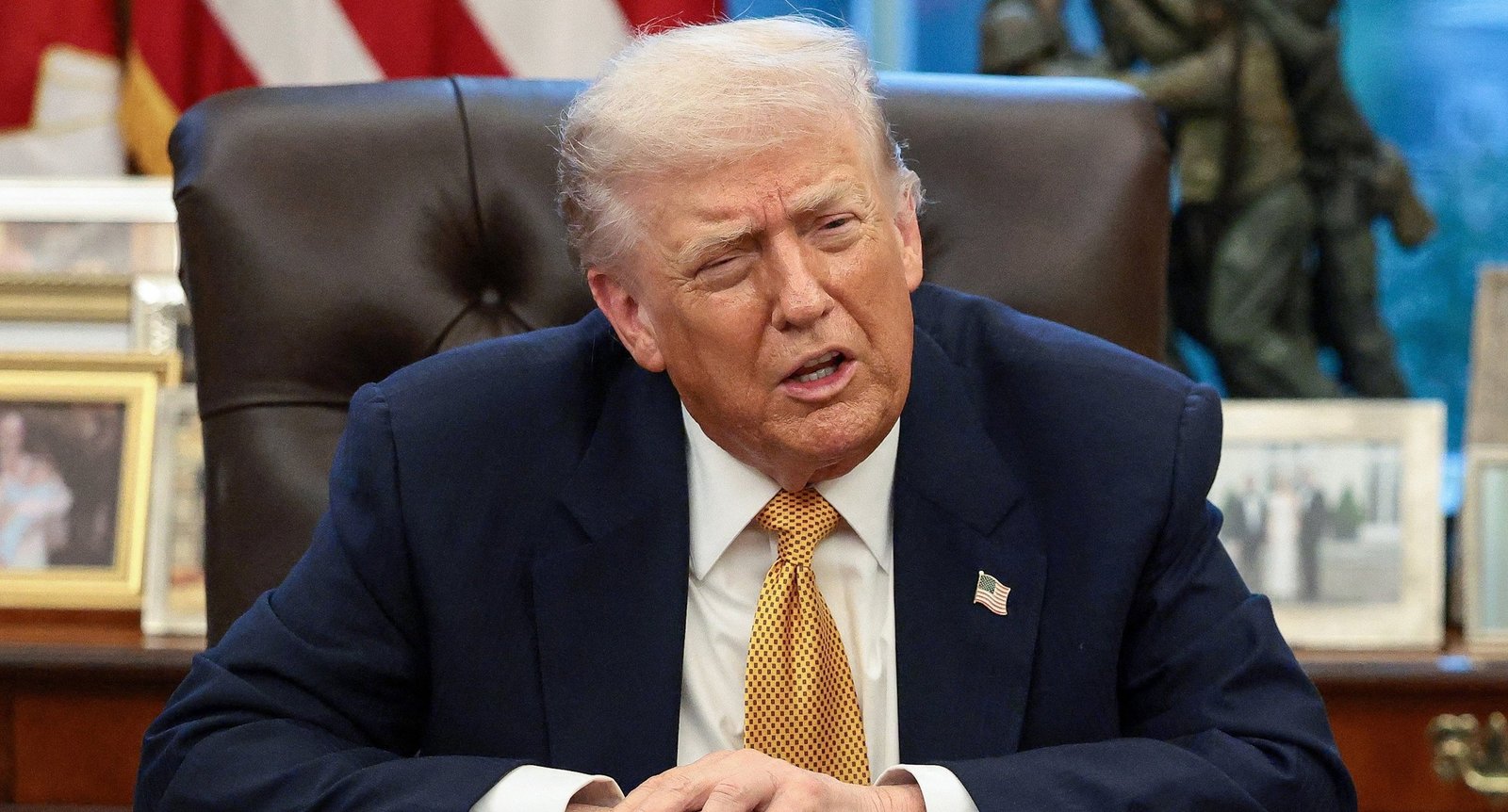
Imagem: Internet
A bipartisan delegation of lawmakers visited Greenland on Friday to reassure Danish and Greenlandic officials that many members of Congress do not support an acquisition. Senators Jeanne Shaheen, a Democrat from New Hampshire, and Thom Tillis, a Republican from North Carolina, later issued a joint statement warning that new tariffs would damage U.S. relations with European allies and benefit adversaries seeking to divide the North Atlantic Treaty Organization.
Senate Minority Leader Chuck Schumer announced plans to introduce legislation blocking the proposed duties. He called the tariff threat “incredible” and argued that it would harm American businesses and allied economies alike.
Legal uncertainties
Previous trade actions by the Trump administration have faced court challenges, and several cases have reached the Supreme Court. It remains unclear how quickly the judiciary might rule on any future lawsuits contesting the latest tariffs.
Next steps for allies
European officials indicated that consultations would continue in the coming days. According to NATO’s official guidelines, collective defense and unity remain foundational principles of the alliance, and member states typically coordinate their economic and security responses.
For now, the eight affected countries are preparing contingency plans as the February 1 deadline approaches. A unified stance could involve reciprocal duties, appeals to the World Trade Organization or intensified diplomatic engagement with Washington. White House representatives have not detailed how the administration plans to implement the tariffs or whether exemptions might be offered.
As both sides weigh their options, uncertainty over Arctic strategy, trans-Atlantic trade and alliance cohesion continues to mount. The coming weeks are expected to bring further statements from European capitals, congressional action in Washington and possible legal filings challenging the administration’s authority to levy the new duties.
Crédito da imagem: Sean Gallup/Getty Images


