Handlers in junior divisions must demonstrate the same technical skills demanded of adults: maintaining steady lead control, presenting the dog in a stacked position for examination and guiding it smoothly around the ring. Younger competitors often face added pressure because height, strength and experience gaps can make precise presentation more challenging. Despite those factors, junior handlers have achieved notable successes in recent years, reflecting a broader effort by show organizers to promote youth engagement.
According to data cited by the American Kennel Club, approximately 2,000 junior handlers participate in sanctioned conformation events each year across the United States. Participants range from nine to 18 years of age, and many transition into professional roles within the sport. Early exposure to ring protocol often establishes a foundation for careers in breeding, training, veterinary sciences or animal welfare advocacy.
The 12-year-old’s entry into the senior ranks stems from her performance in preliminary rounds that satisfied the qualifying criteria set by show officials. While the specifics of those earlier wins remain private, the advancement reflects consistent execution of ring craft fundamentals: proper gait tempo, accurate stacking and controlled interaction with judges. Each of those elements will again be scrutinized during the Best in Show finale, where even minor missteps can distinguish first place from runner-up.
Dog shows have expanded considerably since their 19th-century origins, now featuring livestream coverage, social-media engagement and corporate sponsorships. The evolving landscape offers young handlers expanded visibility but also increases competitive intensity. Professional handlers frequently command teams of assistants and invest considerable resources in grooming, travel and conditioning. In contrast, many youth entrants rely on family support and local club networks to manage training schedules and expenses.
Preparation for a Best in Show bid can span months or even years. Conditioning regimens typically combine cardiovascular exercise, coat maintenance and behavioral reinforcement designed to ensure that a dog performs reliably amid bright lights, crowds and loudspeakers. Handlers must memorize breed-specific movement patterns and learn how to adjust pacing on the fly when ring conditions shift. Because judges observe the synergy between dog and handler, competitors work to establish a rapport that enables subtle, nearly invisible cues to prompt precise performance.
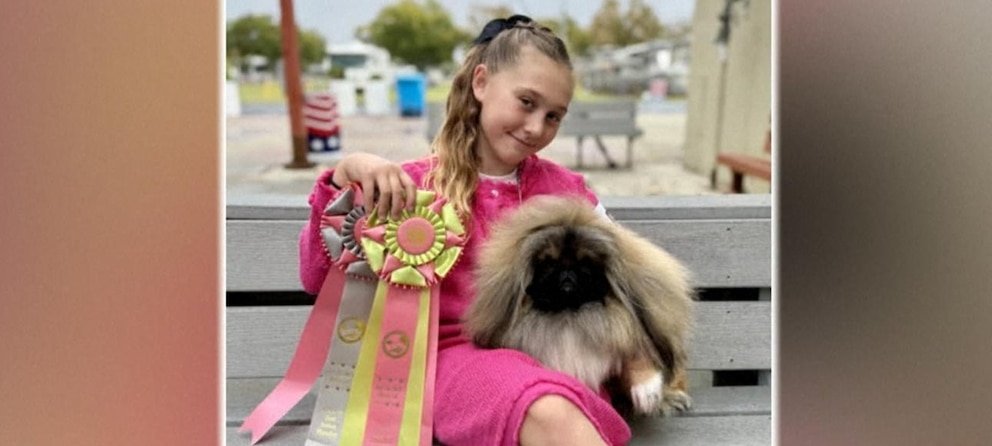
Imagem: Internet
Age restrictions do not limit the aspirations of junior handlers, but parental or guardian supervision is often mandatory at major venues. Organizers provide orientation sessions that outline ring protocols, safety rules and expectations regarding sportsmanship. Those measures aim to foster an environment where youth can develop confidence while adhering to the standards that govern conformation events worldwide.
Should the 12-year-old claim the Best in Show title, she would join a select roster of minors who have captured the top award at a recognized competition. Even a strong placement short of first can enhance her standing within the junior ranks, opening doors to mentorships, scholarship opportunities and invitations to specialty events. For her dog, a high finish may translate to elevated stud or breeding value, depending on the breed and registry status.
Beyond individual accolades, the youngster’s participation underscores the broader role of dog shows in promoting responsible ownership and breed preservation. By showcasing animals that exemplify health, temperament and form, events encourage breeders and owners to prioritize genetic diversity, proper socialization and veterinary care. Youth involvement can amplify those messages, as peer influence often shapes community norms surrounding animal welfare.
Show officials have not disclosed the expected size of the field for the upcoming Best in Show round, although previous editions have featured entries numbering from several dozen to more than one hundred, depending on venue capacity and qualifying standards. Spectator turnout is likely to include family members, breed enthusiasts and the general public, each seeking a close view of the carefully staged competition.
While the path to Best in Show is arduous, the 12-year-old’s journey already highlights the accessibility of the sport to participants outside traditional professional circles. Her progress will be watched closely by junior handler programs nationwide, many of which seek role models to inspire newcomers. Whether or not she leaves the ring with the trophy, her presence alone contributes to a widening demographic that continues to refresh and redefine the culture of competitive dog showing.
Crédito da imagem: ABC News Live