Market reaction to the release was muted. Sterling hovered near $1.3433 against the U.S. dollar shortly after the figures became public, little changed from prior levels. Government bond yields and major equity indices also exhibited limited immediate response.
Sector performance
The details of the report indicate a partial recovery in manufacturing, where output had been restrained in October by supply chain interruptions at major automotive plants. November’s 1.1% increase in overall production was driven by a turnaround in vehicle manufacturing as facilities resumed normal operations. Energy output and mining contributed modestly to the monthly rise.
Within services, wholesale and retail trade, hospitality, and professional services registered moderate gains. Restaurants and pubs, which faced soft demand earlier in the autumn, experienced improved foot traffic, supporting the broader accommodation and food sub-sector. Consumer-facing services, often sensitive to real-income trends and sentiment, benefited from early holiday shopping and promotional activity.
The construction sector moved in the opposite direction, with a 1.3% fall attributed to wetter-than-average weather and a slowdown in new housing starts. Civil engineering and repair work were also weaker, partially reflecting seasonal factors.
Economic outlook
Analysts at several major banks interpreted the November numbers as evidence that the economy retains pockets of resilience. Currency strategists noted that stronger manufacturing output can spill over into retail activity through improved labor demand and supply-chain orders. Nonetheless, forecasters remain cautious about the medium-term path.
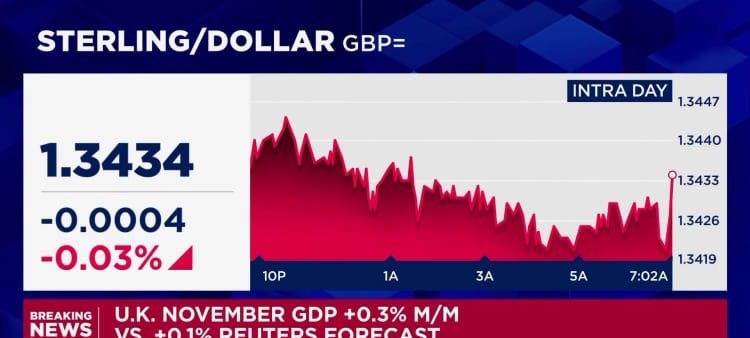
Imagem: Internet
Deutsche Bank projects that quarterly growth will average roughly 0.35% on a quarter-to-quarter basis, helping overall GDP expand modestly this year. Its analysts expect output to accelerate in 2025 to about 1.1%, supported by a recovery in household spending and a gradual uptick in business investment. They see a more pronounced rebound in the first quarter of 2026 as interest-rate reductions by the Bank of England take firmer effect.
Survey indicators released in recent weeks, including purchasing managers’ indexes and business confidence measures, have started to improve as companies adjust to post-Budget tax and spending plans. Early evidence also suggests that the labor market may be stabilizing after a period of softening demand for workers. Even so, economists caution that vulnerabilities persist, especially if wage growth slows more sharply than anticipated or if geopolitical risks push up energy costs again.
Rabobank strategists commented that the November figures are a welcome development for policymakers seeking to balance growth and inflation. They emphasized that a manufacturing recovery can generate positive spillovers for consumption, but warned that sustained momentum will depend on broader global conditions.
Monetary policy implications
The Bank of England kept its policy rate unchanged at 5.25% at its December meeting, citing the need to be confident that inflation is on a firm path back to the 2% target. Markets currently expect the first reduction in borrowing costs later in 2025, followed by a gradual easing cycle through 2026. Thursday’s GDP release is unlikely to prompt an immediate shift in rate expectations, though it may reinforce the view that the economy can withstand restrictive policy for longer if inflation proves persistent.
For additional context, the ONS provides a detailed breakdown of monthly GDP components and methodological notes on its official website.
Crédito da imagem: Bloomberg


