Secretary Noem stated that the United States “will continue to pursue the illicit movement of sanctioned oil,” adding that profits from these shipments are believed to finance narcotics-related networks in the region. Her statement reiterated Washington’s policy of targeting vessels, companies and individuals who facilitate restricted Venezuelan oil exports.
Second Seizure in December
The newly detained tanker is the second vessel seized this month under the same policy framework. On 10 December, an elite Coast Guard tactical operations team, backed by U.S. Navy helicopters, boarded and confiscated control of The Skipper, another sanctioned tanker suspected of participating in a similar smuggling scheme. Both actions reflect a more aggressive maritime enforcement posture that has rapidly expanded since early December.
News agency Reuters first reported that a second seizure was imminent, citing unnamed U.S. officials familiar with Coast Guard planning.
Backdrop of Heightened U.S. Pressure
President Donald Trump has amplified pressure on Caracas throughout December. Earlier in the week, he threatened to impose what he described as a “blockade” on all sanctioned oil tankers entering or leaving Venezuelan waters, declaring that the country is “surrounded by the largest armada ever assembled in the history of South America.” The White House has not released operational specifics, but defense officials confirmed that additional Navy and Coast Guard assets have been reassigned to the Caribbean theater.
In response, President Maduro vowed that Venezuela would continue to trade crude internationally and accused Washington of pursuing regime change. “Venezuela will never be a colony of anyone,” he said during a televised address from Caracas. Maduro’s government maintains that U.S. sanctions are illegal under international law and have exacerbated the country’s economic crisis.
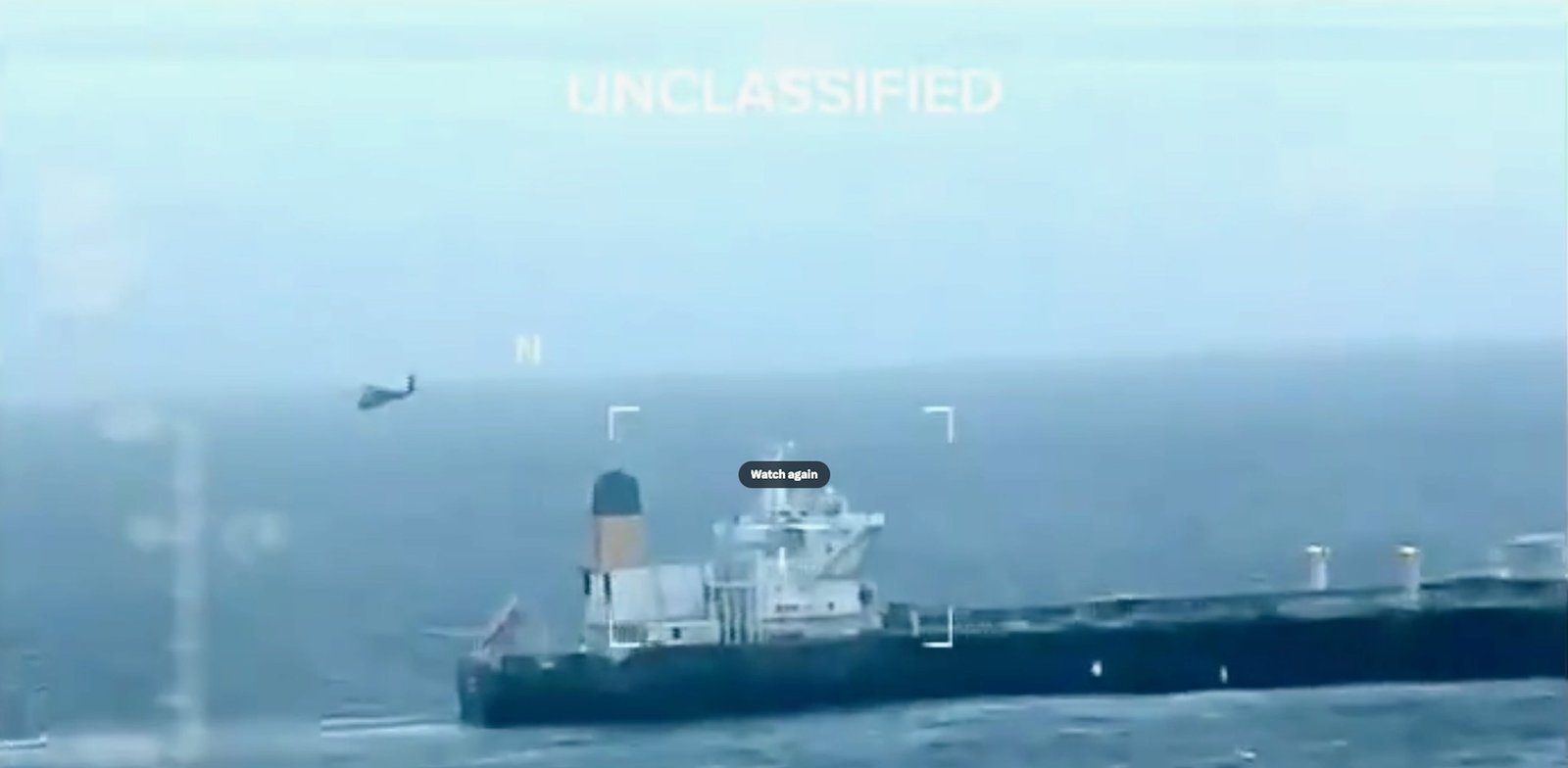
Imagem: Internet
Legal Basis and International Waters
The U.S. cites domestic sanctions authorities and maritime interdiction protocols as the legal foundation for the seizures. Because the latest operation occurred in international waters, Washington contends that it acted within its rights to enforce sanctions against a foreign-flagged vessel suspected of violating U.S. economic restrictions. International law experts note that such actions can be contentious, but they have become more frequent as sanctions regimes expand in scope. A Congressional Research Service analysis details the evolving legal arguments Washington employs when boarding foreign ships outside its territorial sea (Congressional Research Service).
Next Steps
The tanker is expected to undergo a full cargo off-load and forensic inspection at a secure U.S. port. The Department of Justice will determine whether to seek civil forfeiture of the vessel, pursue criminal charges against its owners or negotiate a settlement. Crew members are being interviewed and allowed consular contact while the investigation proceeds. No timetable has been provided for a final decision.
U.S. officials said additional patrols will continue throughout the Caribbean Sea and the Atlantic approaches to prevent further sanctioned shipments. An interagency task force including the Departments of Homeland Security, Defense, Treasury and State is coordinating logistics, intelligence and diplomatic outreach regarding future interdictions.
The Venezuelan Foreign Ministry has not yet issued a statement on the latest seizure. However, diplomats in Caracas previously denounced the 10 December operation as “maritime piracy” and signaled that formal protests would be lodged at the United Nations.
With two tankers already in custody and a broader naval presence deployed, maritime analysts expect tensions between Washington and Caracas to intensify. Regional governments are monitoring developments closely, mindful of potential spillover effects on shipping lanes, insurance costs and energy markets.
Crédito da imagem: @Sec_Noem


