Air traffic controllers, deemed essential employees, have been required to work without receiving regular paychecks for more than a month. The National Air Traffic Controllers Association and government officials reported that some controllers have taken second jobs to cover living expenses. Persistent staff shortages forced the Federal Aviation Administration to slow traffic flows at several key facilities, dampening airlines’ ability to operate on time and prompting the cancellation of thousands of flights.
Delta Air Lines chief executive Ed Bastian said in a television interview the ongoing shutdown would dent the carrier’s financial results, though he did not expect the impact to erase quarterly profits. He also predicted the possibility of another funding lapse in the future and argued that controllers should continue to be paid if that occurs, underscoring concerns about the system’s resilience.
Expectations of a funding deal helped lift airline stocks on Wednesday afternoon trading. Investors speculated that an end to the standoff could stabilize operations and limit further revenue losses tied to refunds, rebooking costs, and crew scheduling complications.
Even if lawmakers approve the measure, officials cautioned that normal service is unlikely to resume immediately. Transportation Secretary Sean Duffy said during a press briefing at Chicago O’Hare International Airport that traffic restrictions would remain in place until the department could verify adequate staffing levels. He noted that the timeline for lifting caps hinges on air traffic controllers returning to duty in sufficient numbers.
Throughout the shutdown, thin staffing levels have raised concerns about system safety and efficiency. Airlines cite elevated risks associated with fatigued or distracted personnel, while the FAA has emphasized the need to balance safety with the public’s demand for travel. The agency’s guidance to carriers reflects a delicate calculus meant to avoid overloading control facilities already operating with fewer qualified controllers than usual.
The operational strain has been compounded by seasonal winter weather that disrupted large hubs in the Northeast and Midwest. Snow, freezing rain, and low visibility conditions clogged arrival and departure banks, stretching available resources and amplifying the effect of workforce shortages. Carriers responded by proactively canceling flights in affected regions to avoid extended ground delays and tight crew duty limits.
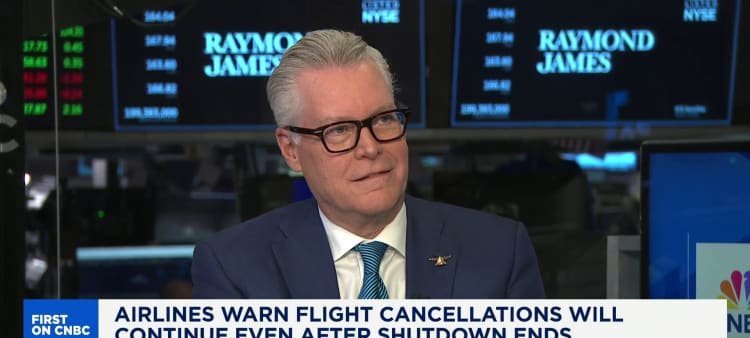
Imagem: Internet
Industry executives have repeatedly pressed Congress and the administration to secure stable, long-term funding for the FAA, arguing that repeated shutdowns erode confidence in the national airspace system. They contend that protracted disruptions can ripple through supply chains, stall aircraft deliveries, and increase costs for maintenance and training programs.
As lawmakers prepared for the evening vote, passenger advocacy groups urged travelers to monitor flight status notifications and remain flexible with itineraries. They also encouraged customers to take advantage of fee waivers posted by airlines, many of which allowed free changes or cancellations for trips scheduled during the shutdown.
According to publicly available information from the Federal Aviation Administration, U.S. air traffic controllers guide roughly 45,000 flights per day during normal operations. The reduced capacity imposed during the funding lapse resulted in instruction overload at certain facilities, compelling the agency to meter departures and arrivals, particularly in congested airspace along the East Coast.
If the House endorses the Senate-passed bill and the president signs it into law, federal employees would begin receiving back pay, and agencies would restart halted programs. However, analysts note that onboarding returning staff, recalibrating traffic flows, and eliminating the backlog of certification and inspection tasks could take several days.
Airlines have signaled that they will scale operations cautiously, adding flights as the FAA lifts slot and flow limitations. Carriers also face the administrative task of repositioning aircraft and crews displaced by rolling cancellations, a process that can stretch longer than the shutdown itself.
With the evening vote pending, travelers, airlines, and regulators awaited final confirmation that the government will fully reopen, a development expected to pave the way for gradual normalization of the nation’s air travel network.
Crédito da imagem: Michael Nagle | Bloomberg | Getty Images


