Airlines responded by trimming schedules, rerouting aircraft and issuing passenger advisories. Carriers warned that additional cancellations and delays were likely through the end of the weekend as crews and equipment repositioned to match the revised FAA capacity limits. Travelers were encouraged to monitor flight status and allow extra time at airports, where long lines formed at rebooking counters and security checkpoints.
Transportation Secretary Sean Duffy said in an interview Friday that the department opted not to curtail international service, citing obligations under bilateral aviation agreements. “Suspending overseas routes would violate treaties and create broader diplomatic complications,” he noted. International flights were therefore permitted to operate, although many experienced departure or arrival holds as domestic congestion spilled into trans-Atlantic and trans-Pacific schedules.
The workforce shortfall stems from the partial federal shutdown that began more than six weeks ago. With no appropriations bill in place, thousands of FAA employees—including air traffic controllers, safety inspectors and technical support staff—have been working without pay or have been furloughed. The agency said mandatory overtime and extended shifts introduced earlier in the shutdown became unsustainable, prompting the capacity reductions announced late last week.
Industry groups expressed concern that prolonged limitations could create a backlog difficult to resolve even after government funding is restored. Airports Council International–North America estimated that every percentage point drop in daily operations at the affected hubs can ripple outward for 48 to 72 hours, complicating crew assignments and aircraft maintenance cycles.
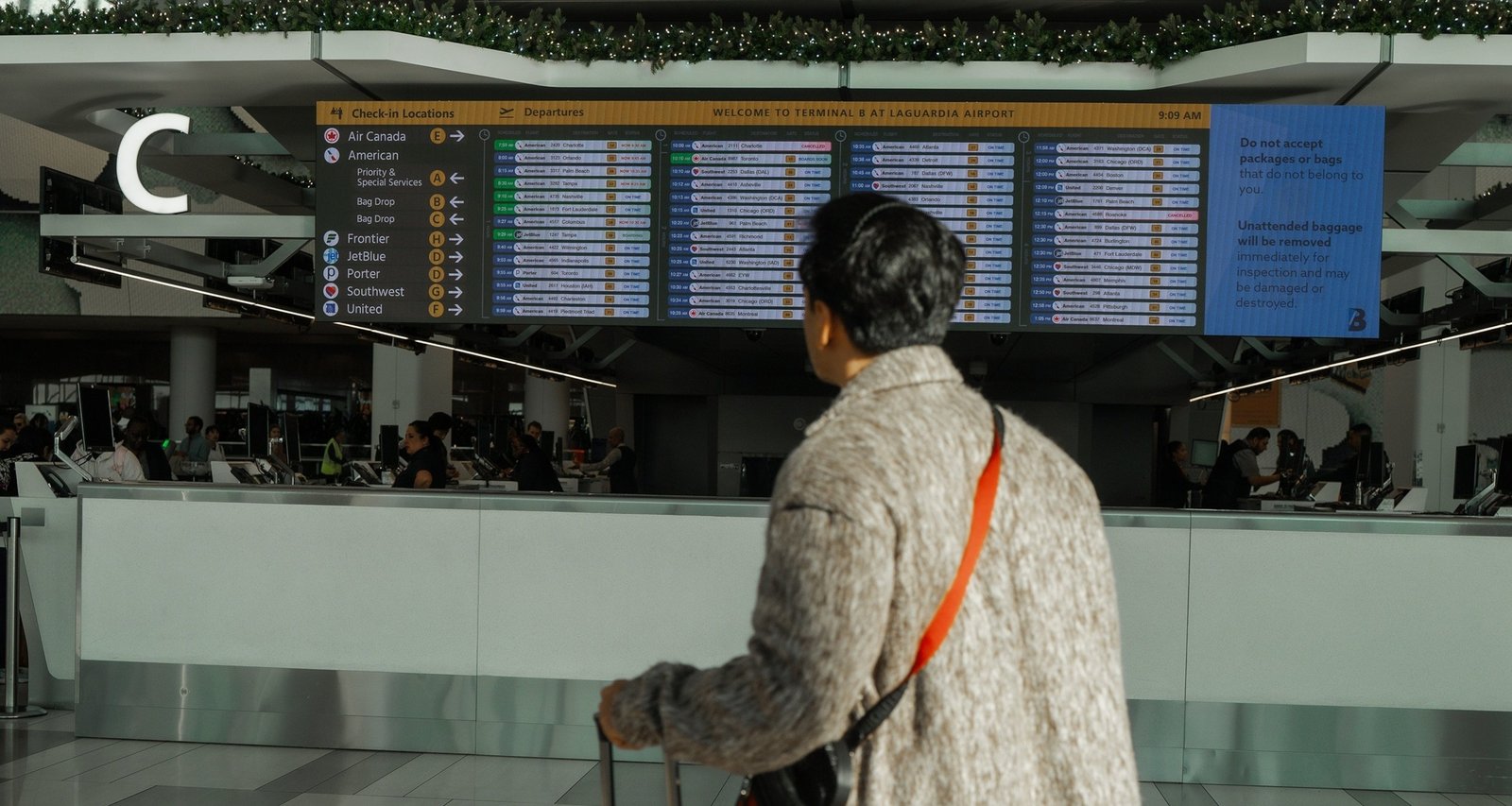
Imagem: Internet
In previous government shutdowns, air traffic services were generally maintained, but the current stoppage has surpassed all prior durations, exposing systemic vulnerabilities. Aviation analysts said the situation underscores the dependence of the nation’s air-transport network on a fully staffed, consistently funded control system.
For passengers, the immediate impact has been felt in missed connections, canceled vacations and rearranged business itineraries. Anecdotal reports on social media described overnight stays in terminal waiting areas and scavenging for scarce hotel rooms near major airports. While most airlines offered fee waivers for itinerary changes, seat availability remained limited as peak holiday travel approaches.
Federal mediators were not immediately available to forecast when staffing levels might return to normal. Congressional negotiators signaled minimal progress toward a funding agreement over the weekend, leaving the timeline for relief uncertain.
The FAA advised passengers to consult their airlines before heading to the airport and to sign up for carrier-specific text or email alerts. The agency also reaffirmed that safety standards remain in force, stressing that capacity reductions are designed to prevent overloading the diminished controller workforce.
Crédito da imagem: Olga Fedorova/AP


