The tariff announcement
Trump revealed the new 15 percent levy in a social-media post on Saturday, one day after the Supreme Court ruled that the International Emergency Economic Powers Act (IEPPA) does not empower a president to impose broad, country-specific tariffs. The decision invalidated a package of duties the White House had introduced on what officials dubbed “Liberation Day,” including a 10 percent surcharge on all imported goods.
Citing authority under Section 122 of the 1974 Trade Act, the president said he retains the ability to apply a blanket tariff of up to 15 percent for as long as 150 days in order to correct perceived trade imbalances. He initially signaled a 10 percent “global tariff” on Friday evening, then raised the figure to 15 percent the following day.
“It’s a little longer process,” Trump told reporters at the White House after the court ruling. The administration, he added, plans to open separate investigations that could lead to additional, more targeted duties during the coming months.
Reaction from the White House and Capitol Hill
On Monday, Trump renewed his criticism of the Supreme Court, writing online that the justices “accidentally and unwittingly” expanded presidential power by clarifying the limits of IEPPA, thereby pushing him toward the Trade Act mechanism. The administration did not indicate when the new tariff would formally take effect, but trade attorneys said proclamation language could be finalized within days.
Certain levies remain untouched by the court’s decision, including a 50 percent duty on steel and aluminum products that the Commerce Department enacted under Section 232 of the same 1974 law. Congressional leaders offered mixed responses: some Republicans praised the president’s determination to counter what they call unfair practices by major trading partners, while several Democrats urged renewed negotiations through the World Trade Organization.
A recent ABC/Post/Ipsos poll found that most Americans disapprove of the administration’s handling of tariffs, underscoring the domestic political stakes as the presidential election cycle intensifies.
Broader market moves
Safe-haven assets gained. Gold futures rose 1.4 percent to settle at $2,085 per ounce, the highest closing price in three weeks, as investors sought protection from potential trade-related volatility. U.S. Treasury yields edged lower, reflecting increased demand for government debt.
Cryptocurrencies also weakened. Bitcoin fell 4.3 percent to about $64,450, marking its lowest level since Feb. 3. Analysts pointed to a combination of risk-off sentiment and speculation that higher import costs could dampen consumer spending on discretionary technology products often purchased with digital assets.
Currency markets were comparatively subdued. The U.S. dollar index was little changed, holding near a two-week high reached on Friday after the Supreme Court decision introduced fresh uncertainty about U.S. trade policy.
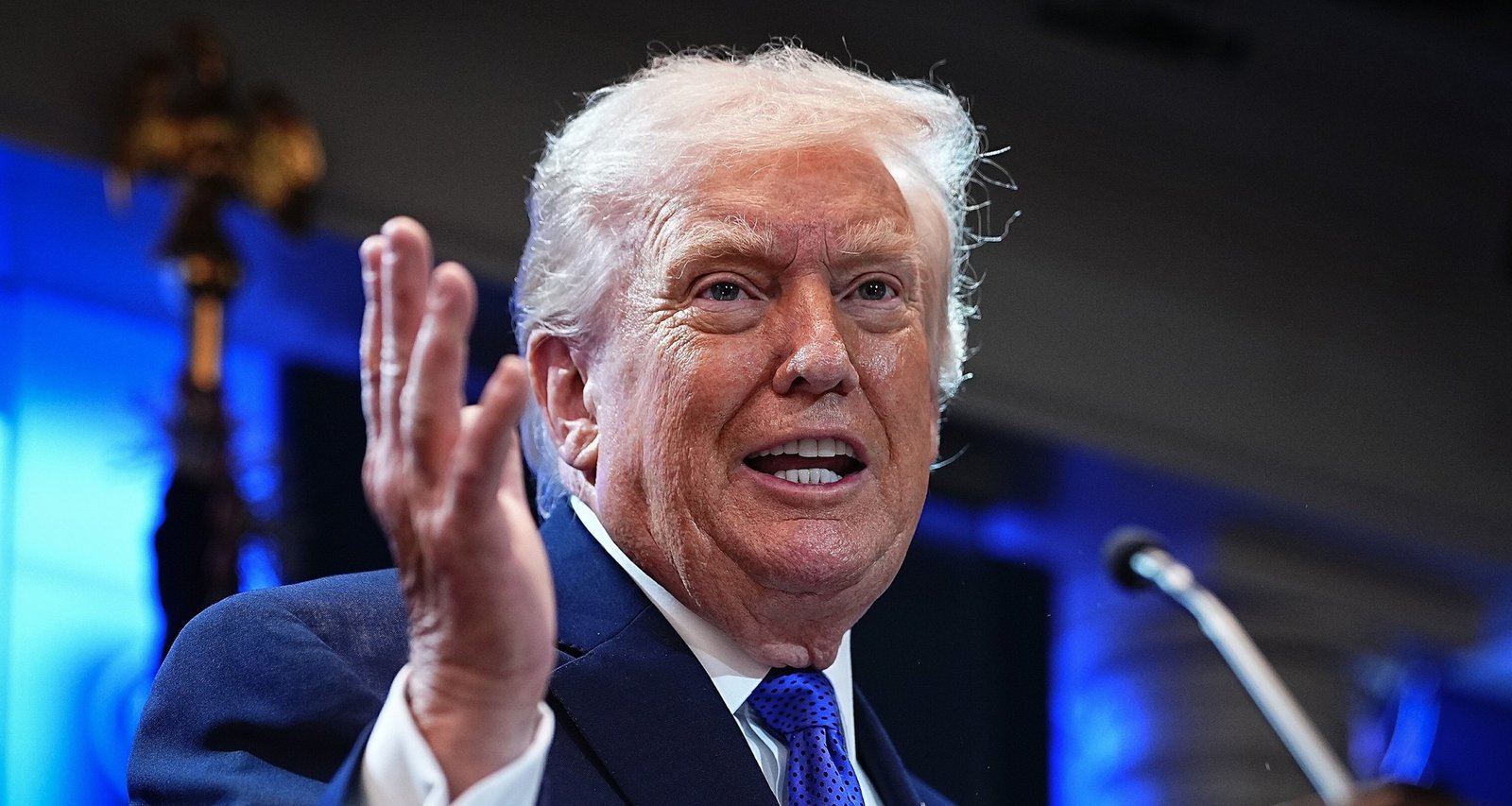
Imagem: Internet
Legal context of the court ruling
In a 6–3 decision Friday, the Supreme Court determined that IEPPA does not grant authority for tariffs aimed primarily at economic competition rather than national security. The opinion effectively voided a series of actions that had targeted specific countries and product categories, prompting the White House to pivot to Section 122 of the Trade Act.
Section 122 allows the president to impose duties of up to 15 percent or quantitative restrictions for up to 150 days on a nondiscriminatory basis if the U.S. balance of payments is deemed under threat. The same statute was last used in 1971, when President Richard Nixon imposed a 10 percent surcharge amid a dollar crisis.
Trade specialists said the forthcoming tariff is likely to face additional legal scrutiny but noted that Section 122 offers a clearer, albeit temporary, foundation than the emergency powers previously invoked. “The courts have historically granted the executive branch considerable leeway under the Trade Act, provided the measures are time-limited and uniformly applied,” said an attorney at a Washington-based law firm.
Corporate and consumer implications
Large retailers and manufacturers signaled that a 15 percent duty could raise costs on a wide array of goods, from electronics and apparel to household appliances. Several companies said they were reviewing supply-chain strategies, including the possibility of accelerating production shifts to countries not subject to separate product-specific tariffs.
Economists warned that a broad tariff, even if temporary, could feed into consumer prices and complicate the Federal Reserve’s effort to guide inflation back to its 2 percent target. The central bank is scheduled to release its next policy statement in mid-March, and officials have recently cited global trade tensions as a key risk to the outlook.
Small-business associations expressed concern about the potential for abrupt changes in landed costs, particularly for firms that lack the scale to absorb tariff-related increases. Industry groups representing agricultural exporters, meanwhile, said they were watching for possible retaliatory measures from major trading partners.
Next steps
The Office of the U.S. Trade Representative is expected to publish an implementation notice once the president signs the executive order. The announcement will specify the effective date, product coverage and any exclusion-request process. Under the statute, Congress can overturn the action by a joint resolution, though such a measure would require a two-thirds majority to overcome a likely veto.
Market participants are bracing for further volatility as details emerge. “Until we see the final language, it’s difficult to quantify the economic drag,” said a strategist at a New York investment bank. “Investors are reassessing growth projections and adjusting portfolios accordingly.”
With corporate earnings season drawing to a close and few major data releases scheduled this week, attention is expected to remain fixed on the White House and any signals about additional trade initiatives. Analysts said sector-specific probes, if launched, could extend uncertainty well beyond the 150-day window set by the Trade Act.
Crédito da imagem: Aaron Schwartz/Getty Images


