The soldiers killed were Sgt. William “Nate” Howard and Sgt. Edgar Torres Tovar. The civilian interpreter was Ayad Mansoor Sakat. All three were assigned to the remote At Tanq Garrison near Syria’s border with Jordan, where roughly 100 to 150 of the approximately 1,000 U.S. service members in Syria are stationed. A source familiar with the matter said Adm. Brad Cooper, commander of CENTCOM, visited the outpost Friday to commend personnel for their actions under fire and to discuss the impending operation.
President Donald Trump said the strikes delivered “very serious retaliation” against those responsible and noted that Syria’s newly installed government supports the action. Hegseth, emphasizing that Washington does not seek a broader conflict, called the response a “declaration of vengeance” for the Americans killed.
Friday’s operation focused on weapons depots, logistics nodes and other infrastructure thought to support ISIS remnants operating in Syria’s central desert. A U.S. defense official said the goal was to deliver “a significant blow” to the group’s ability to plan and conduct future attacks. The latest intelligence assessment places between 1,500 and 3,000 ISIS militants across Syria and neighboring Iraq, many operating in small, mobile cells.
In the days leading up to Hawkeye Strike, U.S. and partner forces conducted 10 separate raids in Syria and Iraq, capturing or killing 23 suspected militants. Since July, joint operations have numbered 80, resulting in 119 detentions and 14 fatalities among ISIS operatives, CENTCOM said. In November alone, coalition troops destroyed 15 weapons caches in southern Syria.
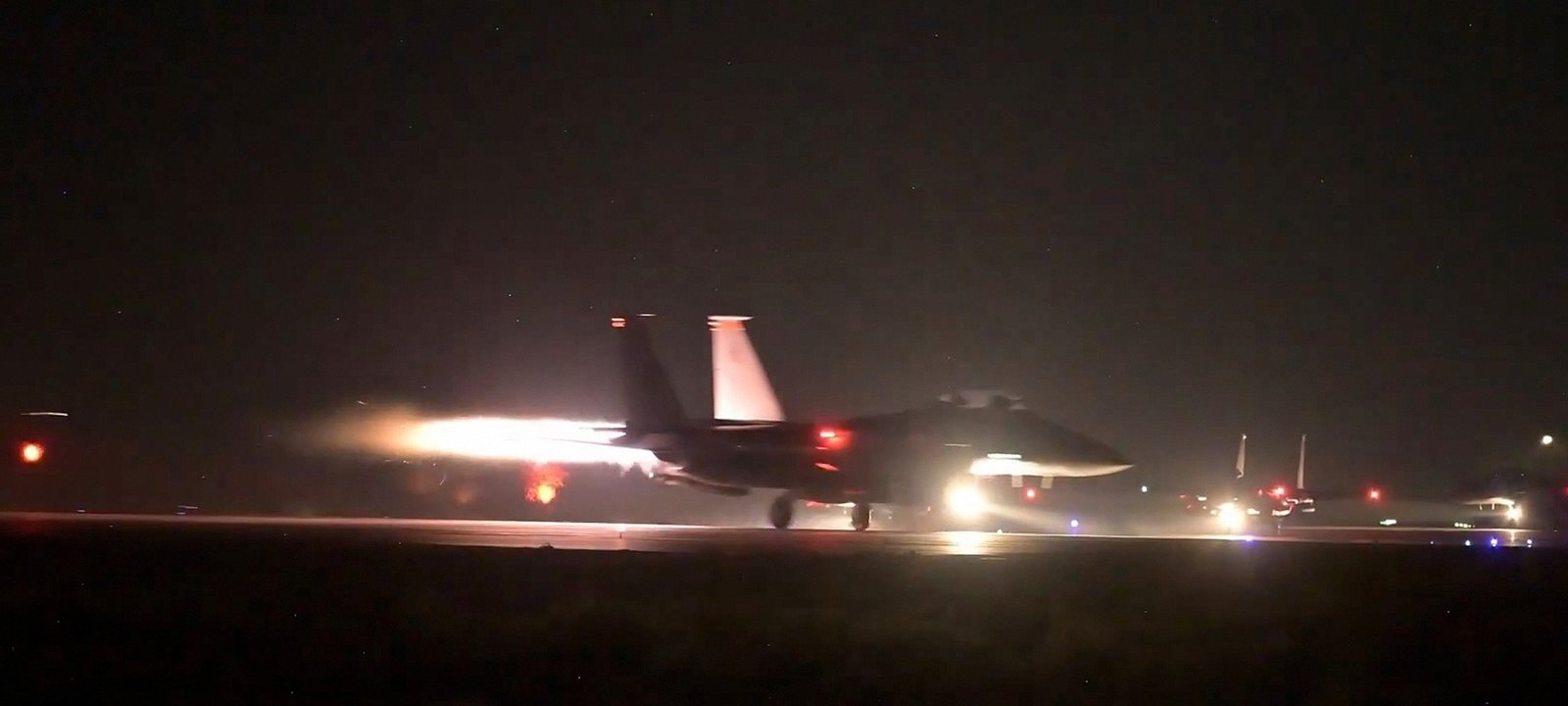
Imagem: Internet
Local monitoring groups in Syria, including the Syrian Observatory for Human Rights, reported a series of explosions across central provinces late Friday, consistent with air and artillery strikes. At the time of publication, there were no immediate reports on militant or civilian casualties, and U.S. officials said battle-damage assessments are ongoing.
The United States maintains its military presence in Syria under the stated mission of preventing an Islamic State resurgence. The bulk of U.S. personnel are deployed east of the Euphrates River, where they advise and support local partner forces. According to a recent Congressional Research Service brief, the coalition has relied heavily on intelligence-driven raids and precision airstrikes to contain the group’s insurgent cells since 2019.
Jordan’s participation in Friday’s strike underscores broader regional efforts to combat ISIS. Amman has been a key member of the international coalition since its formation in 2014, providing basing, overflight rights and combat aircraft for operations in both Syria and Iraq.
As assessments continue, U.S. officials indicated that additional action remains possible if ISIS attempts further attacks on American forces or partners. For now, commanders say the focus is on evaluating the impact of Hawkeye Strike and consolidating intelligence gained during the operation.
Crédito da imagem: U.S. Central Command


