He urged demonstrators to remain non-violent, warning that assaults on officers would be prosecuted “to the fullest extent of the law.” The vice president also emphasized that the administration did not seek to employ force unless necessary, adding that agents prefer to avoid “the kind of tactics required when violence is directed at them.” Asked whether he would recommend that Trump invoke the Insurrection Act, Vance replied that such a measure was not needed “right now,” though he noted that the president could reconsider if conditions deteriorated.
Controversial Detentions and a Fatal Shooting
Scrutiny on federal actions intensified after the 7 January shooting of Renee Nicole Good, a 37-year-old Minneapolis resident and mother of three. An ICE officer fatally shot Good during an attempted vehicle stop. Vance has defended the agent, citing what he called “absolute immunity” for actions taken in the course of federal duties and alleging that Good tried to run over the officer. Municipal officials dispute that version, pointing to video footage they say contradicts federal claims.
Tensions rose further on 20 January when five-year-old Liam Conejo Ramos was detained as officers attempted to arrest his father, Adrian Alexander Conejo Arias, outside the family’s home. School representatives and the family’s attorney insist both father and son entered the United States legally through a port of entry using the CBP One application and have pending asylum claims. Homeland Security, however, maintains that the child was “abandoned” after Conejo Arias allegedly fled on foot, forcing agents to take the boy into custody for his protection.
Vance said he sympathized with the child but argued that parenthood cannot confer immunity from arrest. He also stated that initial reports labeling the pair as American citizens were inaccurate. “If the argument is that you cannot arrest parents because they have children, no law would be enforceable,” he contended. Defense attorney Marc Prokosch countered that both father and son “came properly” through official channels and should not have been treated as fugitives.
Federal Accountability
During the visit, Vance reiterated earlier remarks published in the Washington Examiner that disciplinary action against ICE officers is possible if misconduct is proven. He rejected suggestions that his comments represented a policy shift, saying federal personnel “must receive real due process” but are not exempt from investigation. The administration’s stance reflects a balance between supporting agents working “in a very tough environment” and addressing public outcry over collateral detentions and use-of-force incidents.
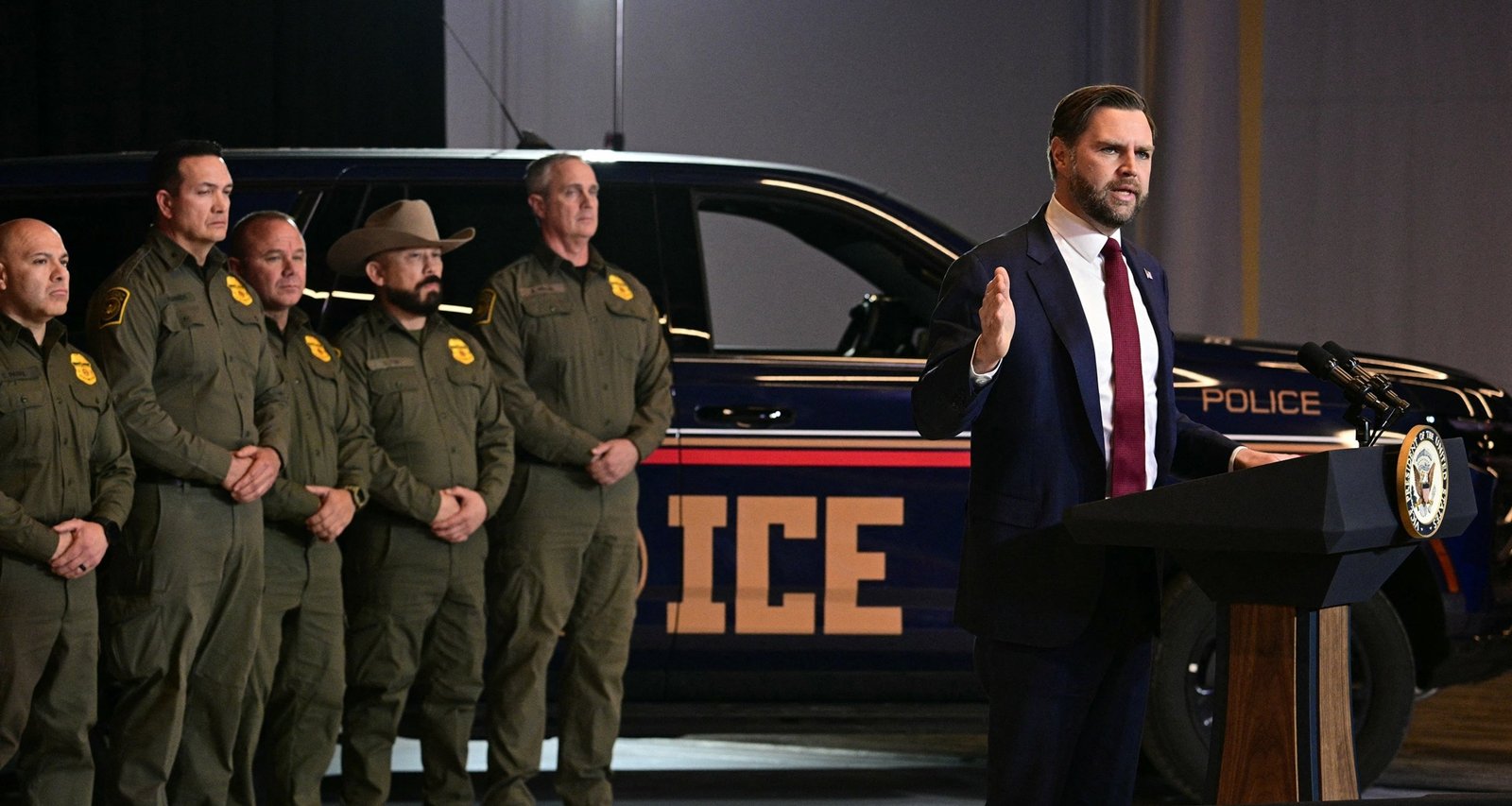
Imagem: Internet
Images from recent protests show agents in riot gear advancing through tear-gas clouds while detaining demonstrators and bystanders. Some arrests involved U.S. citizens who, according to Vance, interfered with federal duties. He insisted that such detentions were justified when individuals assaulted officers. Civil rights advocates, meanwhile, accuse authorities of overreach and cite reports of people being taken into custody without probable cause.
Local officials have expressed frustration at what they describe as a lack of transparency and coordination from Washington. Minneapolis Mayor Jacob Frey has called for an immediate halt to large-scale operations until clear guidelines are established. Minnesota Governor Tim Walz has requested an independent review of the shooting of Good and the arrest of Conejo Ramos, arguing that trust between residents and law enforcement has been severely undermined.
National immigration policy remains a flash point in the 2026 election cycle, with the Trump administration portraying the Minneapolis operation as a model for tougher enforcement. Critics argue that aggressive tactics erode community cooperation and may violate constitutional protections. A detailed overview of ICE authority and procedures is available on the Department of Homeland Security’s official website, which outlines legal frameworks governing detention, removal and officer conduct.
As the vice president concluded his remarks, he reiterated his call for state and city leaders to engage directly with federal agencies. “The best way to lower the temperature,” he said, “is for everyone to do their job and enforce the law responsibly.” Whether that cooperation materializes will likely determine the trajectory of future operations — and the level of tension — in Minneapolis over the coming weeks.
Crédito da imagem: Jim Watson/AFP via Getty Images


