With floodwaters already rising, the county announced the closure of all non-essential government operations on Thursday, including district and superior courts. Local emergency managers described the river projections as “historic,” citing forecasts that indicate the Skagit River could rise 3 to 5 feet above its previous record crest later this week.
Rescues and Road Disruptions
In neighboring King County, Eastside Fire and Rescue reported multiple water rescues on Wednesday. Three adults with limited mobility and a dog were evacuated from their home near the Middle Fork of the Snoqualmie River after rapidly rising water surrounded the property. A separate landslide blocked eastbound lanes of Interstate 90, adding to regional travel complications.
Transportation impacts quickly multiplied across western Washington. U.S. Highway 12 was submerged in several locations, isolating the town of Randle. Amtrak suspended passenger service between Seattle and Vancouver for Thursday and Friday, citing safety concerns tied to swelling river levels along the route.
Rivers Set to Exceed Major Flood Stage
Hydrologists predict that most rivers in western Washington will reach at least moderate flood stage. The Skagit River is expected to see the most severe conditions, with crest levels potentially topping its historic record by several feet. The Snoqualmie River, stretching from Snoqualmie through Carnation, is also forecast to hit major flood status by early Thursday, posing threats to farmland, roadways and residential neighborhoods from Snoqualmie to Fall City.
State and local agencies are monitoring dozens of additional waterways, including tributaries that feed into the Puget Sound. Given the volume of water already in the system, officials say it may take several days for levels to recede even after the heaviest rainfall ends late Thursday.
Regional Outlook and Broader Impacts
Though the brunt of the storm centers on Washington, forecasters at the National Weather Service note that the same plume of Pacific moisture will sweep into northern Idaho and western Montana within the next 24 hours. Localized flash flooding is possible in those areas, especially in mountain valleys and burn scars left by recent wildfires.
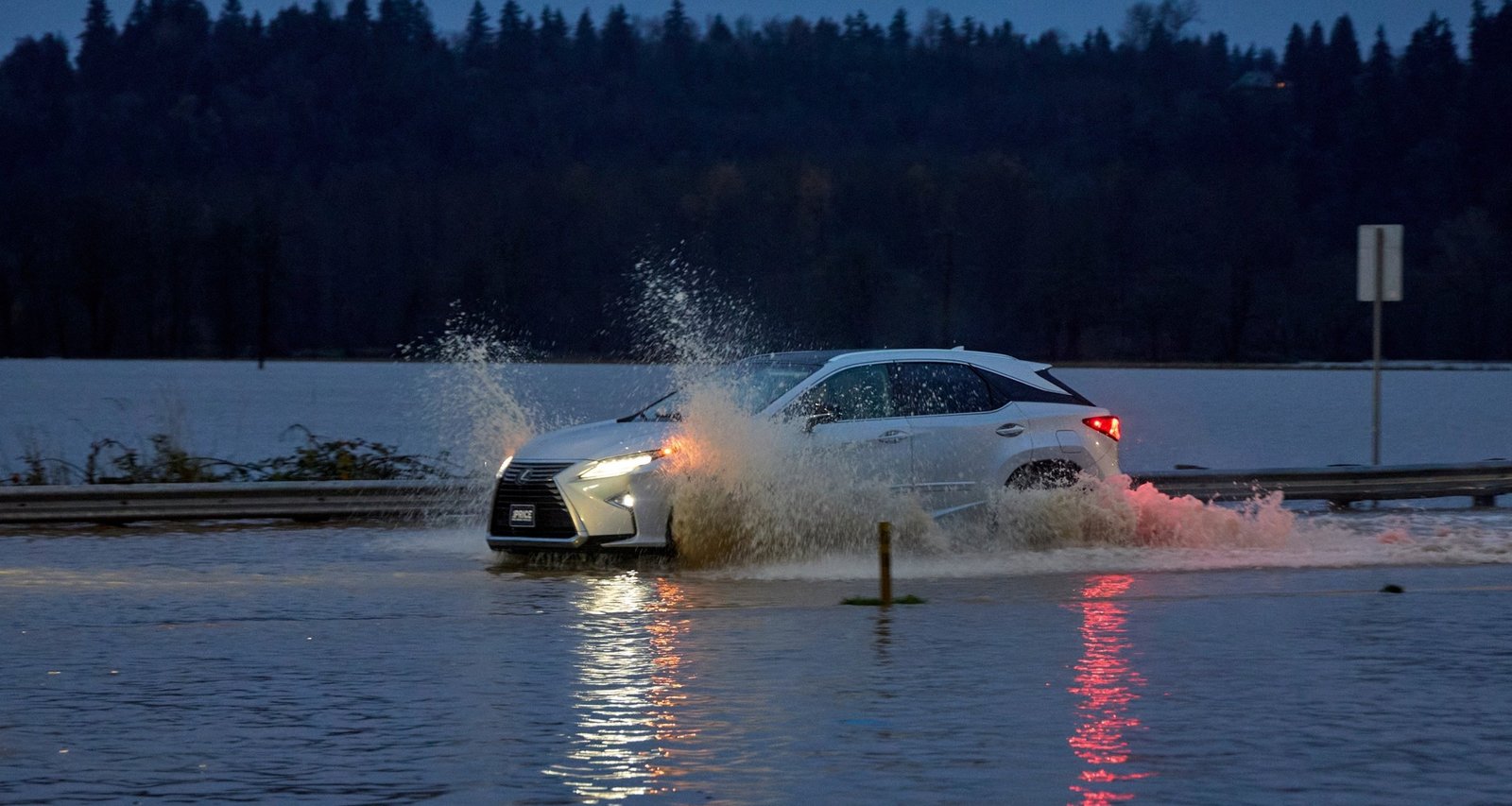
Imagem: Internet
Senator Maria Cantwell said she conferred with federal meteorologists and expressed concern that the Skagit River could crest up to 5 feet above its previous record. She emphasized that the current threat should not be treated as an ordinary seasonal flood and advised residents to act as soon as local authorities issue directions.
Preparedness Measures
The Washington Emergency Management Division has staged high-water vehicles, swift-water rescue teams and National Guard units at strategic locations across western counties. Shelters are open in multiple communities, with priority given to vulnerable populations such as older adults, individuals with mobility challenges and those living in low-lying areas.
Utility crews are on standby for potential outages, and public works departments are distributing sandbags while reinforcing levees. Health officials cautioned drivers never to attempt crossing flooded roads, reminding the public that as little as a foot of moving water can sweep away vehicles.
While rainfall intensity is forecast to diminish by Thursday afternoon, meteorologists caution that flood danger will linger. Reservoir managers may need to perform controlled releases to ease pressure on dams, and additional landslides are possible where soils are already saturated.
Authorities will continue to issue updates as conditions evolve, urging the public to monitor official channels and to be ready to evacuate promptly if directed.
Crédito da imagem: John Froschauer/AP; David Ryder/Reuters


