Waymo’s most recent growth phase has involved operating on high-speed freeways in three metropolitan areas and introducing fully autonomous service—without human safety drivers—in Miami, Dallas, Houston, San Antonio and Orlando. These deployments build on its earlier launches in Phoenix, San Francisco and Los Angeles, which remain the company’s largest markets.
The 450,000-ride benchmark strengthens Waymo’s position against rival Tesla, whose self-driving ambitions are presently concentrated in limited pilot programs. Tesla’s ride-hailing tests in Austin and the San Francisco Bay Area rely on company-owned vehicles that keep a human supervisor behind the wheel, distinguishing them from Waymo’s completely driverless fleet.
During Tesla’s latest earnings call, executives said pilot vehicles had accumulated about 250,000 autonomous miles in Austin and more than one million miles in the Bay Area. By comparison, Waymo announced in July that its vehicles had driven 100 million miles without a human operator, a figure that includes both testing and commercial service.
The divergent approaches highlight two prevailing strategies in the race to commercialize autonomous transportation. Waymo continues to emphasize fully driverless operations in defined service zones, while Tesla tests broader software capabilities under human oversight. Each strategy faces distinct regulatory frameworks, with state and municipal agencies setting localized requirements for public road deployment.
Regulators at the U.S. Department of Transportation have signaled interest in establishing nationwide guidelines for automated vehicles, though current oversight remains largely fragmented among states. Industry observers note that consistent federal standards could influence how quickly companies scale beyond early launch cities.
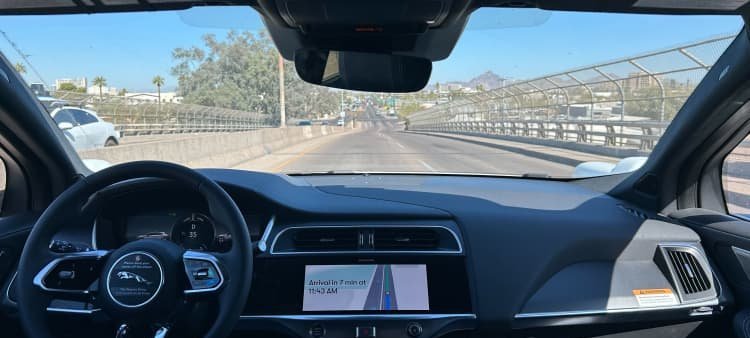
Imagem: Internet
For investors, Tiger Global’s disclosure positions Waymo as a near-term revenue driver within Alphabet’s “Other Bets” division. The fund’s letter cited the robotaxi unit’s accelerating trip volume and operational data as key factors in its investment thesis. Financial details were not released, and Alphabet does not break out Waymo’s individual earnings in quarterly filings.
Waymo has not provided updated information about fleet size or average fare, but previous statements indicate a mixture of Chrysler Pacifica minivans and Jaguar I-PACE electric SUVs equipped with proprietary hardware and software. The company is also collaborating with manufacturers to integrate its systems into purpose-built autonomous vehicles that could extend service to additional markets.
Market analysts suggest that sustained ridership growth could strengthen Waymo’s negotiating position with municipal regulators and transit authorities, many of whom are evaluating autonomous services as a supplement to existing transportation networks. However, questions remain regarding long-term profitability, infrastructure demands and public acceptance as service footprints widen.
Tesla, meanwhile, continues to pursue a software-first approach that it believes will unlock autonomous ride-hailing across its global customer base. The company has indicated plans to remove human supervisors once it meets internal safety benchmarks and regulatory approvals, but it has not set a public timeline.
With weekly rides now exceeding 450,000 and ongoing expansion into new regions and freeway segments, Waymo maintains a tangible lead in deploying driverless technology at commercial scale. The next phase of growth will likely hinge on regulatory harmonization, technological refinement and the pace at which riders embrace fully autonomous travel.
Crédito da imagem: Brendan McDermid | Reuters


