Senior officials emphasized that the briefing does not signal an imminent attack. Instead, it updates the president on a menu of possibilities crafted by the Pentagon, reflecting evolving intelligence and regional deployments. Specialists familiar with the planning say the spectrum of options includes:
- No additional action, maintaining existing maritime interdiction and intelligence operations.
- Air strikes targeting Venezuelan seaports, airports and selected military facilities thought to support narcotics trafficking and illicit migration networks.
- Limited special-operations raid aimed at capturing or eliminating President Nicolás Maduro and senior advisers—an alternative viewed by planners as the least likely to be chosen.
Any move against Venezuela carries substantial risk. While the administration has publicly called for Maduro’s removal, officials acknowledge that his abrupt ouster could open a power vacuum and spark broader instability. Questions also remain about the legal grounds for direct action. Members of the Senate who were recently shown a classified target list said the administration’s current legal rationale covers only ongoing maritime interdictions, not strikes inside Venezuelan territory.
On Thursday, Hegseth announced that the broader regional effort has been designated Operation Southern Spear. The campaign umbrella covers intelligence collection, counternarcotics patrols and naval task-force activities stretching from the Caribbean to the eastern Pacific. For background on U.S. military authorities in the Western Hemisphere, analysts often reference the statutory framework detailed by the Congressional Research Service.
The arrival of the USS Gerald R. Ford marks the carrier’s first deployment to the Southern Command theater. Built to accommodate more sorties per day than previous classes, the vessel offers the administration rapid strike capacity, should it be ordered. Navy officials note that the ship’s presence also serves as a visible deterrent and as reassurance to partners concerned about regional narcotics flows.
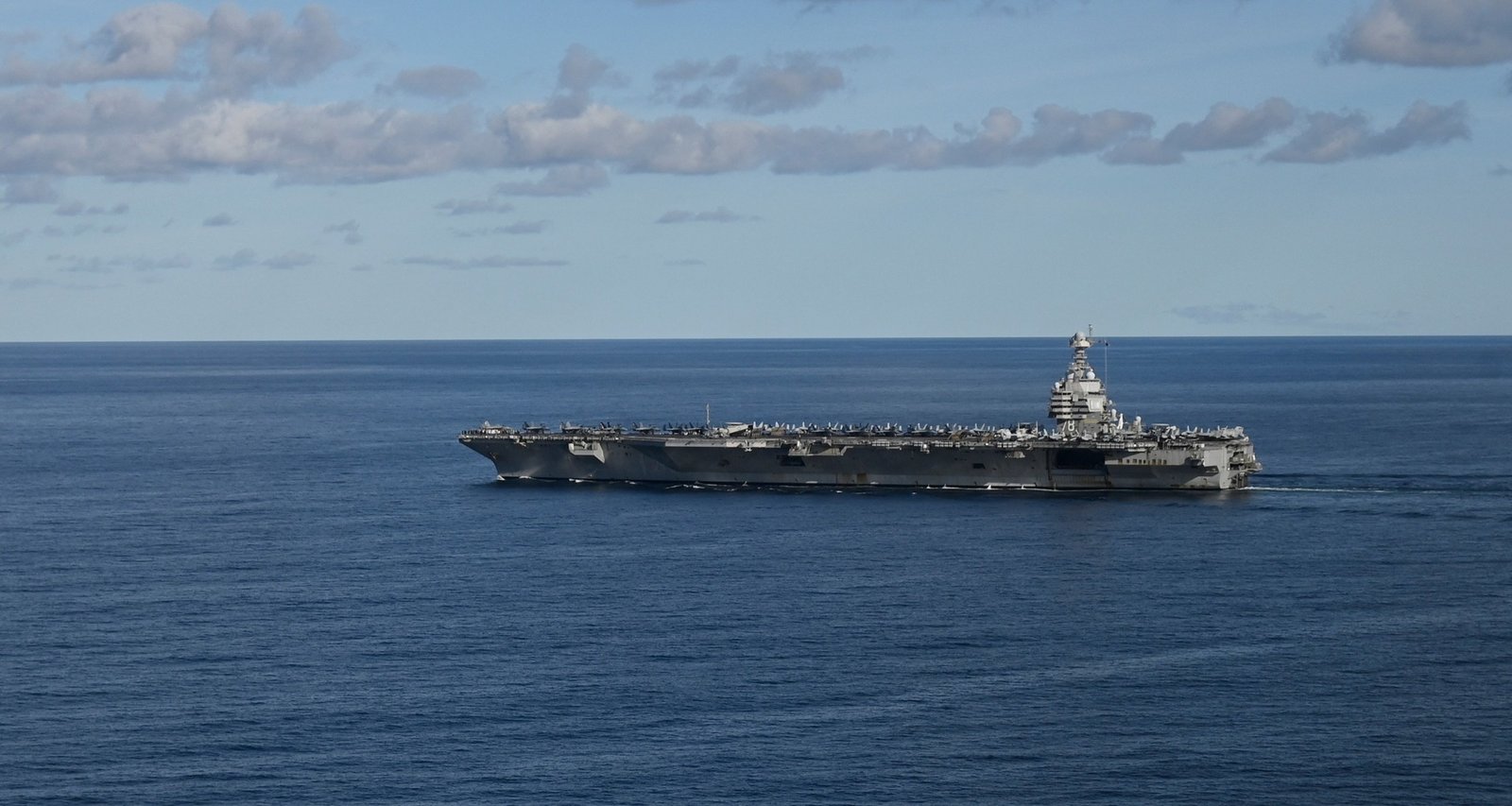
Imagem: Internet
In parallel with military planning, diplomats continue to press allies for coordinated pressure on Caracas. Rubio, speaking on the sidelines of the G7 ministerial in Montreal, reiterated calls for democratic reforms but stopped short of endorsing force. European and Latin American governments have expressed mixed reactions, with some urging caution over the prospect of unilateral U.S. military intervention.
Trump has weighed his options for several weeks, frequently citing Maduro’s alleged role in drug trafficking and the flow of migrants toward the United States. Nevertheless, advisers caution that any strike would require careful sequencing to avoid civilian casualties and to account for Venezuela’s complex internal dynamics, including the loyalty of security forces to Maduro’s government.
Congressional oversight is expected to intensify if the White House moves closer to military action. Lawmakers from both parties have asked for additional briefings to clarify objectives, exit strategies and humanitarian contingencies. Without explicit statutory authorization, any strike would likely draw scrutiny under the War Powers Resolution, a point repeatedly raised during recent classified sessions on Capitol Hill.
For now, commanders continue to refine targeting data, basing plans and logistics, while the administration weighs diplomatic, economic and military levers. Officials familiar with the process say the president has not indicated a preferred option and that the decision window remains open.
Crédito da imagem: Jonathan Klein/AFP via Getty Images


