During the briefing, Leavitt noted that initial instructions to stop the vessel originated with Secretary of War Alexander Haig, who, according to her description, conveyed a presidential directive to neutralize everyone on board. She emphasized, however, that the decision to employ a second round of force was made by Bradley on the scene, not by Defense Secretary Pete Hegseth.
The clarification followed President Donald Trump’s weekend remarks, in which he said he would not have favored a second strike if survivors were present and added that Hegseth had assured him no such order had been issued. Leavitt’s comments appeared aimed at resolving discrepancies between the president’s statement and internal military accounts.
The administration maintains that the engagement was consistent with established law of armed conflict and U.S. statutes allowing interdiction on the high seas. Under the Maritime Drug Law Enforcement Act, American forces may act against vessels suspected of carrying illicit drugs in international waters when authorized by relevant officials.
Leavitt said the president “has a right to take them out” if individuals threaten U.S. interests, underscoring the administration’s portrayal of the operation as an act of self-defense designed to curb the flow of narcotics toward U.S. shores.
Health update on the president
The briefing also included the release of results from an MRI performed on Trump in October. Leavitt reported that the imaging showed normal cardiovascular and abdominal readings and concluded that the president remains in excellent overall health. The scan, she said, was part of routine preventive care intended to identify potential issues early and preserve long-term fitness for duty.
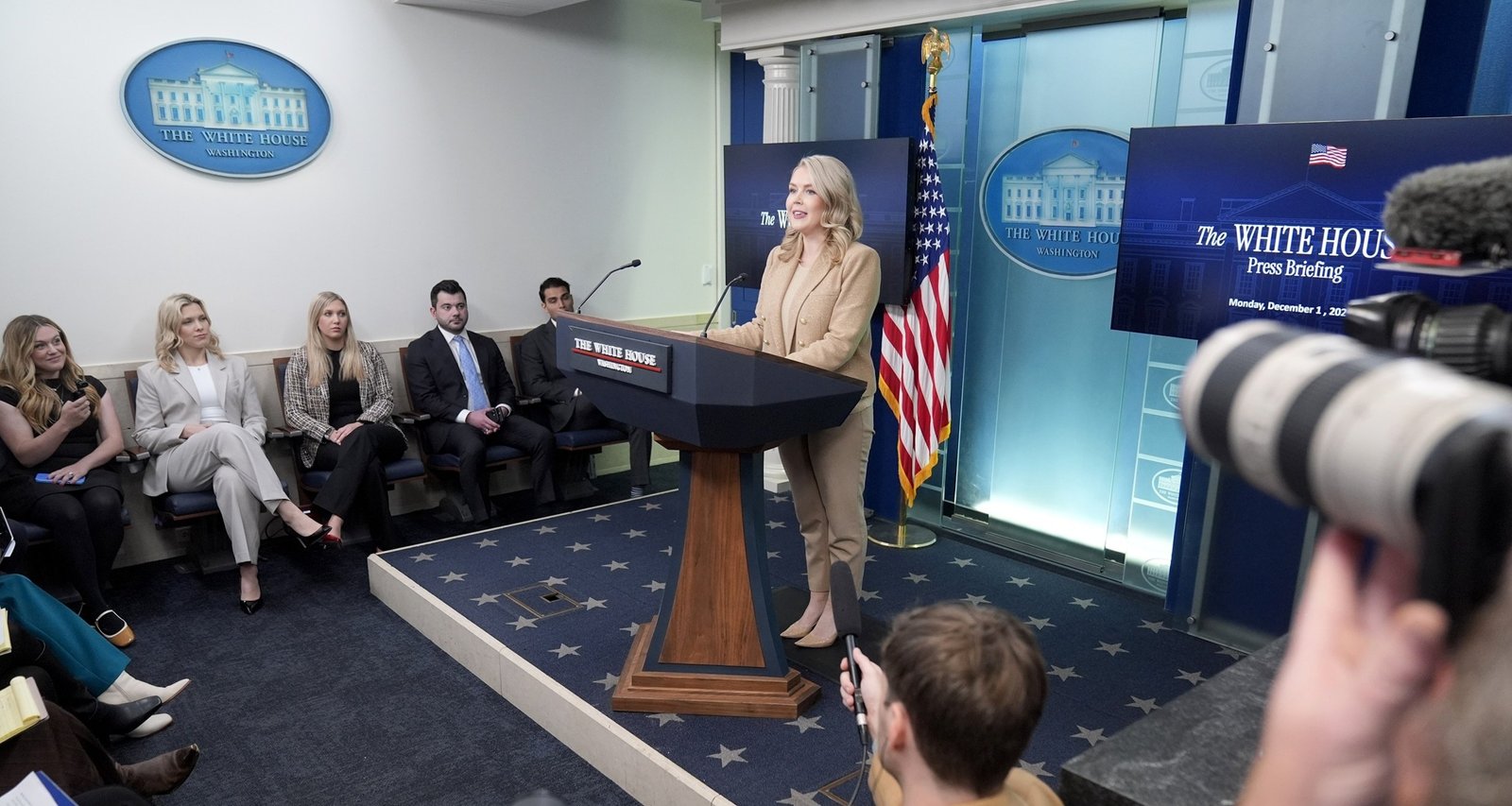
Imagem: Internet
Pardon of former Honduran leader
Reporters pressed Leavitt on Trump’s recent pardon of former Honduran president Juan Orlando Hernandez, who was serving a 45-year sentence in the United States for facilitating cocaine shipments. Leavitt contended that Hernandez had been unfairly prosecuted by the previous U.S. administration, portraying the case as politically motivated. She rejected comparisons to the administration’s stance on Venezuelan president Nicolás Maduro, arguing that the two situations differ substantially but did not elaborate on policy specifics.
Congressional agenda resumes
While the White House sought to address the mounting scrutiny over the Caribbean operation, lawmakers returned to Capitol Hill after the Thanksgiving recess facing a crowded legislative calendar. The Senate is negotiating government funding bills and debating the extension of Affordable Care Act tax credits scheduled to lapse at year’s end. In the House, members plan votes on several education measures and two proposals affecting the Small Business Administration.
Failure to enact appropriations before the current stopgap law expires would trigger a partial government shutdown, a prospect congressional leaders on both sides have vowed to avoid. Senate negotiators are also contending with differing views on long-term policy riders linked to the ACA subsidies.
Efforts to end the war in Ukraine
On the foreign-policy front, special envoy Steve Witkoff is expected in Moscow early this week for talks with Russian officials aimed at securing a framework to end Russia’s ongoing war in Ukraine. Administration officials conducted a series of calls over the weekend to prepare for the meeting, which they hope will accelerate progress toward a negotiated settlement. No timetable for potential agreements has been disclosed.
The combined developments — a contested military strike, a contentious pardon decision, health updates on the president, and a looming fiscal deadline — underscore the broad range of issues confronting the administration as the final month of the year begins.
Crédito da imagem: Mark Schiefelbein / AP


