During the 2021 “Texas Freeze,” prolonged power failures prevented many households from heating their homes, magnifying insured losses. Utility companies and emergency managers are urging residents to prepare for similar contingencies by safeguarding water lines and stocking essential supplies.
Stockpiling pitfalls
In advance of the storm, consumers in numerous states have cleared store shelves of bread, milk and other staples. Amir Mousavian, professor of supply chain management at the University of New England’s College of Business, cautions against buying far beyond a few days’ worth of necessities. Excess purchasing can strain supply chains, raise prices and increase household food waste, especially for perishable goods.
Food prices remain sensitive to shifts in supply and demand. Rapid, localized spikes—common before major weather events—can cause temporary inflation, putting additional pressure on household budgets.
Travel disruptions and passenger rights
Airlines began canceling flights ahead of the storm, and carriers such as Delta Air Lines and United Airlines issued change-fee waivers for affected routes. Passengers with flexibility may benefit from rebooking trips a week or more after the storm passes, according to industry analysts.
Federal rules entitle travelers to a full refund only when the airline cancels a flight and the passenger declines rebooking. Voluntary cancellations generally lead to credit vouchers unless the original ticket was fully refundable. Mobile apps and push notifications help flyers monitor gate changes and cancellations in real time.
Rental-car reservations can typically be modified without penalty until pickup, but policies vary for bookings made through third-party sites. Hotel cancellation windows range from 24 to 48 hours, although some nonrefundable rates may be waived on a case-by-case basis during severe weather. Several premium credit cards and standalone travel insurance policies include trip interruption coverage that may reimburse nonrefundable costs.
Heating costs on the rise
Cold weather over large areas boosts nationwide demand for electricity and natural gas. The spot price of natural gas climbed to $8.15 per million British thermal units on Jan. 22, up from $5.19 one week earlier, according to the U.S. Energy Information Administration (EIA). Higher wholesale gas prices tend to push electricity rates higher, a trend already evident in consumer bills: December’s Consumer Price Index showed electricity prices up 6.7% year over year.
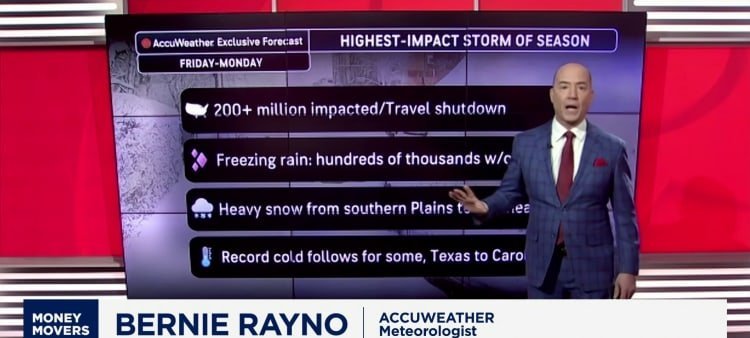
Imagem: Internet
Households reliant on heating oil are paying an average of $3.66 per gallon as of Jan. 19, down modestly from $3.93 a year ago, EIA data show. Still, overall heating expenses are expected to rise as furnaces work harder through the storm’s duration.
Courtney Fieldman, utility program director at the Southwest Energy Efficiency Program, recommends several low-cost steps to conserve energy:
- Set thermostats between 65 °F and 68 °F during daylight hours to capture solar warmth and cut heating costs by roughly 10%.
- Block drafts with towels, blankets or improvised door snakes, and close vents in unused rooms to keep warm air where it is needed.
- Open curtains on the sunny side of the home during the day, then close them at dusk to retain heat.
- Dress in layers, limit the use of space heaters and switch off lights in unoccupied rooms.
Steps to reduce potential losses
Financial planners emphasize preparation as the most effective way to limit the storm’s economic impact:
- Protect property: Cover exterior faucets, insulate pipes and remove tree limbs that could break under ice.
- Secure supplies: Keep a three-day stock of water, nonperishable food, batteries and medications to avoid last-minute shopping.
- Document assets: Take photos of valuables and store insurance contact information in a safe, accessible location.
- Review policies: Verify that homeowners or renters insurance is current and understand deductibles and exclusions.
Residents can monitor official storm updates through the National Weather Service, which issues real-time advisories, watches and warnings.
The NWS expects the storm’s impact to peak over the weekend, with conditions gradually improving early next week. Nonetheless, forecasters stress that ice-laden power lines and blocked roadways may prolong disruptions even after precipitation ends. Utility crews, road departments and emergency responders are positioning resources across multiple regions to expedite recovery efforts.
For millions of Americans, the coming days may bring hazardous travel, elevated heating bills and the risk of property damage. Advance planning—combined with a clear understanding of insurance protections and consumer rights—can help households weather both the storm and its potential financial fallout.
Crédito da imagem: Bloomberg / Getty Images