The pending earnings announcement could prove decisive. The company’s post-report track record is evenly split: in the past two years, the stock finished higher the day after results in half of the eight quarters observed. The most recent report, in November, produced a 2.9% one-day advance. Over that same two-year period, Wynn Resorts registered an average next-day share-price swing of 4.2%, regardless of direction.
Options traders, however, are bracing for a larger move this time. Current at-the-money straddle pricing implies a potential 10.2% swing in either direction following the Feb. 12 release, more than double the two-year historical average. The heightened expectations coincide with the stock’s Schaeffer’s Volatility Scorecard reading of 73 out of 100, a metric suggesting that realized volatility has consistently exceeded what options premiums predicted. If that pattern persists, the implied move could prove conservative.
Short interest remains another variable in the mix. The number of shares sold short fell 20.2% in the most recent reporting period, yet still represents 5.8% of Wynn Resorts’ public float. Continued covering by short sellers could add incremental buying pressure, especially if earnings or guidance surpass consensus forecasts.
Beyond technical considerations, investors will focus on several fundamental issues when management reports results next week. Analysts will look for color on Macau gaming volumes, progress at the company’s Encore Boston Harbor property, and updated commentary on cost controls. Market participants will also examine capital allocation plans, including any commentary on share repurchases or potential dividend adjustments.
Trading volume ahead of the announcement has been mixed. Daily turnover trended higher in late December during the retreat from the $134 area, but eased in January as the shares consolidated around the $110 level. According to Nasdaq market data, average daily volume over the past month stands near 2.3 million shares, below the 2.7 million average observed over the prior three months. Lower participation can amplify price swings when new information hits the tape.
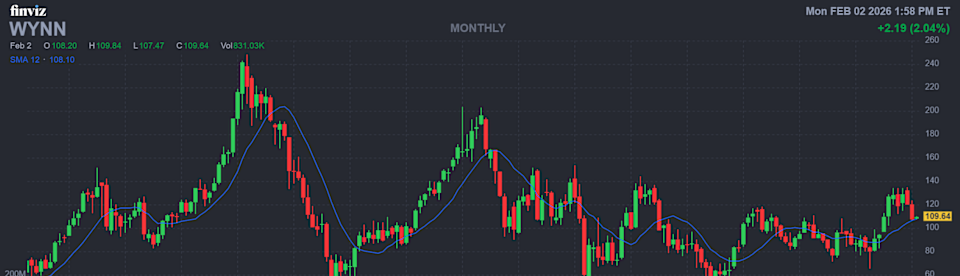
Imagem: Internet
Sector peers face similar crosscurrents. Gaming companies with exposure to both U.S. and Asia are balancing improved domestic leisure travel against the pace of post-pandemic recovery in Macau. Any commentary from Wynn Resorts regarding table limits or visa-processing trends in the region could influence sentiment across the group.
From a valuation standpoint, the recent pullback has trimmed the company’s market capitalization to roughly $12 billion, based on Monday’s intraday quote. While share price appreciation in 2025 bolstered the multiples assigned to forward earnings estimates, the subsequent decline brings those ratios closer to levels seen in early summer, when Macau visitation expectations were more guarded.
In the credit markets, Wynn Resorts’ bonds have traded in line with other gaming issuers of similar rating, reflecting stable liquidity and manageable near-term debt maturities. Any update to leverage targets or refinancing plans during the earnings call will likely be scrutinized, given the broader backdrop of rising interest rates.
Looking ahead, the convergence of technical support, reduced short interest, and elevated options premiums sets the stage for a potentially volatile reaction on Feb. 13, the first trading day after results are published. While the 20-year trendline analysis offers a statistically favorable backdrop, the actual outcome will depend on the company’s ability to meet or exceed expectations on revenue, margin, and forward guidance.
Until then, market participants will monitor price action near the 12-month moving average. A decisive close below that level could undermine the bullish historical pattern, while a rebound toward the $120 area would reinforce the idea that long-term support remains intact.
Crédito da imagem: Wynn Resorts Ltd. Investor Relations