
Democrat Abigail Spanberger is projected to win Virginia’s 2025 gubernatorial election, defeating Republican Lt. Gov. Winsome Earle-Sears and positioning herself to become the first woman ever elected governor of the Commonwealth. The projection was made on the evening of Nov. 4 with slightly less than half of all expected ballots counted.
Early returns showed Spanberger leading Earle-Sears by roughly 10 percentage points, 55% to 44%. The margin tracked closely with pre-election surveys that consistently placed the former U.S. representative ahead of the Republican ticket. If the trend holds through the final tally, Democrats will reclaim an office last held by their party in 2022.
Spanberger’s apparent victory tops an election night that also produced a projected Democratic win in the contest for lieutenant governor. State Sen. Ghazala Hashmi is on course to defeat Republican radio host John Reid in the separately elected post. The race for attorney general remains unresolved; Republican incumbent Jason Miyares is facing Democrat Jay Jones, a former member of the House of Delegates who spent the campaign’s final weeks addressing fallout from a texting scandal in which he urged violence against a GOP lawmaker. Jones apologized and pledged accountability, but the incident gave Republicans fresh ammunition in the closing stretch.
Republicans entered the cycle determined to extend control of the Executive Mansion after the single, non-renewable term of Gov. Glenn Youngkin. Democrats, meanwhile, sought to harness voter frustration over widespread layoffs and the ongoing partial shutdown of the federal government—events that hit Virginia harder than most states because of its large population of public-sector employees. According to the U.S. Office of Personnel Management, more than 300,000 federal workers live in Virginia, many of them near the Washington, D.C., suburbs.
Preliminary exit polling indicated that about half of voters named the economy as the most pressing concern, and a majority said recent federal workforce cuts were affecting their personal finances. Those findings echoed a campaign in which both major parties framed the contest as a referendum on national economic decisions. Democrats argued that budget reductions ordered by the Department of Government Efficiency during former president Donald Trump’s second term, along with the current shutdown, endangered household stability. Republicans countered that fiscal restraint was necessary to curb spending and promote growth.
The political symbolism of the off-year race extends beyond Virginia’s borders. Gubernatorial results in the Commonwealth are frequently viewed as an early barometer for the following year’s congressional midterms, especially in competitive suburban districts. Analysts also watched whether voter sentiment would track with Trump’s performance; the former president lost Virginia in 2016, 2020 and 2024 by significant margins, and Spanberger’s lead will likely be interpreted as further resistance to his agenda in the state.
On the stump and during an October debate, Spanberger and Earle-Sears sparred over education funding, renewable versus traditional energy sources, and the level of cooperation local law-enforcement agencies should provide to federal immigration authorities. Spanberger emphasized a pragmatic governing style, while Earle-Sears leaned on her record as lieutenant governor and argued that Republican leadership would maintain recent job gains.
Spanberger’s political résumé includes three terms in the U.S. House representing a Central Virginia district. She built a reputation for moderate positions on fiscal matters and national security. Earle-Sears, the first woman of color elected lieutenant governor in Virginia, campaigned as a staunch conservative with an emphasis on parental rights in schools and restrictions on abortion.
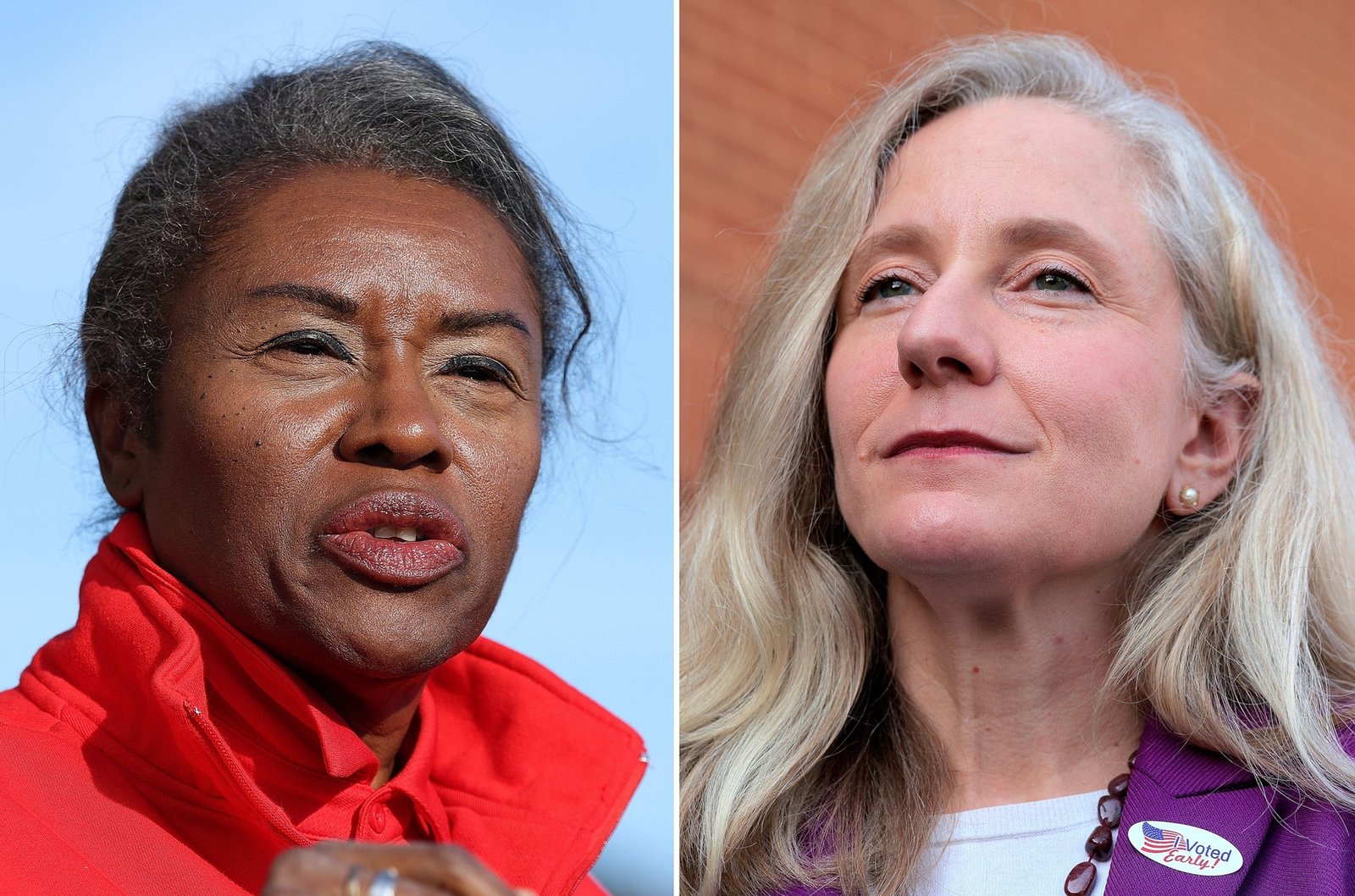
Imagem: Internet
Hashmi, poised to become lieutenant governor, emigrated from India as a child and previously taught literature at a community college before winning a state Senate seat in 2019. Her Republican opponent, Reid, is best known as a Richmond-area talk-radio personality who entered politics for the first time this cycle.
In the attorney-general contest, Miyares sought a second term by highlighting his efforts to combat fentanyl trafficking and cybercrime. Jones contended that Miyares had politicized the office by joining multistate lawsuits against federal regulations, but the Democrat’s campaign was overshadowed when private text messages surfaced in which he advocated physical retaliation against a political rival. Although Jones expressed remorse, Republican strategists used the episode to question his judgment.
Turnout appeared robust across urban and suburban precincts, a trend election officials attributed to early voting options and heightened interest in federal policy debates. Final participation figures will not be available until all mail ballots are processed in accordance with state law.
The Virginia Constitution bars governors from serving consecutive terms, clearing the path for Spanberger to succeed Youngkin once the results are certified. In addition to making history as the state’s first female governor, she would become the second Democrat to hold the office in the past decade.
The State Board of Elections is expected to certify official returns later in November. Should the projected outcomes stand, Democrats will hold both the governorship and the lieutenant governorship, while the attorney general’s office remains to be decided.
Crédito da imagem: Getty Images / AP