
Major U.S. carriers will ground hundreds of flights beginning Friday as the Federal Aviation Administration implements mandatory capacity reductions at 40 large airports in response to the prolonged federal government shutdown.
American Airlines plans to cancel approximately 220 of its roughly 6,000 daily departures from Friday through the weekend. United Airlines intends to remove fewer than 200 of its more than 5,000 daily flights over the same period, while Delta Air Lines expects to cancel about 170 flights each day. All three companies say most affected passengers should be accommodated on alternative services.
FAA order targets 40 high-impact airports
The FAA earlier this week announced a phased reduction in scheduled operations designed to ease pressure on air-traffic control facilities that have been operating with limited staffing since the shutdown began more than a month ago. Initial cuts of roughly 4 percent will deepen to 10 percent, federal officials said.
An emergency directive issued Thursday requires airlines to trim flight volumes at the specified airports by 6 percent no later than Nov. 11 and by 10 percent by Nov. 14. Carriers exceeding their allocated slots face fines of up to $75,000 per flight, according to the order.
Transportation Secretary Sean Duffy has warned that, absent relief, the agency could be forced to close portions of the national airspace next week, a step he said would cause widespread disruption.
Staffing shortages drive flight limits
Air-traffic controllers, classified as essential employees, continue working without pay during the shutdown. The prolonged lapse in funding has led to elevated absenteeism, particularly at busy facilities. Last weekend the New York City region reported periods when as many as 80 percent of scheduled controllers were off duty, the FAA said.
Persistent staffing gaps have produced scattered delays and cancellations in recent weeks, but the newly mandated schedule cuts mark the largest coordinated adjustment since the budget standoff began. Industry observers note that a similar wave of controller absences contributed to the resolution of the 35-day shutdown in 2019.
Airlines spread cancellations across their networks
Carriers say they are selecting flights with historically lighter passenger loads or multiple alternative departures to limit traveler inconvenience. United, for example, is avoiding the elimination of routes with only one or two daily frequencies, opting instead to distribute reductions throughout its network.
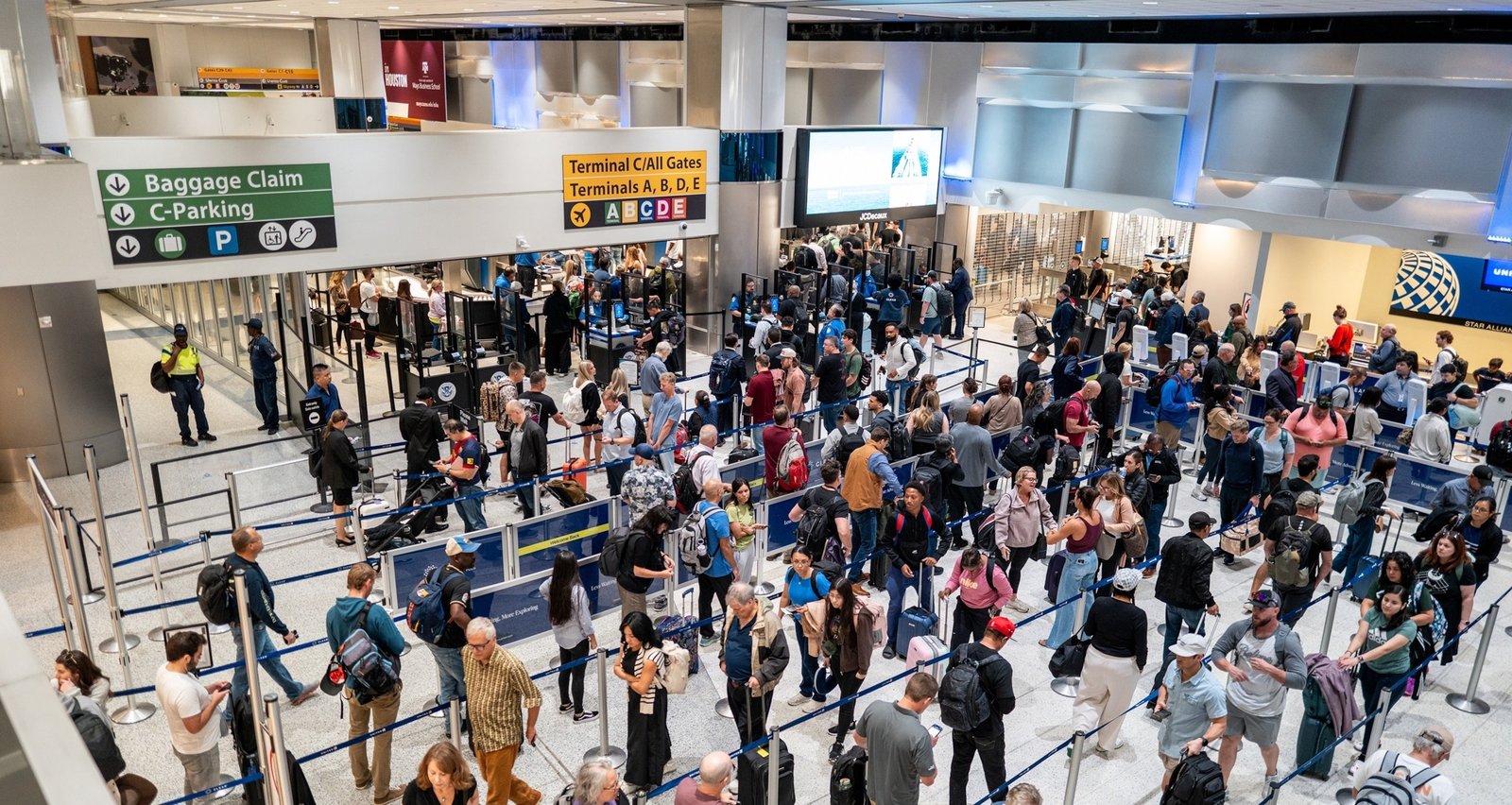
Imagem: Internet
Executives at the three largest airlines emphasize that the timing of the order, which falls between the peak summer season and the year-end holidays, provides additional flexibility. They also note that load factors are typically lower in early November, allowing room to rebook most customers on the same day.
Despite those reassurances, travelers passing through the affected airports should prepare for longer lines, schedule changes and the possibility of missed connections as airlines recalibrate their operations. The 40 airports designated as “high-impact” include the nation’s busiest hubs, from Atlanta’s Hartsfield-Jackson to Los Angeles International.
Potential ripple effects beyond the weekend
The FAA will reassess staffing levels and traffic flows early next week to determine whether further adjustments are necessary. If the shutdown persists and controller availability continues to deteriorate, airlines could face deeper cuts or rolling ground stops.
Industry trade groups have urged Congress and the White House to reach an agreement that would restore agency funding and allow suspended hiring and training programs to resume. According to FAA data, the controller workforce has been near critical minimums for several years, and prolonged hiring freezes risk widening the gap as experienced personnel retire.
For now, airlines advise passengers with upcoming itineraries to monitor their flight status closely, sign up for carrier alerts and consider allowing extra time at the airport. Rebooking options remain relatively plentiful, but seat availability could tighten quickly if the shutdown shows no sign of resolution.
Crédito da imagem: Brandon Bell/Getty Images | Jeff Chiu/AP