
A District of Columbia jury on Thursday found Sean Charles Dunn not guilty of misdemeanor assault for hurling a wrapped Subway sandwich at a U.S. Customs and Border Protection (CBP) officer during a law-enforcement surge on Aug. 10, 2025. The eight-person panel reached its decision after three days of testimony and review of dozens of exhibits presented in U.S. District Court.
Dunn, a onetime Department of Justice staff member, faced the misdemeanor charge after a grand jury declined to indict him on felony assault earlier this year. The incident, captured on video along the city’s U Street corridor, circulated widely online and earned Dunn the moniker “Sandwich Guy.”
When the verdict was read, Dunn embraced his legal team and told reporters he was “relieved” and eager to resume his normal life. Defense attorney Sabrina Shroff, who led the case, exited the courtroom declaring her satisfaction with the outcome. U.S. District Judge Carl J. Nichols presided and reminded jurors throughout deliberations that their decision had to be based solely on the evidence introduced at trial.
Confrontation in August 2025
Court records show that federal and local officers were deployed to the U Street entertainment district as part of a “high-visibility” operation intended to deter violence. According to the criminal complaint, Dunn confronted a CBP agent during the deployment, shouting, “Why are you here? I don’t want you in my city!” After several minutes of exchange, he tossed a foot-long sandwich that struck the agent in the chest. Dunn was arrested on the scene by personnel from the Federal Bureau of Investigation and CBP.
The prosecution contended that Dunn’s actions created a seven-minute distraction designed to draw officers away from their post. Assistant U.S. Attorney Michael DiLorenzo told jurors that, regardless of the object’s nature, Dunn’s conduct crossed the legal line. “Even with a sandwich, you don’t have the right to touch another person,” DiLorenzo said during closing arguments.
To support that claim, the government played body-camera footage in which Dunn acknowledges, “I did it. I threw a sandwich. I did it to draw them away from where they were. I succeeded.” Prosecutors argued this admission proved intent to interfere with law-enforcement duties, a key element of the assault allegation.
Defense Focuses on Object and Impact
Shroff, representing Dunn, centered her defense on the sandwich itself. She emphasized that the food remained intact in its original wrapping after the throw and caused no injury. Labeling the case “about a sandwich,” Shroff likened the act to “a child tossing a stuffed toy during a tantrum” and argued it lacked the foreseeability required for an assault conviction.
During cross-examination, Shroff introduced photographs showing a novelty “felony footlong” badge and a plastic Subway sandwich that colleagues later gave the CBP agent as gag gifts. She suggested that preserving such mementos was inconsistent with someone who felt genuinely threatened or harmed. “If someone assaulted you, would you keep a souvenir of the event?” she asked the jury.
The defense also framed Dunn’s remarks to officers as protected political speech criticizing federal presence in the city. By focusing on the absence of physical harm and intent to injure, Shroff urged jurors to view the incident in context rather than as a criminal assault.
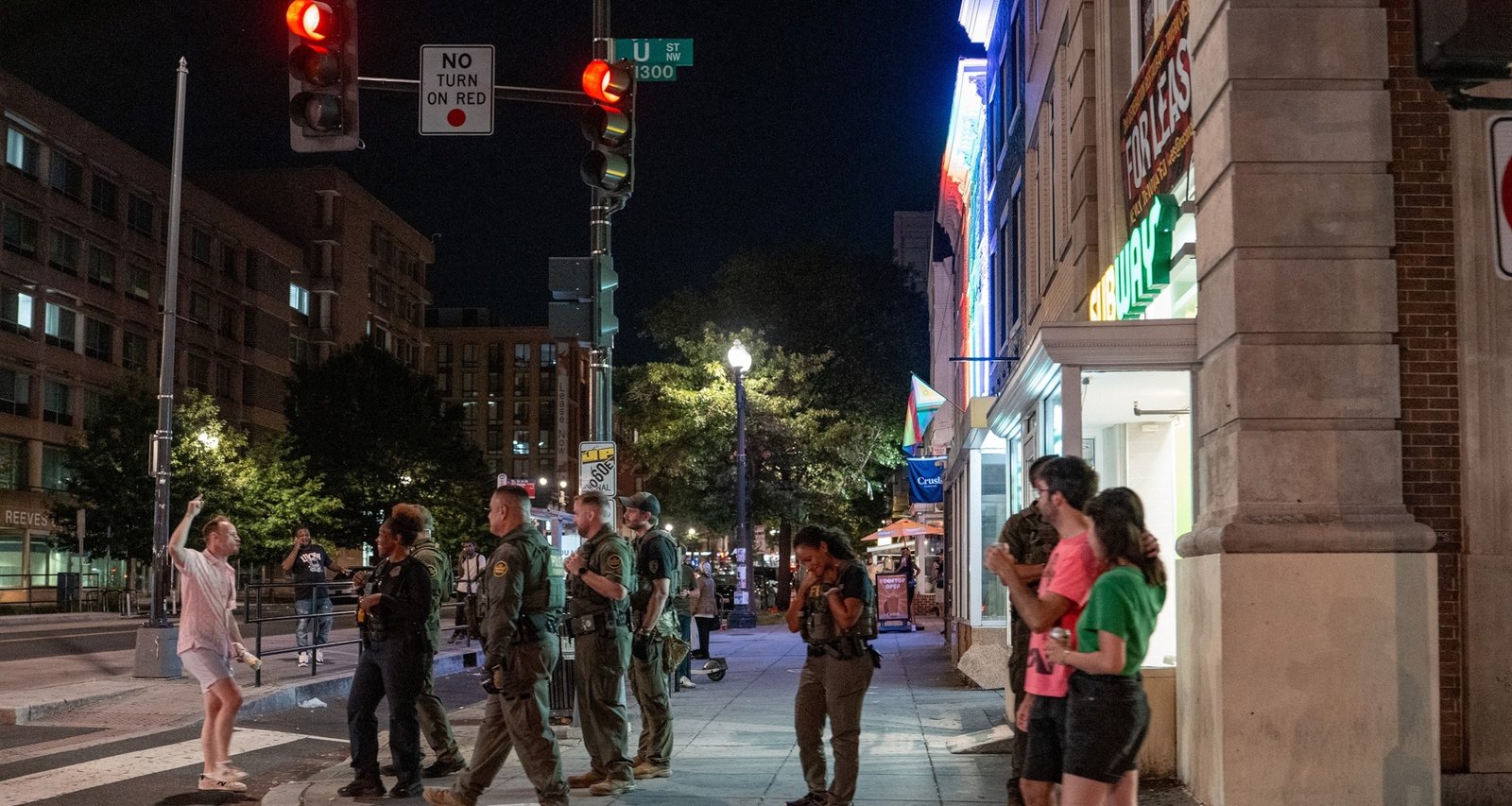
Imagem: Internet
Jury Weighs Intent and Harm
Throughout deliberations, Judge Nichols instructed jurors to consider whether Dunn’s actions constituted “offensive touching” under D.C. law and whether the government had met its burden of proving intent beyond a reasonable doubt. After several hours, the panel unanimously determined the prosecution had not satisfied that standard.
Legal analysts note that misdemeanor assault in the District can be applied to a broad range of contact, but juries often look for evidence of injury or a weapon. “Objects not typically seen as dangerous complicate assault cases,” said a criminal-procedure scholar at Georgetown Law, who was not involved in the trial.
Aftermath and Next Steps
The U.S. Attorney’s Office offered no immediate comment on whether it would pursue any further action. Barring an appeal, the verdict brings the criminal matter to a close for Dunn, who had been free on bond since his arrest.
CBP has not announced any internal review related to the confrontation. The agency’s policies on officer safety and public interactions are publicly available on the CBP website.
Dunn indicated through counsel that he intends to return to private life and does not plan to seek damages over the arrest. The defense team, meanwhile, said the case underscores the importance of distinguishing between genuine threats and symbolic protest.
Crédito da imagem: Andrew Leyden/Getty Images