
One year after losing the White House and Congress, Democrats are pointing to a trio of off-year victories as evidence that a focus on household costs and criticism of former President Donald Trump can resonate with voters. Successes in Virginia, New Jersey and New York City offer a possible template for the 2026 midterm campaign, even as party officials acknowledge that next year’s battleground will be broader and more competitive.
The 2025 Results
In Virginia, former U.S. representative Abigail Spanberger defeated Republican Lieutenant Governor Winsome Earle-Sears in the governor’s race. Exit polls indicated that roughly half of voters ranked the economy as the most important issue, and a majority of those concerned about their personal finances backed Spanberger. Although nearly 60 percent of respondents rated the state’s economy as “excellent” or “good,” more than 80 percent said they were either holding steady or falling behind financially, underscoring unease over costs despite headline growth.
New Jersey produced a similar result. Democratic congresswoman Mikie Sherrill prevailed over Republican challenger Jack Ciattarelli. Economic matters and taxes dominated voter concerns, and about half of those casting ballots said they strongly disapproved of Trump’s performance, according to exit surveys.
In New York City, State Assemblyman Zohran Mamdani, a 34-year-old self-described democratic socialist, won a three-way contest for mayor. He campaigned on freezing rents for some tenants, making buses free and expanding universal child care. More than half of city voters cited the cost of living as their top issue, and two-thirds of that group supported Mamdani over former Governor Andrew Cuomo and Guardian Angels founder Curtis Sliwa.
Shifting Views on the Economy
The off-year elections coincided with new national polling that suggests Republicans have lost their traditional advantage on economic stewardship. An NBC News survey found that 63 percent of adults believe the Trump administration has fallen short on the economy. The same poll showed the two major parties now tied on the question of which is better suited to handle economic issues—down sharply from the 20-point Republican lead recorded in 2023. Political analysts note that this is the GOP’s narrowest margin on the topic in seven years. Historical data on party advantages compiled by the Pew Research Center illustrates how unusual such parity is in modern cycles.
Roadmap, Not a Guarantee
Democratic strategists caution that victories in reliably blue jurisdictions do not automatically translate to competitive districts in states such as Arizona, Georgia or Wisconsin. Turnout in Virginia, New Jersey and New York City was high for an off-year election, yet forecasting participation in a midterm environment remains difficult. Candidate quality, message discipline and the level of Trump’s personal involvement are also expected to influence 2026 outcomes.
Spanberger, Sherrill and Mamdani emphasized affordability and criticized proposed federal workforce cuts or policies they argued would raise living costs. Party officials believe those themes can unify Democratic voters who fractured in 2024, when Trump won the popular vote and helped Republicans secure full congressional control. Even so, the national economic picture in late 2026 could either bolster Democratic arguments or allow Republicans to claim credit if conditions improve.
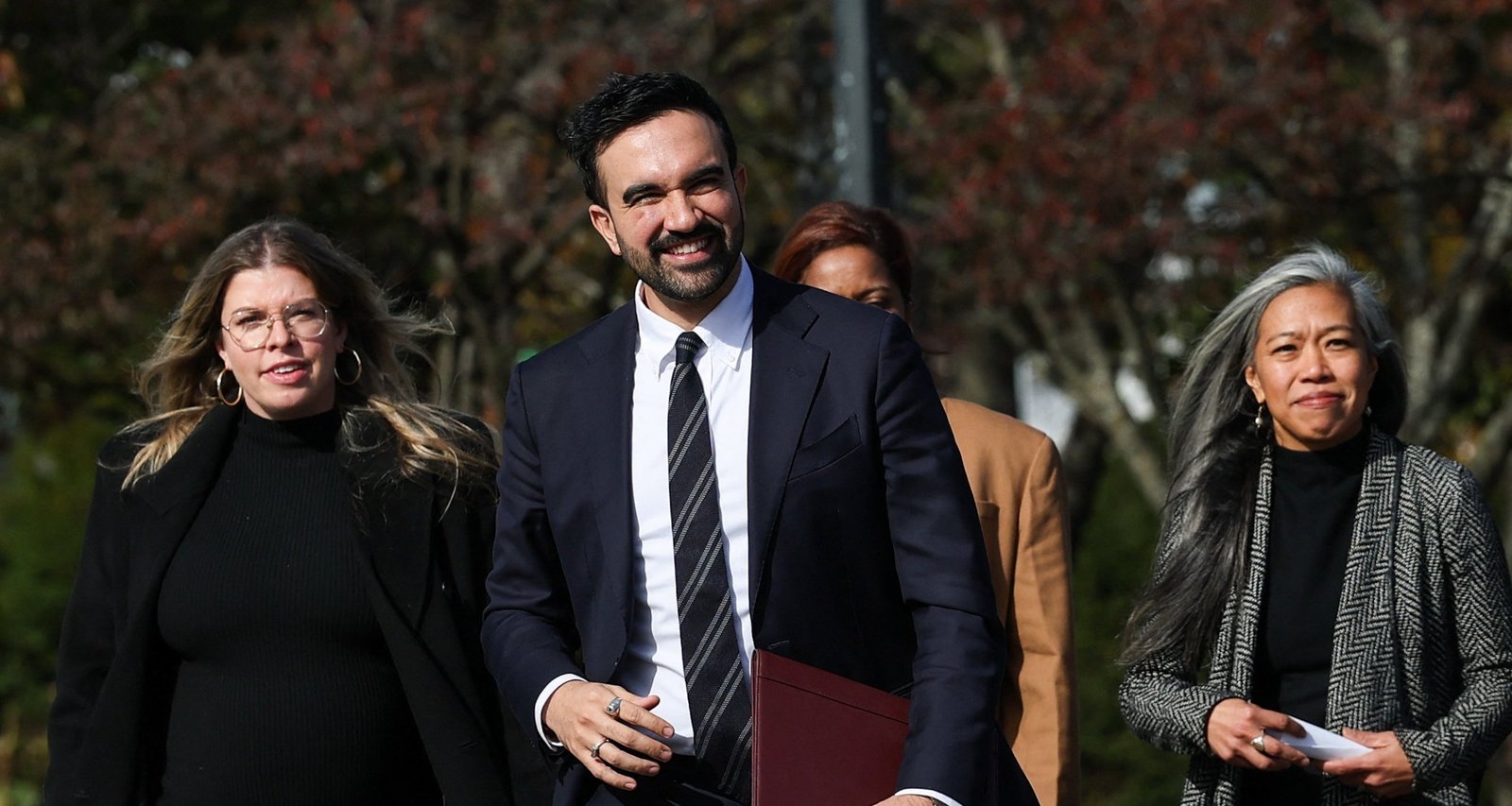
Imagem: Internet
Internal Party Dynamics
Interviews conducted on ABC’s “Good Morning America” the day after the elections highlighted continuing debate inside the party. Sherrill said the central task is “how to deliver for people,” while Mamdani pledged to demonstrate results in New York City. Their comments point to a larger conversation over policy direction as Democrats balance progressive demands with appeals to suburban and swing-district voters.
Looking Ahead
Democrats enter the midterm cycle with momentum but face a map that includes several Senate seats in Republican-leaning states and dozens of House districts carried by Trump in 2024. The party’s ability to replicate the 2025 formula—spotlighting cost-of-living concerns and leveraging dissatisfaction with Trump—will be tested in regions where partisan identities are less predictable.
Republicans, meanwhile, are expected to reassess their economic messaging after the NBC poll and Tuesday’s results. GOP strategists have long viewed inflation and taxation as reliable lines of attack, yet the latest numbers suggest voters are open to alternative approaches. Both parties will monitor economic indicators closely; shifts in wages, employment and prices could alter perceptions before ballots are cast next November.
The 2025 contests have supplied Democrats with data points on voter priorities and message efficacy. Translating those findings into a winning national strategy, however, will require sustained attention to local conditions, candidate recruitment and policy delivery over the next twelve months.
Crédito da imagem: AFP via Getty Images