
Panama City, Panama — Dutch author, artist and filmmaker Samuel van Keeken has published a first-person account describing how he works to maintain a sense of lightness while confronting loss, uncertainty and the passage of time. Writing at age 30, van Keeken reflects on childhood memories, the death of his father a decade ago and a series of deliberate experiments intended to test whether it is possible to remain open-hearted as adult responsibilities accumulate.
Childhood image becomes guiding metaphor
The narrative begins with an evening scene from the Netherlands: streetlights turning neighborhoods a monochrome yellow at dusk. As a child, van Keeken felt a recurring sadness during this transitional moment, an emotion he later connected to broader questions about impermanence. A bicycle trip for ice cream with his father on one such evening became, in hindsight, an enduring symbol of choosing small joys over despair. The writer notes that his father died of cancer when he was 20, a loss that intensified his preoccupation with how to avoid cynicism.
Early adulthood marked by wide-ranging pursuits
In his twenties, van Keeken tried to outrun bitterness by immersing himself in multiple disciplines, including philosophy, the arts, powerlifting, financial trading, travel, filmmaking and writing. He characterizes this period as an energetic but ultimately insufficient search for answers. Despite professional success and varied experiences, he reports that the underlying question — how to remain emotionally “light” while memories accumulate — persisted.
Encounter with burnout and contemplation of suicide
The accumulation of unresolved questions led to what van Keeken describes as a prolonged stretch of emotional exhaustion. During that interval he considered suicide, concluding that the option of “stepping out” always seemed available. The admission functions as a turning point in the account, redirecting his attention from seeking definitive answers to cultivating new questions about how to live with uncertainty.
Influence of a friend’s upbeat perspective
A conversation with a woman known for greeting difficulties with levity helped shift his outlook. According to van Keeken, her habit of responding to serious topics with humor demonstrated that weighty subjects need not dominate daily interactions. The episode convinced him that the unknown, once seen as an enemy, might instead be treated as a source of possibility.
Experiments with literal and figurative reversal
To test that idea, van Keeken and his partner undertook a two-month trek in northern Spain, walking backward along sections of the Camino de Santiago. The unusual method was intended to make uncertainty tangible by limiting their forward field of vision. He reports that, once the initial fear subsided, the couple experienced a heightened sense of presence and freedom.
Following the Spanish journey, the pair left Amsterdam for rural Panama, settling in an agricultural area known locally as “el campo.” Isolated from familiar stimuli, van Keeken confronted what he calls the lingering effects of perfectionism and the impulse to impose order on a disorderly world. The isolation, he says, ultimately reinforced the value of accepting circumstances rather than resisting them.
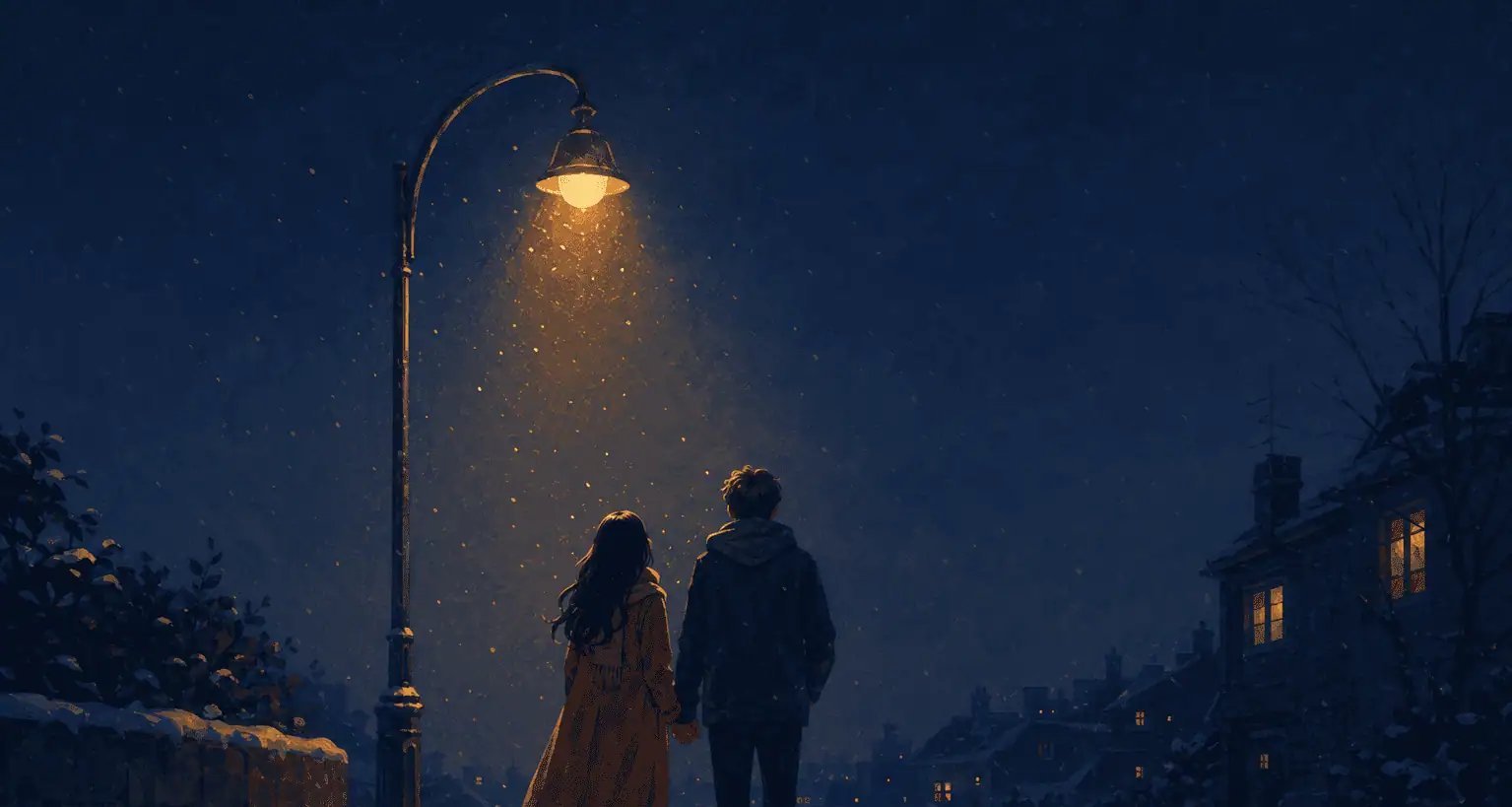
Imagem: Internet
Professional initiative built around existential courage
While in Panama, the writer co-founded Same Worldwide, a project that publishes essays, artistic works and hosts retreats. The venture centers on what he terms the “Same Method,” a framework designed to foster existential courage and encourage meaningful action. Details about the curriculum are not specified in the personal essay, but the initiative signals an effort to translate his private explorations into structured programming for others.
Revisiting the original lesson
The closing section circles back to the childhood ice-cream outing with his father. Van Keeken interprets that memory as evidence that acknowledging life’s bleak moments does not preclude enjoying ordinary pleasures. Today, he reports recognizing the same choice when watching sunsets over Panama’s Volcán Barú with his partner: the option to notice beauty without denying adversity.
Context within broader mental-health discussion
Van Keeken’s reflections arrive amid ongoing global conversations about burnout, grief and resilience. Data from the World Health Organization indicate that depression affects approximately 280 million people worldwide, underscoring widespread interest in practical strategies for sustaining optimism. While the author’s account is anecdotal, his emphasis on small, voluntary acts of enjoyment aligns with research showing that routine positive experiences can mitigate symptoms of prolonged stress.
By framing his personal history as a sequence of experiments rather than a linear solution, van Keeken positions uncertainty not as a problem to solve but as a constant companion. The ice-cream outing, backward pilgrimage and move to rural Panama each serve as case studies supporting his central claim: that remaining receptive to everyday pleasures can counterbalance the inevitability of loss.
Same Worldwide continues to operate from Panama, offering essays and creative resources that expand on the ideas presented in the essay. Although the project’s long-term impact is not yet measurable, van Keeken’s story contributes a field report from one individual attempting to stay “light in the heart” while acknowledging life’s darker contours.