IBM plans to cut a small share of its global staff during the fourth quarter of 2024, extending a series of job reductions that have accompanied the company’s push to streamline operations and expand the use of artificial intelligence.
The technology and consulting firm confirmed that the upcoming action will affect a “low single-digit” percentage of its worldwide headcount. IBM ended 2023 with roughly 270,000 employees, according to its most recent annual report. A 1 % reduction would translate to about 2,700 positions, though the company has not disclosed the precise figure. Management expects overall employment in the United States to remain roughly unchanged from the prior year, suggesting that most of the cuts will occur in other regions or be offset by new domestic hires.
The latest move arrives as major technology companies pursue efficiency gains through automation and cost discipline. In October, Amazon announced plans to eliminate 14,000 corporate roles, and Meta Platforms said roughly 600 positions in its artificial-intelligence division would be dropped. Similar measures have appeared across the sector as executives cite productivity improvements from generative AI tools and other software advances.
IBM’s decision follows earlier workforce adjustments within the company. In March 2024, employees in marketing and communications were let go as part of a targeted restructuring. The firm also disclosed that AI-based “agents” had assumed routine tasks previously handled by approximately 200 human-resources workers. Chief Executive Officer Arvind Krishna indicated at the time that displaced head-count was being rebalanced toward revenue-generating roles such as sales representatives and software developers.
Krishna, who became CEO in 2020, has placed emphasis on hybrid cloud services and AI-driven software as growth engines. That strategy produced a 10 % year-over-year revenue increase in the software segment during the third quarter, reported on 22 October. The performance outpaced analyst estimates and contributed to higher-than-expected earnings for the period, underscoring management’s argument that productivity initiatives can coexist with selective hiring.
IBM derives revenue from hardware, software and consulting services, but the company has been recasting its portfolio toward higher-margin offerings. The 2021 spinoff of infrastructure-services unit Kyndryl allowed executives to direct resources into cloud platforms, analytics and security products. Continuing layoffs form part of a multi-year plan to reduce operating expenses while reallocating capital to priority areas.
Broader economic conditions also influence staffing choices. Rising borrowing costs and cautious enterprise spending have prompted technology firms to monitor expenses closely. The U.S. Bureau of Labor Statistics recorded an unemployment rate of 3.8 % in August, while job openings in the information sector declined compared with the same month a year earlier, according to data available from the federal agency. IBM’s forthcoming head-count reduction aligns with that environment, in which companies weigh growth prospects against the need for fiscal restraint.
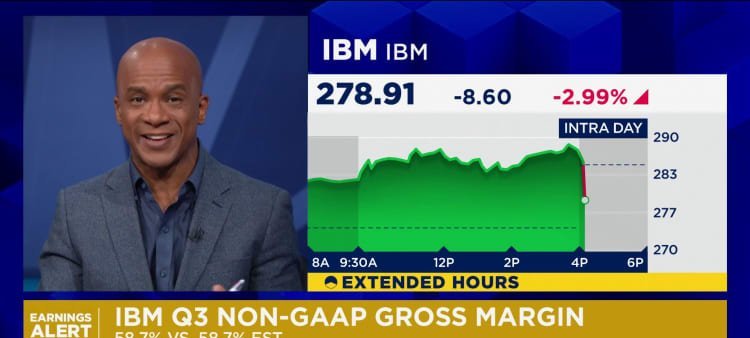
Imagem: Internet
Although the company provided no timetable beyond “fourth quarter” for completion of the cuts, workforce adjustments typically involve severance costs that appear in the same financial period. IBM did not release an estimate of restructuring charges related to the action.
Looking ahead, analysts will examine whether cost savings materialize without disrupting strategic investments. IBM has highlighted generative AI as a catalyst for future demand, positioning its watsonx platform to compete with rival offerings. Personnel changes could influence the balance between research, product development and customer support.
Investor response to the announcement was muted, in part because staff reductions had been anticipated amid industry-wide restructuring. Shares of IBM have traded broadly in line with the S&P 500 Information Technology Index during 2024, reflecting optimism about software growth tempered by concerns over legacy hardware revenue.
The fourth-quarter layoffs reaffirm a gradual but persistent reshaping of IBM’s workforce. Since the onset of the pandemic, the company has used a combination of attrition, targeted terminations and new hiring to shift skills toward cloud computing, AI and cybersecurity. The upcoming cut continues that trajectory, signaling that leadership remains focused on cost control while pursuing areas deemed critical for long-term expansion.
Crédito da imagem: Cq-Roll Call, Inc. / Getty Images