
U.S. District Judge Karin Immergut on Sunday extended her prohibition on sending National Guard troops into Portland, Oregon, marking the latest development in an ongoing legal dispute over presidential authority to deploy military forces within the United States.
The preliminary injunction, issued after a three-day bench trial, keeps any state’s National Guard from entering the city until at least Nov. 7. Judge Immergut said she will release a full opinion later this week, once she has evaluated all testimony and documentary evidence presented in court.
The case centers on President Donald Trump’s effort to federalize National Guard units under 10 U.S.C. § 252, a statute that permits such action during rebellion or invasion. The administration argued that unrest in Portland met that threshold. Immergut disagreed, concluding that the city had experienced only “isolated and sporadic” violent incidents that local and federal law enforcement were already containing.
“Defendants have not proffered any evidence demonstrating that those episodes of violence were perpetrated by an organized group engaged in armed hostilities for the purpose of overtaking an instrumentality of government,” she wrote in her order. She added that the record showed no serious injuries to federal personnel and limited property damage confined to a single building.
Immergut determined that the administration’s justification relied on amplified claims of widespread disorder. By her assessment, the federalization attempt likely violated the statute’s rebellion requirement and encroached on Oregon’s sovereignty under the Tenth Amendment.
The ruling extends a sequence of court actions that began when the Trump administration first signaled plans to activate the Oregon National Guard in early October. On Oct. 15, Immergut temporarily barred that deployment. Within days, the White House sought to bring in Guard units from Texas and California instead. The judge blocked that move as well, prompting the Department of Justice to appeal.
A divided three-judge panel of the U.S. Court of Appeals for the Ninth Circuit briefly lifted Immergut’s order on Oct. 24, but the full appellate court voted to rehear the matter en banc. That decision reinstated the prohibition and sent the dispute back to the district court for expedited proceedings.
Last week’s trial featured witnesses from federal law enforcement, city officials, and protest observers. Government lawyers contended that nightly demonstrations posed a rising threat to federal courthouses and personnel. Plaintiffs—comprising the State of Oregon and several Portland residents—maintained that protests were largely peaceful and that local police, state troopers, and existing federal agents were sufficient to address sporadic misconduct.
Immergut’s new injunction leaves the federal government without immediate authority to deploy Guard members to Portland pending her final ruling. Should the administration disagree with the forthcoming decision, it could petition the Ninth Circuit again or request emergency review by the U.S. Supreme Court.
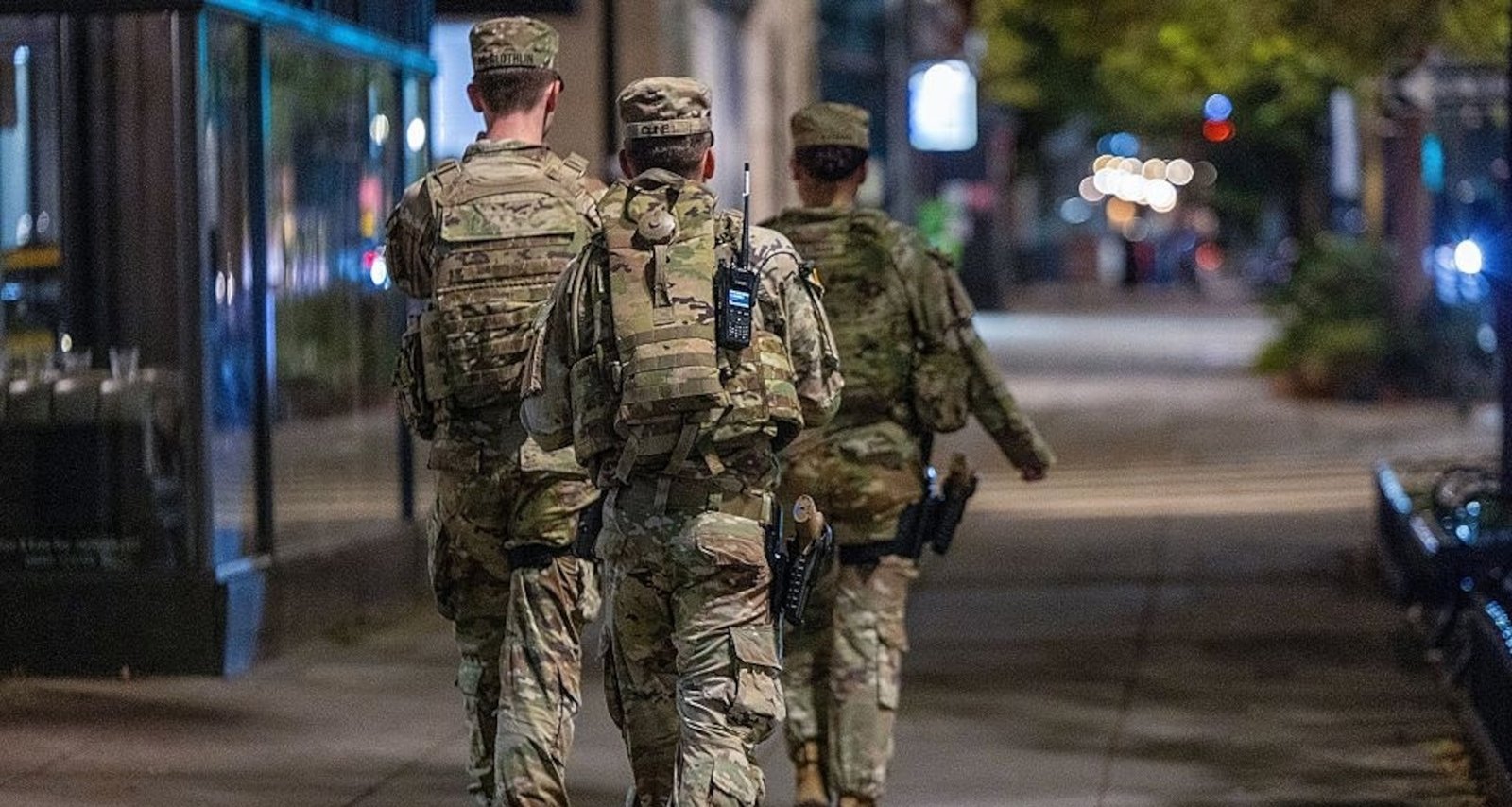
Imagem: Internet
The Department of Justice has not announced whether it will pursue additional appeals before the injunction expires. A spokesperson said attorneys are “reviewing the court’s order and evaluating next steps.”
Oregon officials welcomed the extension, reiterating their stance that public safety responsibilities lie primarily with state and local agencies. Governor Kate Brown, who testified during the trial, argued that federal troops would inflame tensions rather than restore calm.
Meanwhile, Portland’s mayor’s office reported that demonstrations over the past week remained mostly non-violent, with police making a handful of arrests for property damage and unlawful assembly. City officials said they are coordinating with federal officers already stationed at federal buildings to monitor upcoming protest activity.
Legal scholars following the case note that Immergut’s reasoning could influence future disputes over domestic troop deployments. Courts have historically granted presidents broad latitude to invoke emergency powers, but challenges have increased when states contend that federal intervention is unwarranted.
The preliminary order stays in effect until midnight on Friday, Nov. 7. If Immergut’s final ruling maintains the block, any National Guard presence in Portland would remain barred unless a higher court intervenes.
Crédito da imagem: Tasos Katopodis/Getty Images