
The American Federation of Government Employees (AFGE), the nation’s largest federal workers’ union, this week endorsed a Republican proposal to reopen the government through a “clean continuing resolution,” marking a rare break with many of its traditional labor allies. The endorsement, announced Monday by AFGE President Everett Kelley, aligns the 750,000-member union with GOP lawmakers who want funding restored before any debate on health-care subsidies or other policy issues.
AFGE’s move has intensified pressure on congressional Democrats, who have so far refused to support the Republican bill unless it also extends subsidies created under the Affordable Care Act. Despite the added scrutiny, several major unions continue to back the Democratic strategy, arguing that broader health-care protections must remain part of any funding agreement.
Among those holding the line is the Service Employees International Union Local 32BJ. Jaime Contreras, an executive vice president for the 185,000-member affiliate, said he sympathizes with furloughed federal employees but rejects the idea of trading “affordable health care for millions of Americans” in exchange for a short-term reopening. Local 32BJ represents roughly 2,400 federal contractors—security officers, food-service staff and other employees—who face the prospect of lost back pay if the shutdown continues.
Contreras acknowledged that members are “bearing the brunt” of the budget stalemate, yet he urged Democratic lawmakers to maintain their position. His comments underscore a widening divide inside organized labor, a constituency that typically presents a unified front during budget confrontations.
AFGE’s stance has drawn concern but not widespread emulation. The AFL-CIO, a federation encompassing nearly 15 million workers, squarely blamed President Donald Trump for the impasse. President Liz Shuler said federal employees are missing paychecks while the administration tries to “pit workers against each other,” and she called for both government funding and a solution to what she described as the ongoing health-care crisis.
Administration officials countered those claims. Speaking at the White House on Thursday, Transportation Secretary Sean Duffy argued that most federal workers can withstand one missed paycheck but “none of them can get through two.” He placed responsibility for the standoff on Democratic leaders and warned of “huge problems” if negotiations remain stalled.
The National Education Association, representing almost 3 million educators, reaffirmed a prior statement supporting simultaneous action on health care and appropriations. United Steelworkers International President David McCall echoed that view, calling for legislation that would “prioritize affordable health care while funding essential services.” The American Federation of State, County and Municipal Employees and the United Food and Commercial Workers pointed reporters to earlier releases expressing similar positions.
Labor analysts say the split is notable but not yet decisive. Nelson Lichtenstein, a labor historian at the University of California, Santa Barbara, noted that federal unions, while significant, are “not the biggest players” inside the broader movement. John Logan, who teaches U.S. labor history at San Francisco State University, added that the administration is exerting “huge pressure” on federal unions, but emphasized that “large parts of the rest of the labor movement” remain committed to challenging the White House’s approach.
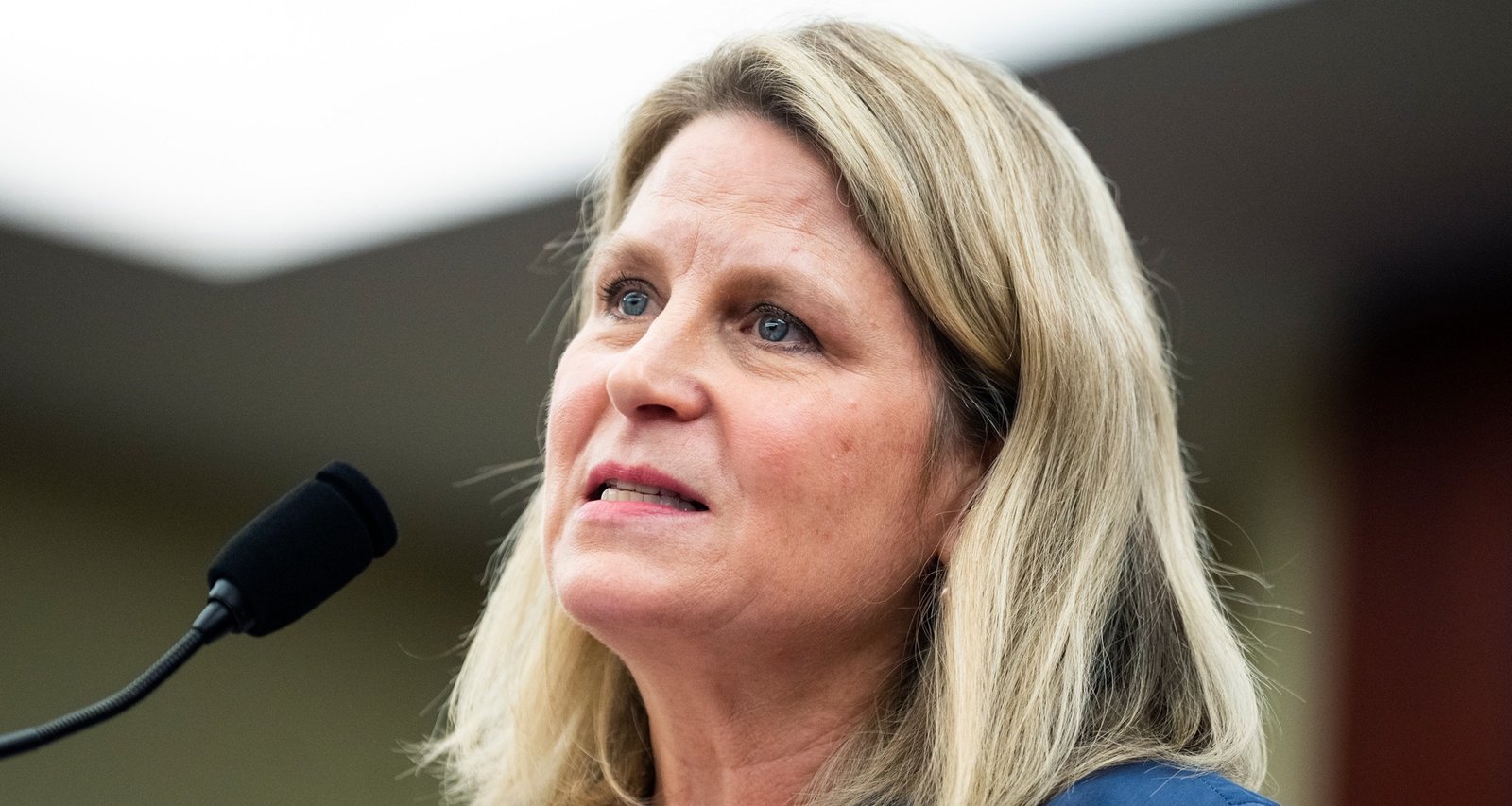
Imagem: Internet
One major organization has sided with AFGE. Teamsters General President Sean O’Brien renewed his call on Thursday for Congress to pass a clean continuing resolution, telling lawmakers to avoid placing “working people in the middle of a problem.” O’Brien last year became the first Teamsters leader to address a Republican National Convention, a signal of warming ties between the union and GOP officials.
On Thursday night, President Trump urged Senate Republicans to eliminate the chamber’s filibuster rule—sometimes called the “nuclear option”—to advance the GOP funding measure without Democratic support. Senate Democrats have voted 13 times against the bill, and the Senate is in recess until next week, limiting prospects for a swift resolution.
The shutdown reached its 30th day on Friday, affecting hundreds of thousands of federal employees who have missed at least one paycheck and face the possibility of furloughs or layoffs. Contract workers, such as those represented by SEIU 32BJ, may not receive retroactive pay even after government operations resume.
Guidance from the Congressional Research Service notes that prolonged shutdowns typically delay federal services, reduce consumer spending in regions with large government workforces and increase administrative costs once agencies reopen.
While AFGE’s endorsement gives Republicans a rare ally inside organized labor, the larger labor landscape remains largely aligned with Democratic demands for a comprehensive deal that couples government funding with continued health-care assistance. Until the two sides reconcile those objectives—or one group shifts its position—the shutdown appears poised to continue.
Crédito da imagem: CQ-Roll Call via Getty Images