
WASHINGTON — All 50 states and four U.S. territories must have National Guard rapid-response teams dedicated to civil disturbance operations ready for activation by 1 January, following an executive order issued in August by President Donald Trump.
According to an internal National Guard memorandum dated 8 October, up to 500 service members per state will be assigned to the new mission. The document lists specific personnel quotas and sets the start-of-year deadline for full operational capability. While each state already maintains quick-reaction elements for natural disasters and public safety emergencies, the forthcoming structure centers exclusively on controlling civil unrest.
The directive expands the National Guard’s standing capacity to address domestic disturbances. Existing quick-reaction forces typically support disaster relief, search-and-rescue operations and crowd-control tasks when local agencies request assistance. The newly mandated units are expected to receive additional training focused on rapid mobilization, riot control techniques and coordination with civilian law-enforcement authorities.
The memorandum does not clarify whether the 500-member quota will augment or replace current quick-reaction elements. It also leaves unanswered how the specialized civil-disturbance forces will differ operationally from present configurations. State adjutants general are responsible for defining training schedules, equipment needs and command relationships so that personnel can be activated on short notice.
Implementation follows several recent deployments of National Guard troops to support local authorities during periods of heightened tension. Over the summer, federal officials ordered large Guard contingents to Los Angeles amid demonstrations tied to immigration enforcement actions. Separate deployments were later dispatched to Washington, D.C., as part of a crime-reduction initiative. Additional assistance was offered to municipal leaders in Chicago and Portland during protests and instances of property damage.
The growing frequency of domestic deployments has drawn scrutiny from defense experts and civil liberties advocates, who question the long-term impact on the Guard’s dual federal-state role. Under Title 32 of the U.S. Code, governors typically command Guard forces during in-state missions, while the president can federalize units under Title 10 for national-level requirements. The latest order keeps command authority at the state level but sets uniform federal expectations for readiness and capacity.
National Guard Bureau planners are working with state headquarters to finalize standardized training packages. Core instruction will likely cover crowd psychology, use-of-force guidelines and interoperability with municipal police departments. Logistic considerations include the allocation of non-lethal munitions, personal protective equipment and dedicated transportation assets to permit assembly within hours of activation.
Each state must also designate staging locations and establish communication protocols linking the quick-reaction forces to joint operations centers. The memorandum advises commanders to conduct at least one readiness exercise before the end-of-year deadline to validate procedures and identify shortfalls.
The order represents one of the largest peacetime expansions of Guard civil-disturbance capability in recent decades. During the 1960s and early 1970s, multiple states activated thousands of Guardsmen to respond to civil rights demonstrations and anti-war protests. In more recent years, large-scale domestic mobilizations have generally been tied to natural disasters such as hurricanes and wildfires rather than public-order missions.
Funding for the new units will be drawn from existing state National Guard budgets supplemented by federal allocations designated for domestic operations. Detailed cost estimates have not been released, though officials expect the primary expenses to involve additional drills, specialized equipment and potential facility upgrades.
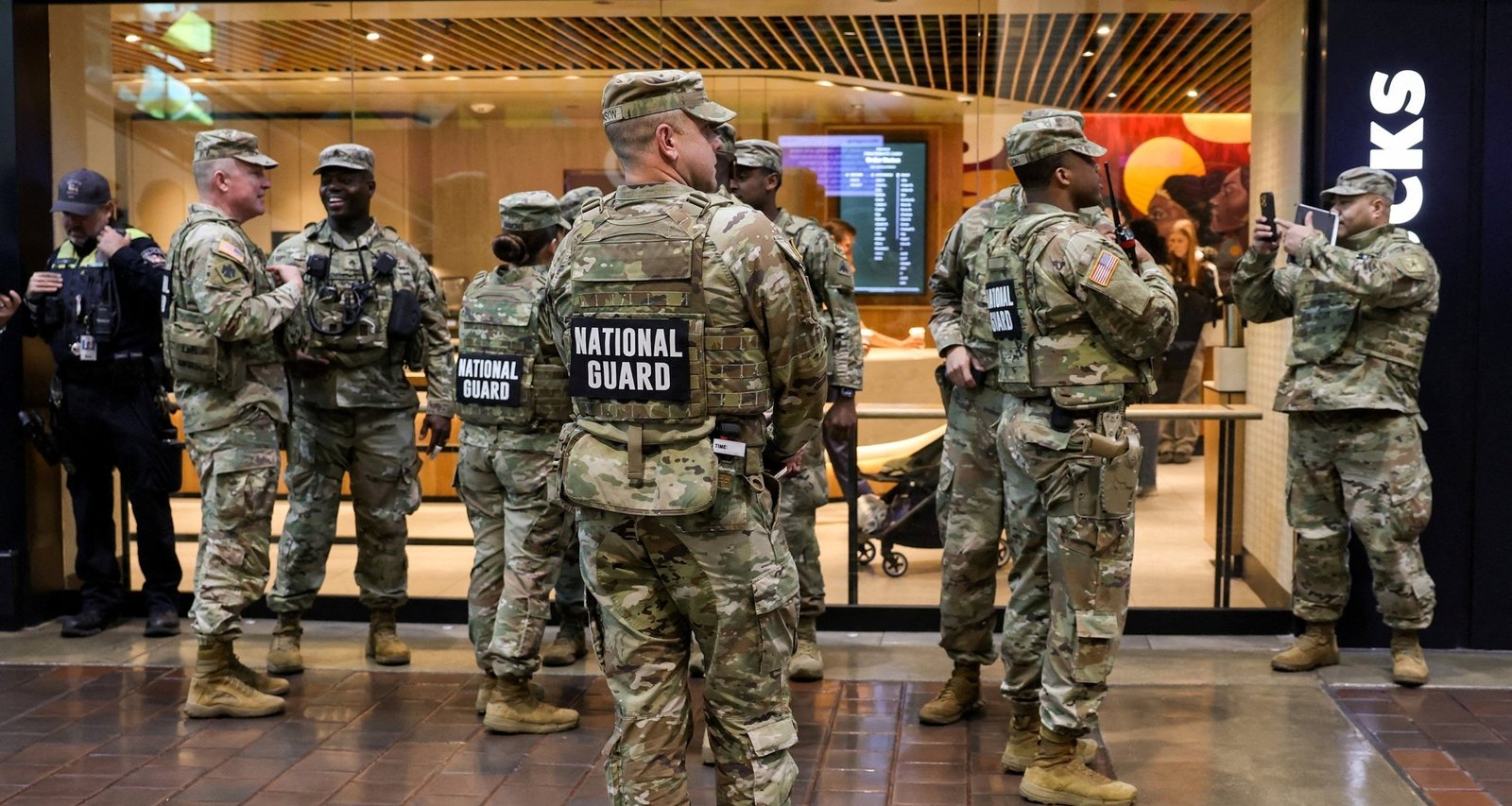
Imagem: Internet
While the memorandum sets a uniform personnel target of 500 troops for most jurisdictions, smaller states and territories may receive waivers permitting lower numbers based on population and threat assessments. Conversely, larger states could be authorized to exceed the baseline if they demonstrate a need for greater capacity.
Legal authorities governing the use of National Guard forces in civil-disturbance scenarios remain unchanged. Troops operating under state control are bound by rules that generally restrict the performance of traditional law-enforcement activities such as searches and arrests. Instead, Guardsmen typically provide perimeter security, traffic control and logistical support, allowing police officers to carry out enforcement functions.
Coordination between the Department of Defense and the Department of Homeland Security will continue through established interagency channels. The National Guard Bureau, headquartered in Arlington, Virginia, will monitor compliance with the executive order and facilitate resource sharing among states. Additional information on the Guard’s statutory responsibilities can be found on the National Guard Bureau’s official website.
The memo specifies 1 January as the date by which each governor must certify that the designated personnel have met training requirements and are available for immediate deployment. States unable to meet the timeline must submit mitigation plans outlining interim capabilities and projected completion dates.
With the deadline approaching, state military departments are expediting recruitment of volunteer soldiers and airmen who already hold crowd-management skills or military police specialties. Completion of refresher courses and issuance of updated equipment kits are expected to intensify throughout November and December.
Once certified, the new rapid-response forces will stand alongside existing disaster-relief assets, giving governors and federal officials an expanded menu of options when events outpace local resources. How frequently the units will be mobilized after becoming operational remains to be seen, but planners anticipate that the standardized framework will shorten response times and simplify interstate support agreements.
Crédito da imagem: Kylie Cooper/Reuters