
Washington, D.C. — Senate Republicans on Friday turned aside a proposal from Democratic Leader Chuck Schumer that would have reopened federal agencies while extending enhanced Affordable Care Act (ACA) premium tax credits for one year.
The federal government entered a partial shutdown on Oct. 1 after lawmakers failed to pass a new spending measure. Since then, national parks, processing of some federal benefits and several agency operations have been curtailed or suspended. The impasse has centered on whether a short-term funding bill should include language preserving expanded ACA subsidies, which are scheduled to lapse at the end of December.
Details of the Schumer Offer
Schumer’s plan called for Democrats to provide the 60 votes needed to advance a so-called “clean” Republican continuing resolution that would finance government operations for several weeks. In exchange, Republicans would vote separately for a one-year extension of the larger ACA tax credits and agree to form a bipartisan panel to explore longer-term strategies for lowering health-care costs.
According to the Congressional Budget Office, enhanced ACA subsidies signed into law in 2021 currently help more than 20 million Americans reduce monthly insurance premiums. Without congressional action, those expanded discounts expire on Dec. 31, potentially raising 2026 premiums for many Marketplace enrollees during the current open-enrollment period. Insurers have warned they could be forced to adjust posted 2026 rates if the subsidies are not extended.
Republican Response
GOP senators rejected Schumer’s proposal within hours. South Carolina Republican Lindsey Graham said tying any level of ACA subsidy extension to reopening the government amounted to “political hostage taking” and confirmed he would vote against the plan. Majority Whip John Thune of South Dakota described the offer as a “non-starter” and said it fell short of what Republicans consider an acceptable path to ending the shutdown.
Republicans maintain the Senate should first pass a short-term funding bill that contains no policy changes—often referred to as a clean continuing resolution—and postpone debate over the future of the subsidies until after federal agencies are fully operational. The GOP controls 53 Senate seats, while Democrats hold 45, with two independents aligned with them, leaving Democrats unable to advance legislation without at least some Republican support.
Democratic Position
Before Friday, Senate Democrats had insisted any stopgap funding measure must also carry an extension of the premium assistance. Schumer argued that linking the issues would provide families certainty during open enrollment and avoid chaos in the individual insurance market. He contended his revised plan respected Republican calls for a standalone funding bill while still safeguarding the subsidies in a separate vote.
House Minority Leader Hakeem Jeffries endorsed Schumer’s initiative, calling it a “reasonable, good-faith” approach to reopen the government and protect health-care affordability. Jeffries also criticized House Republicans for adjourning for a six-week recess during the shutdown.
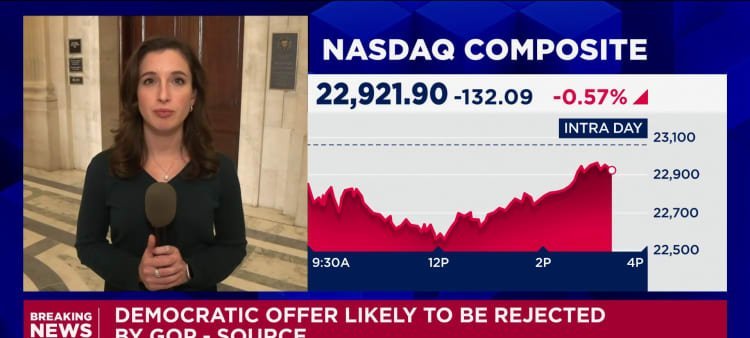
Imagem: Internet
White House and Political Backdrop
A White House official characterized the Democratic offer as evidence the party is under “massive internal pressure,” adding that the administration is willing to negotiate over the tax credits once federal operations resume. The official urged Democrats to approve a clean funding bill immediately.
The standoff unfolds against polling that shows more voters blame Republicans than Democrats for the ongoing shutdown. Earlier in the week, Democratic candidates posted strong results in municipal and state elections in New York, New Jersey and Virginia. Former President Donald Trump, speaking Wednesday, acknowledged that the shutdown was perceived as a negative factor for Republican candidates.
Next Steps
No votes have been scheduled on Schumer’s proposal, and Senate leaders have not announced an alternative path forward. Without a breakthrough, hundreds of thousands of federal employees will continue to work without pay or remain furloughed, and agencies will provide only essential services.
Health-policy analysts warn that if enhanced subsidies are allowed to lapse, many households could face sharp cost increases. An analysis by the Kaiser Family Foundation estimates average premiums could rise by several hundred dollars per year for middle-income shoppers absent the expanded credits.
Lawmakers have fewer than four weeks before the end-of-year deadline affecting the tax credits and less than that to address the broader government funding shortfall. Both chambers are expected to reconvene next week, but neither side has indicated willingness to alter core demands, leaving the shutdown’s resolution uncertain.
Crédito da imagem: Annabelle Gordon / Reuters