The U.S. Supreme Court on Wednesday, Nov. 5, 2025, heard oral arguments on whether President Donald Trump exceeded his authority by imposing a sweeping schedule of import tariffs under the 1977 International Emergency Economic Powers Act (IEEPA). The case could reshape the balance of fiscal authority between Congress and the White House and carries major financial implications for businesses, consumers and federal revenue.
Plaintiffs led by several Democratic-controlled states and small businesses contend that the Constitution reserves taxing and duty-levying powers to Congress and that IEEPA was never intended to grant a president unlimited discretion to raise tariffs. If the challengers prevail, the federal government could be required to refund tens of billions of dollars already collected, creating a complex reimbursement process for importers across the country.
The Trump administration argues that the contested levies are regulatory tools designed to manage foreign commerce, not revenue measures. Government lawyers maintain that any money collected is incidental and that the executive branch may act unilaterally once a national emergency is declared. Trump is the first president to rely on IEEPA for a global tariff program without explicit congressional authorization.
The financial stakes
Since 2024, tariffs ranging from 10 percent to more than 100 percent have been placed on goods from Mexico, Canada, China and dozens of other trading partners. Economists estimate the duties could add an average of about $1,700 to household expenses in 2025. At the same time, the non-partisan Committee for a Responsible Federal Budget projects that tariff revenue under current policy could reach $2.8 trillion over the next decade.
For many small and mid-sized firms, those costs have been disruptive. Illinois-based toy maker Learning Resources Inc. reports paying $2.3 million in tariffs in 2024 and projects exponentially higher obligations if current rates persist. Idaho apparel company Wild Rye warns that the domestic supply chain for its specialty textiles does not exist, while Tennessee technology start-up Flora says new product development has stalled under the added expense.
Key questions from the bench
During nearly two hours of argument, several conservative justices signaled skepticism toward the administration’s position. Chief Justice John Roberts focused repeatedly on the distinction between regulation and taxation, noting that import charges routinely come out of Americans’ pockets—a traditional congressional domain. Justice Neil Gorsuch raised concerns that accepting the government’s reading of the statute could permanently tilt fiscal power toward the executive branch, allowing future presidents to declare emergencies on issues such as climate change and impose unilateral tariffs.
Justice Samuel Alito acknowledged that emergency statutes are often drafted broadly but pressed counsel for the challengers on whether IEEPA’s flexibility is sufficient to justify the current tariff program. Justice Amy Coney Barrett explored the practical aftermath of a ruling against the administration, asking how refund claims would be processed if the levies are struck down. Attorneys for the plaintiffs responded that an administrative mechanism exists but conceded that untangling thousands of claims could take considerable time.
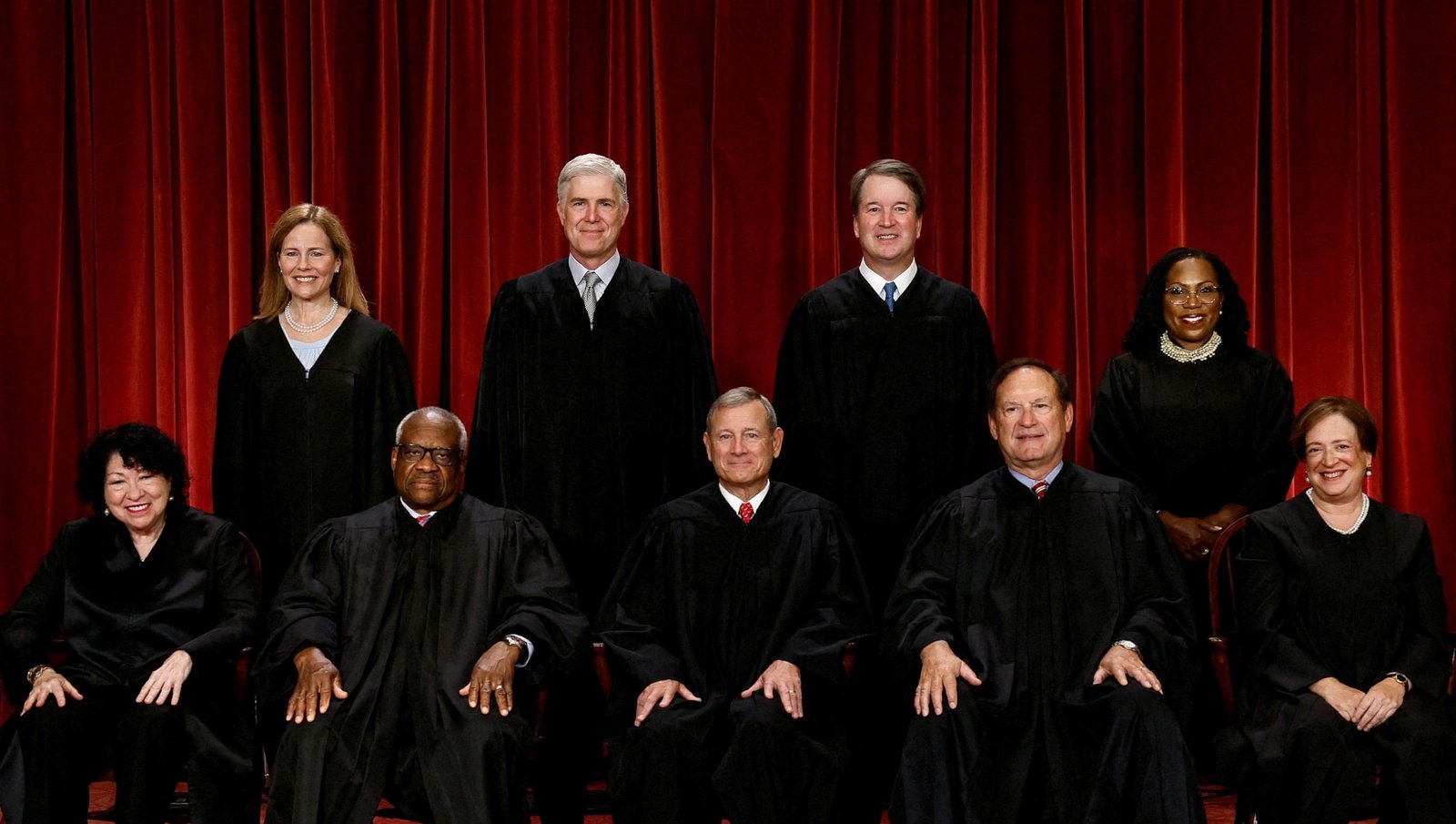
Imagem: Internet
Lower-court rulings and existing trade powers
Three lower courts—the Court of International Trade, the U.S. Court of Appeals for the Federal Circuit and a federal district court in Washington, D.C.—have already sided with the plaintiffs. Those tribunals concluded that neither immigration pressures, drug trafficking nor persistent trade deficits constitute the “unusual and extraordinary threats” required by IEEPA. They allowed the tariffs to remain in force while the case moves through the appellate process.
Even if the justices ultimately limit IEEPA’s reach, other statutory authorities would leave portions of the administration’s trade agenda intact. Section 232 of the 1962 Trade Expansion Act permits tariffs on national-security grounds, and Section 301 of the 1974 Trade Act allows penalties after a finding of unfair trade practices. Both pathways, however, impose more rigorous procedural and temporal constraints than the open-ended emergency declarations at issue in the current dispute.
Separation-of-powers implications
The Court’s six-member conservative majority has historically deferred to presidential latitude in foreign affairs while restraining executive initiatives viewed as domestic overreach, such as nationwide eviction suspensions and broad student-loan forgiveness. Legal scholars say the tariff case forces the justices to revisit that tension. If the Court frames the matter as a question of foreign policy, the administration could prevail; if statutory text and the Constitution’s assignment of taxing power dominate, limitations on presidential tariffs are more likely.
The Court granted review on an expedited schedule and is expected to issue a decision before the current term ends in June 2026. Businesses, trade partners and federal budget planners are already preparing for wide-ranging consequences depending on how the justices interpret IEEPA’s scope. For background on the statute, readers may consult the official text available through the U.S. House Office of the Law Revision Counsel.
Crédito da imagem: Evelyn Hockstein/Reuters