
WASHINGTON — Senate Majority Leader John Thune indicated on Monday, 3 November 2025, that any continuing resolution to fund the federal government will require a new expiration date because the original timeline no longer provides sufficient breathing room for Congress to complete full-year appropriations.
The Senate has tried 13 times since the shutdown began to advance a short-term funding bill that cleared the House of Representatives more than a month ago. That measure would have financed federal operations through 21 November, roughly seven weeks beyond the start of the shutdown. With 34 days already elapsed, only about two-and-a-half weeks remain on the House-approved calendar, a period Thune now deems inadequate for negotiating comprehensive spending legislation.
Senate leaders are exploring procedural options to revise the deadline. Lawmakers could pass the House bill and attach an amendment altering the date, or draft an entirely new resolution in the upper chamber. Either approach would force the House to reconvene and vote on the amended text before it could be sent to President Donald Trump for signature, marking what would be the first return of representatives to Washington since the shutdown began.
Extending funding into early 2026 is among the scenarios under discussion. Thune signaled openness to multiple end-dates but stressed that 21 November is effectively obsolete. Deliberations are expected to intensify this week as appropriators gauge how much time is realistically needed to finish the dozen regular spending bills for fiscal year 2026.
Democratic leaders maintain that any temporary spending measure must be coupled with negotiations on health-care policy. Republicans have resisted linking the two issues, proposing instead that talks focus solely on budgetary procedure. This impasse has left the Senate short of the 60 votes required to advance the existing continuing resolution.
Behind the scenes, a handful of rank-and-file members from both parties met over the weekend to search for a path forward. According to Thune, those informal discussions have produced modest progress, though no concrete agreement has emerged. Republicans have not significantly altered their offer, which remains limited to procedural assurances rather than the health-care provisions Democrats seek.
The shutdown’s practical consequences are widening. The U.S. Department of Agriculture recently confirmed that Supplemental Nutrition Assistance Program (SNAP) benefits were not issued on 1 November, and a federal judge has outlined steps to protect the program if the funding lapse continues. Other agencies have begun furloughing workers, curtailing services, and issuing warnings about delays that could intensify as the standoff persists.
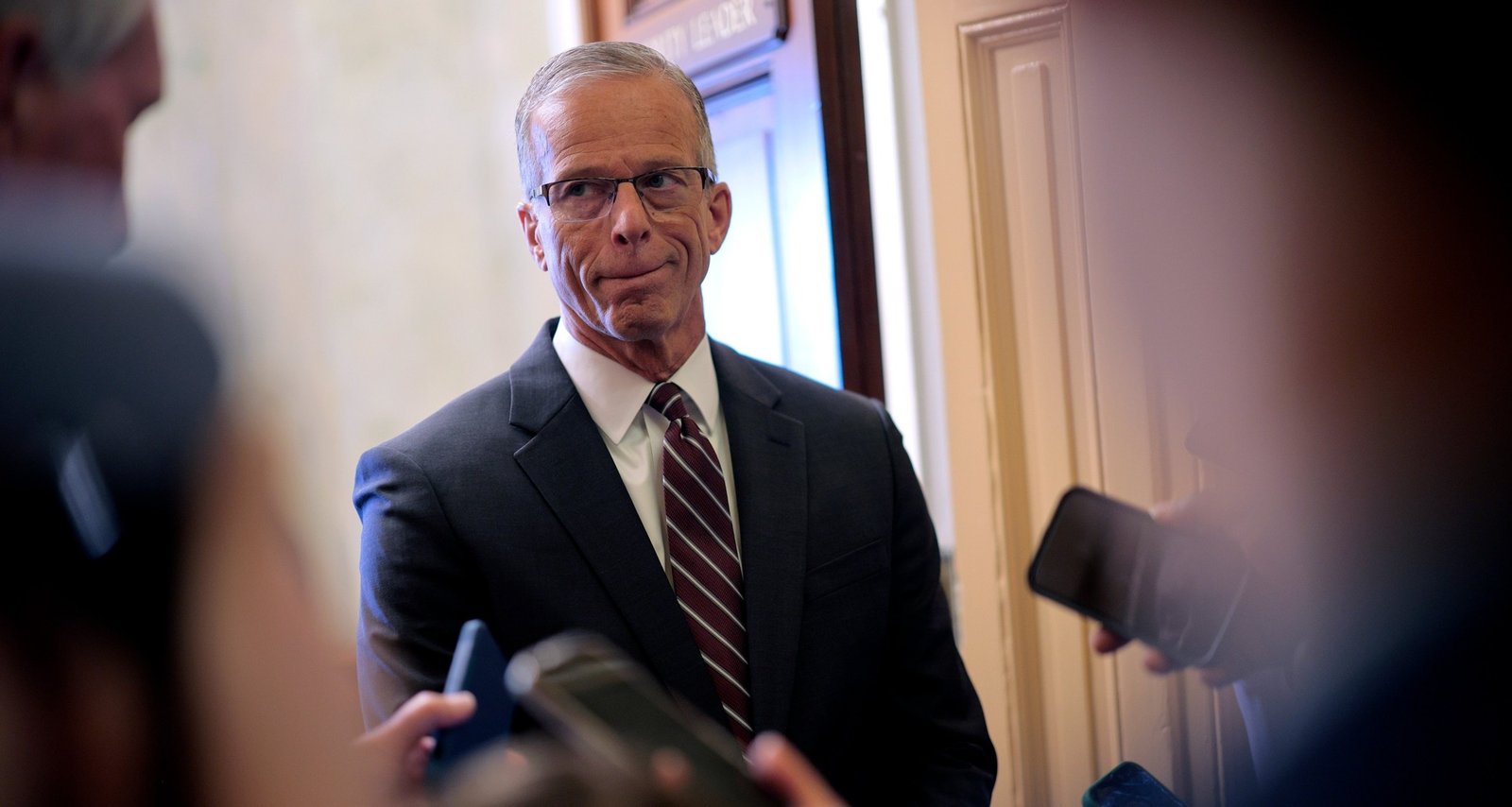
Imagem: Internet
Historical data compiled by the Congressional Research Service show that prior government shutdowns rarely exceeded one month. The current closure, now in its fifth week, is among the longest on record and has already surpassed the 2018–2019 shutdown in several operational metrics, including the breadth of agencies affected.
Should the Senate settle on a new date and pass a bill, Speaker Mike Johnson would face the logistical challenge of summoning representatives back to the Capitol. A successful vote in the House would still require sufficient bipartisan support, particularly if the revised resolution mirrors the contours of the earlier version that Democrats opposed. Failure to secure a majority could prompt negotiations over additional concessions or result in another dead end, prolonging the shutdown further.
Even if Congress enacts a fresh short-term measure, lawmakers would confront another deadline early next year. Appropriators would need to accelerate work on permanent spending bills or craft yet another temporary extension to avoid a repeat closure. The prospect of closing fiscal year 2025 without full appropriations has raised concerns among agency officials who warn of planning uncertainties and potential cost overruns.
For now, Senate leaders are focused on recalibrating the calendar to regain leverage in talks with the House and the White House. Adjusting the date is the most immediate tactical move available, but whether it will produce the bipartisan coalition needed to reopen the government remains uncertain.
Crédito da imagem: Chip Somodevilla/Getty Images | Jim Watson/AFP via Getty Images