
The White House has begun an unprecedented effort to dismiss Federal Reserve Governor Lisa Cook, a step that could give President Donald Trump greater influence over monetary policy and bank regulation. The campaign marks the first direct attempt in modern history to remove a sitting Fed governor and has triggered warnings from legal scholars, former central-bank officials and market analysts.
Why Cook’s seat matters
The seven-member Board of Governors supervises the U.S. banking system, sets the discount rate and determines the interest paid on reserve balances. While the full Federal Open Market Committee (FOMC) votes on the federal funds rate, only the governors decide those two complementary rates, giving them significant leverage over overall monetary conditions. In addition, the board can reappoint—or replace—the 12 regional Fed presidents who rotate into FOMC voting seats.
Cook’s term runs until 2038, and removing her would open a slot the president could fill with an ally more inclined to favor lower rates. According to the Federal Reserve Act, a governor may be removed “for cause,” a standard courts have rarely tested. If the administration prevails in court, it would set a legal precedent that future presidents could use to reshape the central bank at will.
A wider push for control
Since taking office in January, Trump has criticized the Fed for keeping rates above what he considers optimal, threatened to replace Chair Jerome Powell and openly vetted candidates who promise easier policy. He argues that cheaper borrowing costs would help manage the federal debt and stimulate housing. Critics counter that political direction of the Fed could erode its credibility and push inflation expectations higher.
Kathryn Judge of Columbia Law School cautions that sustained political pressure risks “the erosion of central bank independence.” Former Vice Chair Roger Ferguson echoed that concern, calling the dismissal attempt “a direct effort to undermine” nearly nine decades of separation between the Fed and the executive branch.
Potential market impact
Evercore ISI analyst Krishna Guha told clients that a successful effort to re-stack the board could produce a “materially different reaction function” by 2026, altering how the Fed responds to inflation or recession. The president currently has two confirmed governors—Christopher Waller and Michelle Bowman—plus nominee Stephen Miran awaiting Senate approval. Powell’s term as chair ends in May, creating another opening. If all positions align with the White House, Trump could secure five of seven votes on the board.
However, analysts note that Waller and Bowman have demonstrated independent streaks, sometimes supporting both dovish and hawkish positions. Robert Hockett of Cornell University warns that assuming automatic loyalty “is unfair to the sitting governors,” yet he adds that even the appearance of political domination could weaken global faith in the dollar.
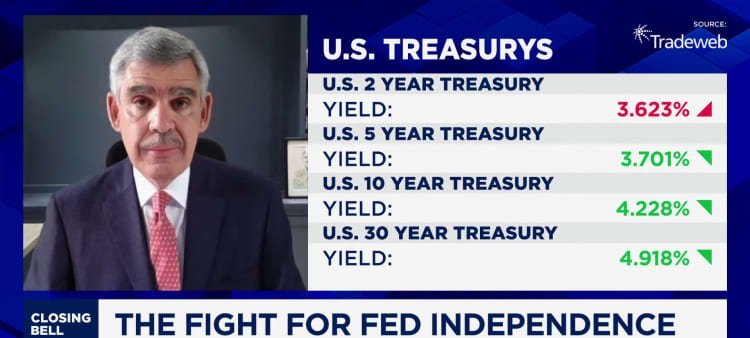
Imagem: Internet
Legal hurdles ahead
Courts will decide whether the president can meet the “for cause” requirement to remove Cook. A ruling in Trump’s favor would revise long-standing interpretations of the Federal Reserve Act and invite future challenges to central-bank autonomy. The outcome will also test how markets perceive the durability of U.S. institutions. Historically, investors have treated the Fed’s independence as a backstop against runaway inflation. A change in that perception could alter Treasury yields and exchange rates.
Additional reforms floated by administration advisors include revisiting the Fed’s 2 percent inflation target and narrowing its focus to core mandates, moving away from recent initiatives on climate risk and diversity. Supporters say these proposals would rein in what they view as “mission creep,” while opponents argue they would strip the Fed of tools needed to manage modern risks.
For a detailed overview of the Board of Governors’ statutory powers, the Federal Reserve provides an official outline on its website at federalreserve.gov.
Developments surrounding the Fed’s leadership will likely influence fiscal planning and investment strategies over the coming years. Readers can follow related updates in our Finance News Update section.
Image credit: original source