
President Donald Trump has directed the Pentagon to prepare for potential operations in Nigeria and threatened to suspend all U.S. assistance to the West African nation. The warning, delivered Friday on the former president’s social-media platform, came amid assertions that Nigerian authorities are failing to stop deadly assaults targeting Christian communities.
In his post, Trump labeled the Nigerian government “disgraced” and said Washington could intervene “guns-a-blazing” to eliminate what he described as “Islamic terrorists” responsible for a rising number of killings. He added that he had instructed what he called the “Department of War” to brace for “possible action,” issuing a direct admonition: “The Nigerian Government better move fast.”
The threat followed Trump’s decision the same day to designate Nigeria a “country of particular concern,” a classification under the U.S. International Religious Freedom Act applied to states accused of severe violations of religious liberty. Trump said Christianity faces an “existential threat” in Africa’s most populous country and requested a report from the House Appropriations Committee through Reps. Riley Moore, R-W.Va., and Tom Cole, R-Okla.
Nigeria, home to roughly 230 million people, is nearly evenly divided between Muslims and Christians. The country has experienced a surge in violence attributed to armed gangs, criminal networks and extremist groups, particularly in the north. Human-rights organizations have reported near-daily attacks involving abductions, village raids and mass killings. While Christian communities have frequently been singled out, observers note that victims also include Muslims, members of diverse ethnic groups and individuals targeted for economic reasons.
Amnesty International earlier this year described the escalating death toll as a “humanitarian crisis,” pointing to the complexity of motivations behind the assaults. The organization said factors such as resource competition, ethnic tension and organized crime intersect with religious hostility, making accountability difficult.
Nigerian President Bola Ahmed Tinubu rejected Trump’s portrayal, writing on social media that the characterization of Nigeria as religiously intolerant “does not reflect our national reality.” Tinubu said his administration maintains “open and active engagement with Christian and Muslim leaders alike” and is working to address security threats that affect citizens “across faiths and regions.” He expressed willingness to cooperate with Washington and the broader international community to protect all religious groups.
The back-and-forth arrives as Nigeria confronts a resurgence of Boko Haram, the Islamist insurgent movement that has waged a years-long campaign against government forces and civilians. In September, gunmen killed dozens in an attack on a village in the northern part of the country, according to local reports. Analysts say splinter factions, shifting alliances and cross-border arms trafficking have complicated military and humanitarian responses.
The United States currently provides Nigeria with economic aid, military training, counterterrorism support and humanitarian assistance. According to public budget documents, U.S. bilateral assistance to Nigeria has averaged several hundred million dollars annually in recent years, funding programs in health, education, security cooperation and democratic governance.
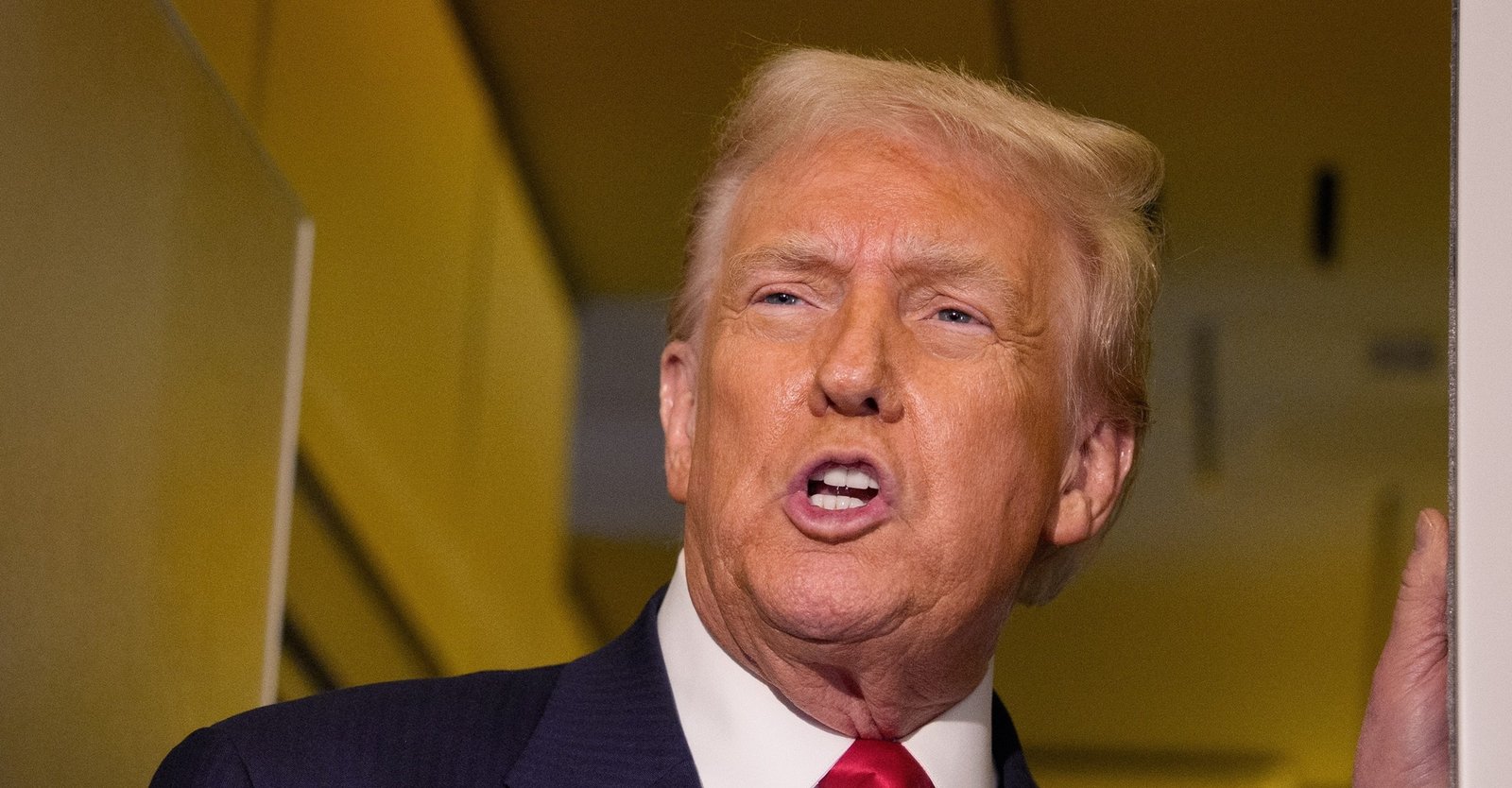
Imagem: Internet
Trump did not specify which categories of aid might be suspended, nor did he outline a timeline for possible intervention. The Pentagon has not released details of any operational planning. Historically, the United States has limited direct military involvement in Nigeria, focusing instead on intelligence sharing, capacity building and regional partnerships to combat extremist groups such as Boko Haram and Islamic State West Africa Province.
Congressional reaction has been muted so far. House and Senate leaders have not issued formal statements regarding Trump’s threat, and it remains unclear how lawmakers would respond to a request for authorization of force or to a proposal to halt appropriated assistance. Under U.S. law, significant changes to foreign aid programs generally require legislative approval.
Trump’s remarks come at a moment of wider debate in Washington over the use of sanctions, aid suspensions and military force to address international religious-freedom concerns. Previous administrations have applied visa restrictions and targeted financial measures against foreign officials deemed responsible for religious persecution, but large-scale military threats tied specifically to faith-based violence have been rare.
Diplomatic observers say any U.S. intervention in Nigeria would have complicated implications for regional stability, counterterrorism efforts and humanitarian operations. Neighboring countries in the Lake Chad Basin already struggle with spillover from Nigerian insurgent activity, and a major American military campaign could reshape existing security alliances.
For now, Nigerian authorities continue to confront attacks by armed groups while seeking international support. Whether the Trump administration will follow through on the threatened aid cutoff or military action may hinge on developments on the ground, congressional deliberations and consultations with allies concerned about escalating conflict in West Africa.
Crédito da imagem: Andrew Harnik/Getty Images