
State and local authorities have been advised to prepare for a “highly volatile” threat environment as voters head to the polls on 4 November, according to a new assessment from the nonprofit Center for Internet Security (CIS). The bulletin warns that political violence, cyber intrusions and disinformation campaigns are converging at levels not observed since the 1970s, even though 2025 is considered an off-year in the U.S. election cycle.
The document, circulated this week among election administrators and law-enforcement agencies, states that recent realignments of federal cybersecurity resources, combined with intense partisan disputes, have created conditions that could embolden both domestic extremists and foreign actors. Officials are urged to review contingency plans for polling places, voting equipment and personnel protection.
Heightened concern despite off-year status
CIS analysts note that off-year contests typically attract fewer threats than presidential or midterm cycles. This year, however, several high-profile races and ballot measures have drawn national attention, increasing the likelihood of targeted disruptions. The assessment says threat activity “will increase if specific races or ballot measures gain widespread contentious public attention, or if foreign adversaries assess an election outcome would provide a strategic advantage.”
John Cohen, former acting intelligence chief at the Department of Homeland Security and now executive director of the CIS program on hybrid threats, said continued cyberattacks on local governments and a rise in politically motivated violence require “election and law-enforcement officials to be prepared for foreign and domestic threat actors viewing the 2025 elections as an opportunity to sow discord, undermine confidence in government institutions and incite violence.”
Recent incidents underscore risks
Several episodes cited in the bulletin illustrate the range of threats election workers may face:
- Minnesota, September 2025. A mayoral campaign office was vandalized with graffiti reading “Somali Muslim – this warning is no joke.” The candidate had previously appeared on an alleged hit list attributed to Vance Boelter, who is charged with murdering two Democratic state legislators and their spouses in June.
- Colorado, September 2025. A Molotov-style device was thrown into a county facility, damaging Dominion Voting Systems equipment in two election offices. A former sheriff candidate has been arrested in connection with the attack.
- Pennsylvania, February 2025. The governor’s residence was targeted in a firebombing, part of what authorities describe as a broader uptick in politically motivated violence this year.
- National trends. The bulletin references the 2024 assassination of conservative activist Charlie Kirk, two attempted attacks on then-presidential candidate Donald Trump in 2024, and bomb threats that temporarily closed polling places in Atlanta and Milwaukee on Election Day 2024. The FBI later traced those threats to email domains registered in Russia.
Cybersecurity and information operations
While physical security remains critical, the report stresses that digital threats are expanding. Phishing campaigns, malware-laden spam (“malspam”) and impersonation schemes have targeted campaign staff, volunteers and voters. In Texas last month, fraudulent text messages promised to help recipients register to vote but were designed to harvest personal data.
Election offices have also reported attempts to infiltrate networks through malicious attachments or links disguised as routine correspondence. CIS warns that these tactics often intensify during early voting periods, when officials are busy and more likely to open unfamiliar messages.
Disinformation is expected to surge as well. The bulletin cites fake news websites believed to be operated from Russia that are publishing fabricated stories about mail-in ballots, polling-place changes and preliminary results. Security experts say such efforts aim to erode trust in election outcomes and exploit existing political divisions. The U.S. Cybersecurity and Infrastructure Security Agency offers guidance on countering false narratives, emphasizing rapid factual updates and transparent communication with voters. For more details, officials are directed to CISA’s election security resources.
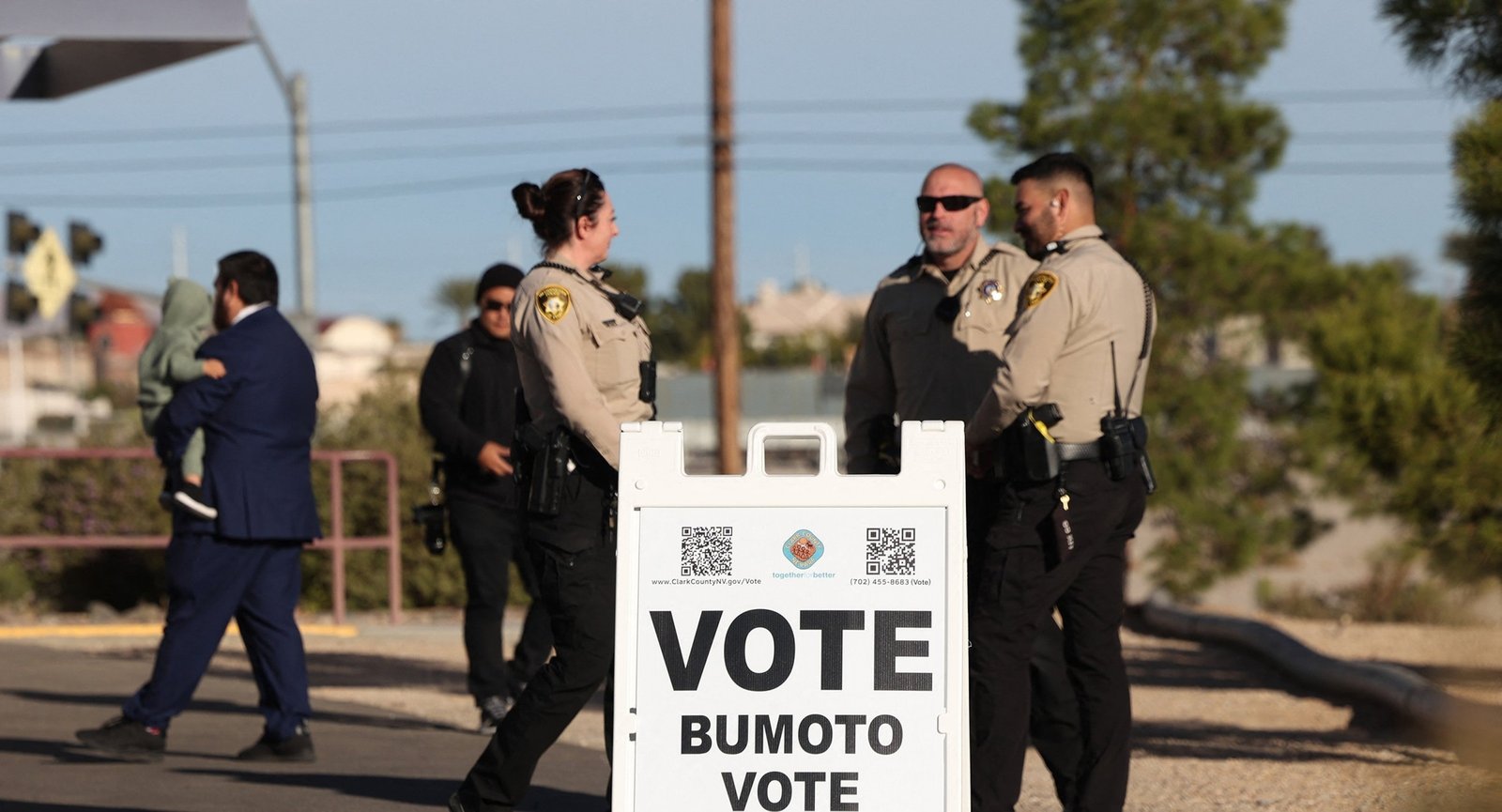
Imagem: Internet
Recommended actions
To mitigate risk, CIS outlines several measures:
- Reassess physical security at polling sites, drop boxes and election offices, including coordination with local police.
- Run tabletop exercises simulating disruptive events such as power outages, cyber intrusions or violent demonstrations.
- Ensure backup paper ballots and offline tabulation capabilities are available if electronic systems are compromised.
- Deploy multifactor authentication, network segmentation and continuous monitoring tools on all election-related systems.
- Establish rapid-response protocols for identifying and refuting false information on social media.
- Provide helplines and mental health resources for election workers who may face harassment or threats.
According to the bulletin, some jurisdictions have already expanded security perimeters around vote-counting centers and installed additional surveillance cameras. Others are scheduling regular briefings with state fusion centers to receive real-time intelligence on potential threats.
Officials weigh preparations
ABC News recently contacted election offices in New York, New Jersey, Virginia and California; none reported specific credible threats at present, but all confirmed they are maintaining heightened vigilance. In addition, several secretaries of state have issued public statements reminding voters that safeguards are in place and that any attempts to interfere with the process will be prosecuted.
With less than a week remaining until Election Day, CIS concludes that “the combination of elevated political tensions, evolving technologies and historical precedents of violence” demands sustained attention from every level of government. The bulletin emphasizes that even isolated incidents can have wide-ranging effects on voter confidence, making proactive security measures essential.
Crédito da imagem: Ronda Churchill/AFP via Getty Images